
THE APEX TIMES
Ryan Silverfield explains why Arkansas punted late instead of going for it vs. Tennessee
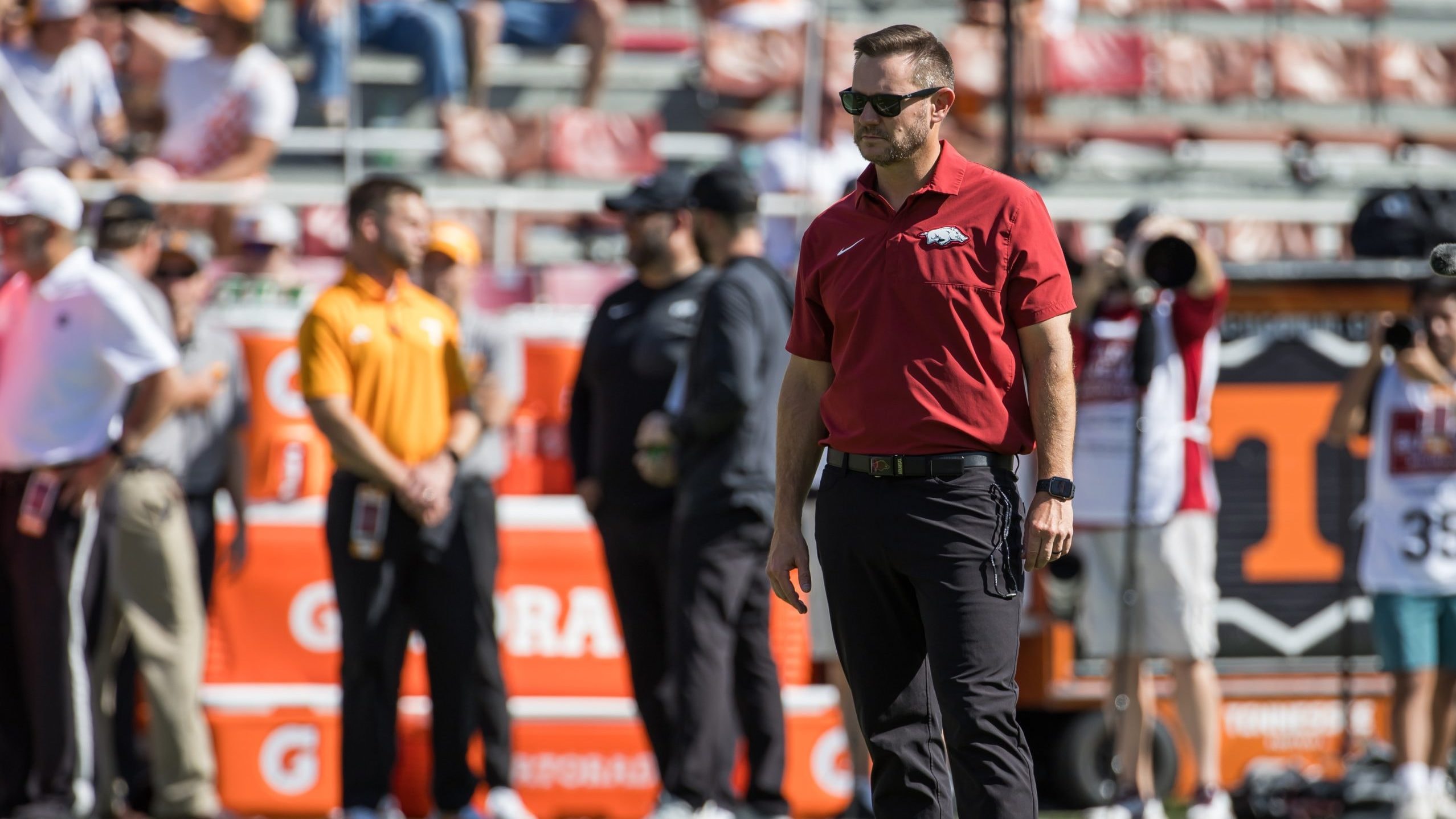
After Arkansas fell to Tennessee, offensive coordinator Ryan Silverfield addressed a late-game decision: punting with under two minutes remaining while trailing, rather than attempting to go for it.
Arkansas’s late-game choice against Tennessee became a talking point after the game, and Ryan Silverfield said the call reflected how the possession had played out when time was nearly gone. According to Saturday Down South, Silverfield explained why the Razorbacks punted rather than pressing for a conversion with under two minutes remaining while trailing the Volunteers.
The moment mattered because late in a college football game, the gap between risk and reward tends to shrink. A punt can buy one more defensive stand and deny the opponent an easier path to running out the clock, but it also hands the ball back to the other team with little time left. Silverfield’s postgame explanation, as reported by Saturday Down South, focused on why he viewed the punt as the better option at that point in the contest.
Silverfield’s comments also underscored a broader strategic reality for teams that are behind late: the decision is rarely about a single play call and more about the chain of factors that leads there, including field position, down-and-distance, and the remaining time on the clock. With under two minutes, the margin for error on both offense and defense narrows, and each snap can function like both a scoring opportunity and a clock-management decision.
For Arkansas, the loss to Tennessee added another layer of SEC pressure. Tennessee is one of the conference’s signature programs and the matchup typically carries recruiting and reputation weight, even when it comes down to the smallest in-game decisions. How Arkansas handled the closing stretch became part of the story, even though the overall result went against them.
Silverfield’s decision to punt rather than go for it does not automatically suggest a long-term philosophy. Instead, it reads as a situational judgment made on the fly, one that he felt needed clarification after the game. The reported explanation gives supporters a window into the coaching staff’s late-game thinking, even as the outcome remained unfavorable.
What to watch next is how Arkansas balances those end-of-game calls in similar game scripts. Late-game fourth-down and punt-versus-go decisions can reveal how a staff values field position, defensive matchups, and the probability of producing enough offense quickly enough to change the scoreboard.
Until additional primary details are published, the exact substance of Silverfield’s explanation is not fully verifiable here. Still, the reported takeaway is clear: he believed the punt with under two minutes remaining was the correct choice at that moment, and he wanted that reasoning understood after the loss.
Why It Matters
- Late-game punt-versus-go calls can swing the final two possessions, especially when time is under two minutes.
- In SEC matchups, situational decisions become part of a team’s broader identity and public evaluation.
- The explanation helps clarify how Arkansas’s staff thinks about preserving defensive opportunities versus maximizing scoring chances.
- When a season turns on close games, coaching judgments in closing minutes can influence how fans and analysts view play-calling priorities.
Sources
Key Facts
- Ryan Silverfield addressed a late-game decision after Arkansas lost to Tennessee.
- Saturday Down South reported that Silverfield explained why Arkansas punted with under two minutes remaining.
- The decision occurred while Arkansas was trailing Tennessee late in the game.
- Silverfield compared the punt approach to an alternative of going for it rather than taking a turnover-risk approach late.
- The explanation was delivered after the game as part of postgame discussion.