
THE APEX TIMES
Saban looks back on 2018 title-game QB decision, credits Hurts for growth after being benched
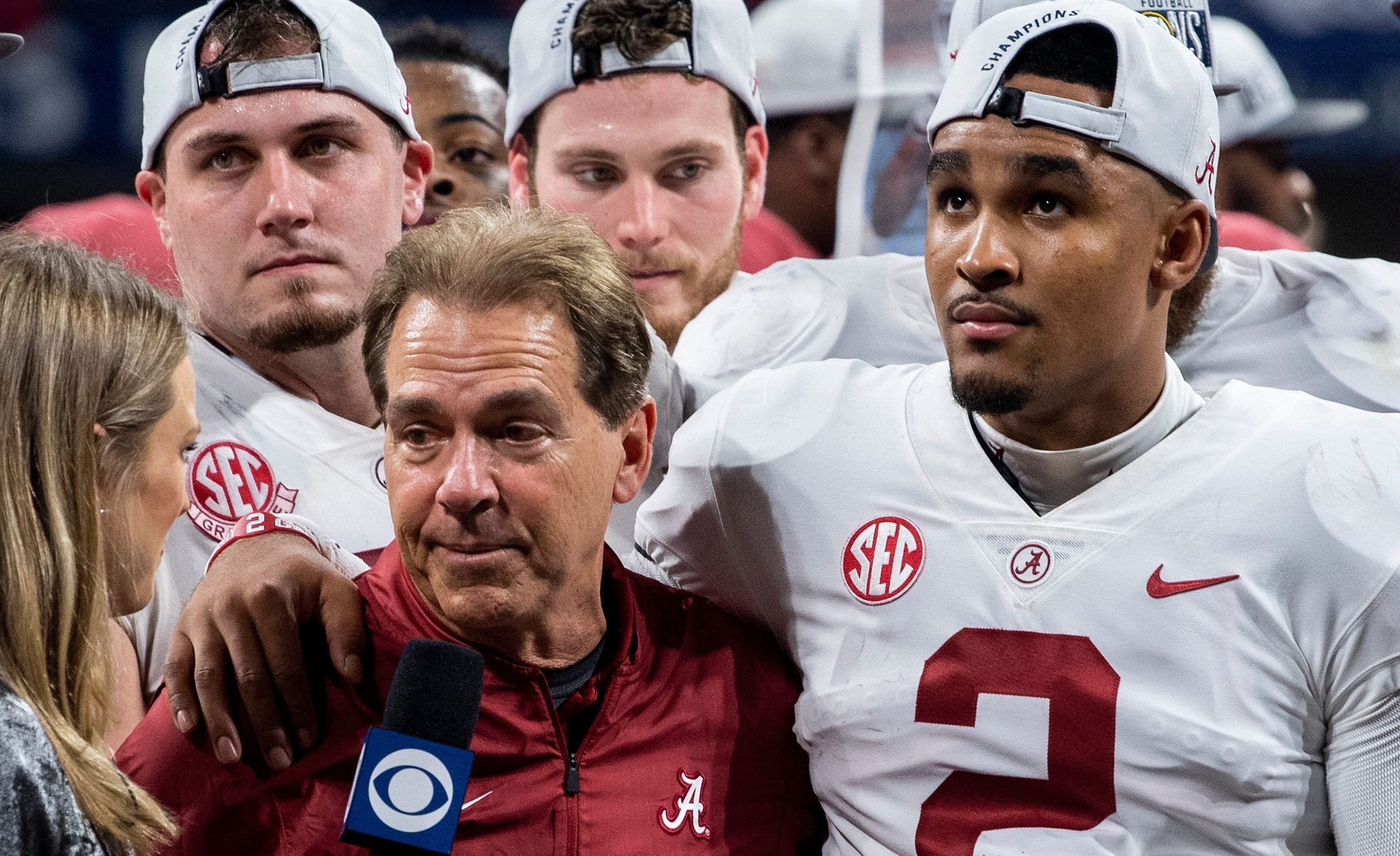
Nick Saban said Jalen Hurts’ reaction to losing the starting quarterback spot in the 2018 national championship game helped “make him better,” pointing to the psychological side of elite quarterback development.
In revisiting one of the most scrutinized quarterback calls in college football history, Alabama coach Nick Saban credited Jalen Hurts for the way he responded after being benched in favor of Tua Tagovailoa during the 2018 national title game. The point of the story was not the switch itself, but what followed from Hurts once the outcome forced a new direction for the offense.
According to coverage from Saturday Down South, Saban praised Hurts for his response to the benching decision, describing it as something that “made him better.” That assessment underscores a theme Saban has returned to throughout his coaching career: how a player responds to adversity can matter as much as the adversity itself, especially for quarterbacks who must maintain trust in a team’s process while their personal role changes.
The 2018 national championship is often remembered for its high-stakes quarterback contrast. Tagovailoa started the second half after Alabama’s early-game plan shifted, and Hurts’ benching became part of the public narrative around leadership, resilience, and readiness. But the Saban comments, as reported, frame the benching as an inflection point in Hurts’ development, with the coach emphasizing that the learning did not stop at the moment the starting job changed.
That perspective also reflects the reality of elite competition at the quarterback position, where performance, decision-making, and execution in practice and game situations can quickly alter the depth chart. For Alabama, the decision to put Tagovailoa on the field came with enormous pressure, but the personnel decision had to be matched by internal accountability, including ensuring that the non-starter remained engaged rather than disconnected.
Saban’s public emphasis on Hurts’ response suggests the coach viewed the quarterback’s mindset as a key ingredient in staying prepared for whatever came next. In the broader college football context, benchings are common, but durable programs are built on players who can absorb those moments without undermining team culture or their own future opportunities.
What to watch next is how that “made him better” message resonates when Hurts is evaluated in subsequent years, and how quarterbacks in similar situations respond to a loss of the starting role. The practical takeaway from Saban’s framing is that the bench is not necessarily the end of a quarterback’s trajectory, but it can be the start of a different kind of training, one that tests emotional control and commitment to improvement.
Because this account is drawn from a media write-up rather than a primary transcript of the original remarks, readers should treat the comments and emphasis as reported. Still, the significance of the 2018 title-game quarterback decision, combined with Saban’s reported praise, provides a clear lens for understanding how Alabama’s coaching staff has historically evaluated leadership under pressure.
Why It Matters
- The comments highlight that quarterback development is not only about performance on the field, but also about how a player handles changing circumstances.
- Saban’s framing reinforces leadership expectations inside championship-level programs, where a benching can test buy-in and trust.
- The 2018 national championship remains a reference point for how teams manage quarterback dynamics under maximum pressure.
Sources
Key Facts
- Nick Saban publicly praised Jalen Hurts’ response to being benched in favor of Tua Tagovailoa in the 2018 national title game.
- The reported characterization from Saban was that Hurts’ response “made him better.”
- The discussion centers on quarterback development beyond the on-field switch, focusing on mindset and resilience.
- The context of the remarks ties to one of the most discussed quarterback decisions in Alabama’s recent championship history.