
THE APEX TIMES
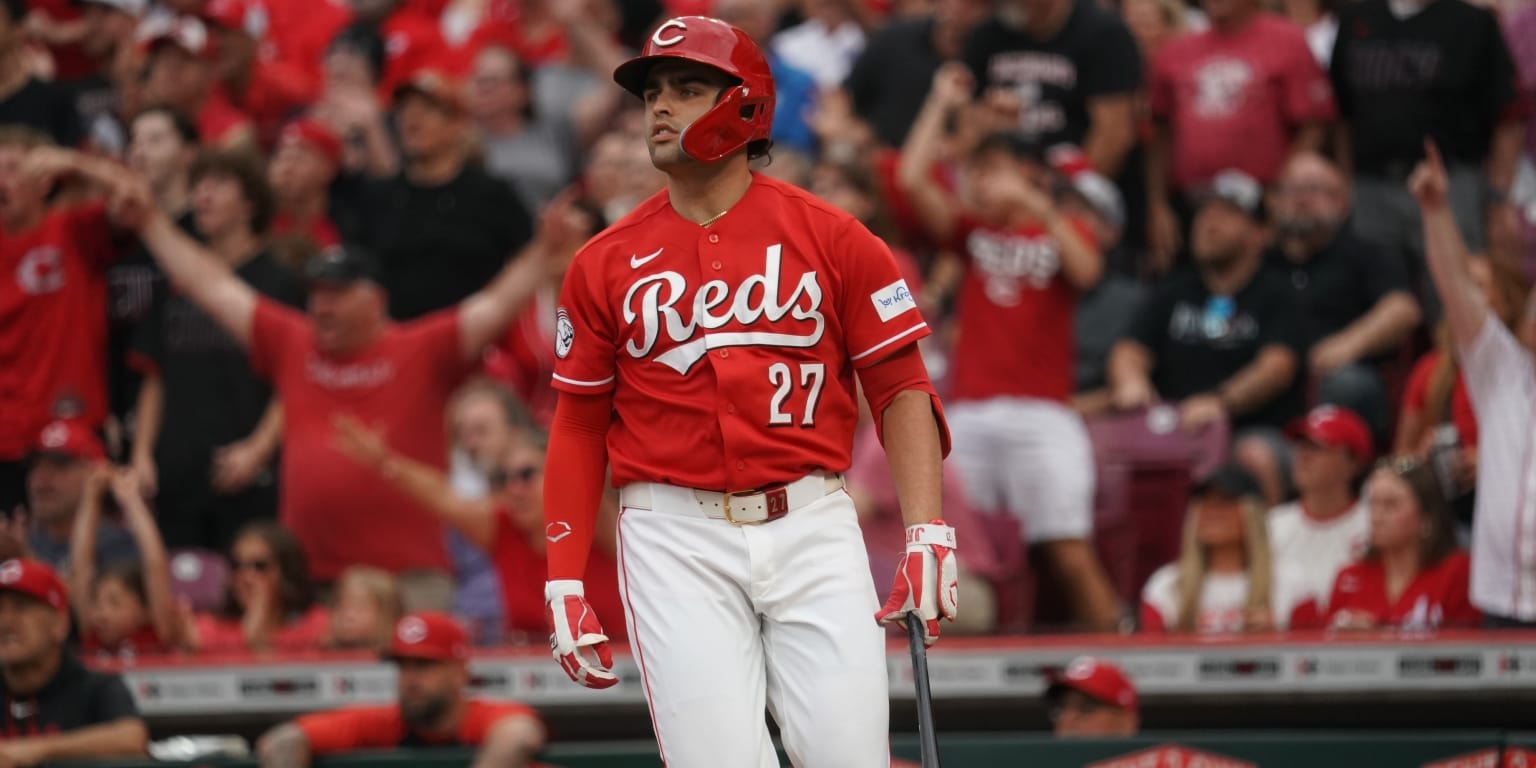
Sal Stewart answers a Reds slump with a 3-run homer and RBI single in Cincinnati’s win over the Mets
The 22-year-old first baseman, a young centerpiece for Cincinnati’s lineup, delivered run-impact swings that helped the Reds turn the game around after a stretch that had gone quiet.
Cincinnati’s offensive rhythm needed a reset, and rookie first baseman Sal Stewart provided it with two decisive swings as the Reds ambushed New York Mets starter Kodai Senga. In an evening shaped by momentum shifts, Stewart’s performance anchored the kind of at-bat-to-at-bat response the Reds have been searching for during a recent ebb.
Stewart, 22, entered the season already learning a major-league lesson: hitters often move through waves, not straight lines. According to MLB’s recap of the game, his recent form had dipped over the past few weeks, but he refused to let the slump linger. He snapped it at the plate with a three-run home run that immediately changed the scoreboard math and gave Cincinnati a more comfortable offensive platform.
The homer mattered not only for the runs it produced, but for how it set the tone for the rest of Stewart’s contributions. After the big fly, Stewart added an RBI single, extending the pressure on the Mets and reinforcing that his impact was not limited to one swing. For a first baseman in his early major-league development, the ability to string together productive outcomes is a clear marker that the approach can hold under different counts and situations.
Senga’s presence on the mound gave the game added structure. A Mets starting pitcher with a reputation for difficult matchups, Senga is the type of opponent who can shut down lineups if they get passive. Instead, Stewart’s performance suggested Cincinnati’s hitters were ready to attack when the opportunity appeared, making the Reds’ win feel like more than just a one-inning burst.
The Reds’ task over the long stretch of a season is to manufacture consistency without overreacting to temporary droughts. Stewart’s night offered a reminder of what can happen when a struggling hitter gets back to his timing and barrel-to-ball quality. The same player who had been experiencing the ebb described in the game story showed that he can also find the exit when he needs to.
Looking ahead, the most practical question is whether Stewart can build on this kind of game into a repeatable routine. Cincinnati’s lineup construction depends on its young core to provide at least one reliable run driver, particularly from the middle of the order where extra-base hits and clutch RBI can swing the leverage of entire series. Nights like this also influence how managers plan around him, because production early in the season can reshape expectations for later matchups.
For Mets fans and coaches, the lesson is simpler: even against a starter like Senga, Cincinnati’s best answer came from a hitter willing to damage the game early. For the Reds, the takeaway is similarly straightforward. If Stewart can keep his offensive output from turning into another cycle of quiet, it strengthens the team’s ability to weather the next inevitable ebb.
If you want, I can generate a second version that emphasizes Reds postseason implications or a Mets rotation/strategy angle, but I’ll need confirmation of any additional details you want included from the full game recap (for example, the final score or inning-by-inning turning points).
Why It Matters
- A young hitter breaking out of a slump can stabilize a Reds lineup that must grind through long stretches.
- Stewart’s extra-base power plus follow-up RBI gives Cincinnati more ways to create separation against quality pitching.
- For the Mets, the loss is a reminder that even matchup-heavy starters can be punished when hitters time their chances.
- If Stewart sustains this level of production, it strengthens the Reds’ longer-term lineup planning at first base and in run-scoring roles.
Key Facts
- Sal Stewart is a 22-year-old rookie first baseman for the Cincinnati Reds.
- In the Reds’ win over the Mets, Stewart hit a 3-run home run.
- Stewart also added an RBI single in the same game.
- MLB’s game recap describes Stewart’s performance as a snap of a recent hitting slump.
- The game featured Mets starter Kodai Senga, whom Cincinnati’s lineup attacked successfully.