
THE APEX TIMES
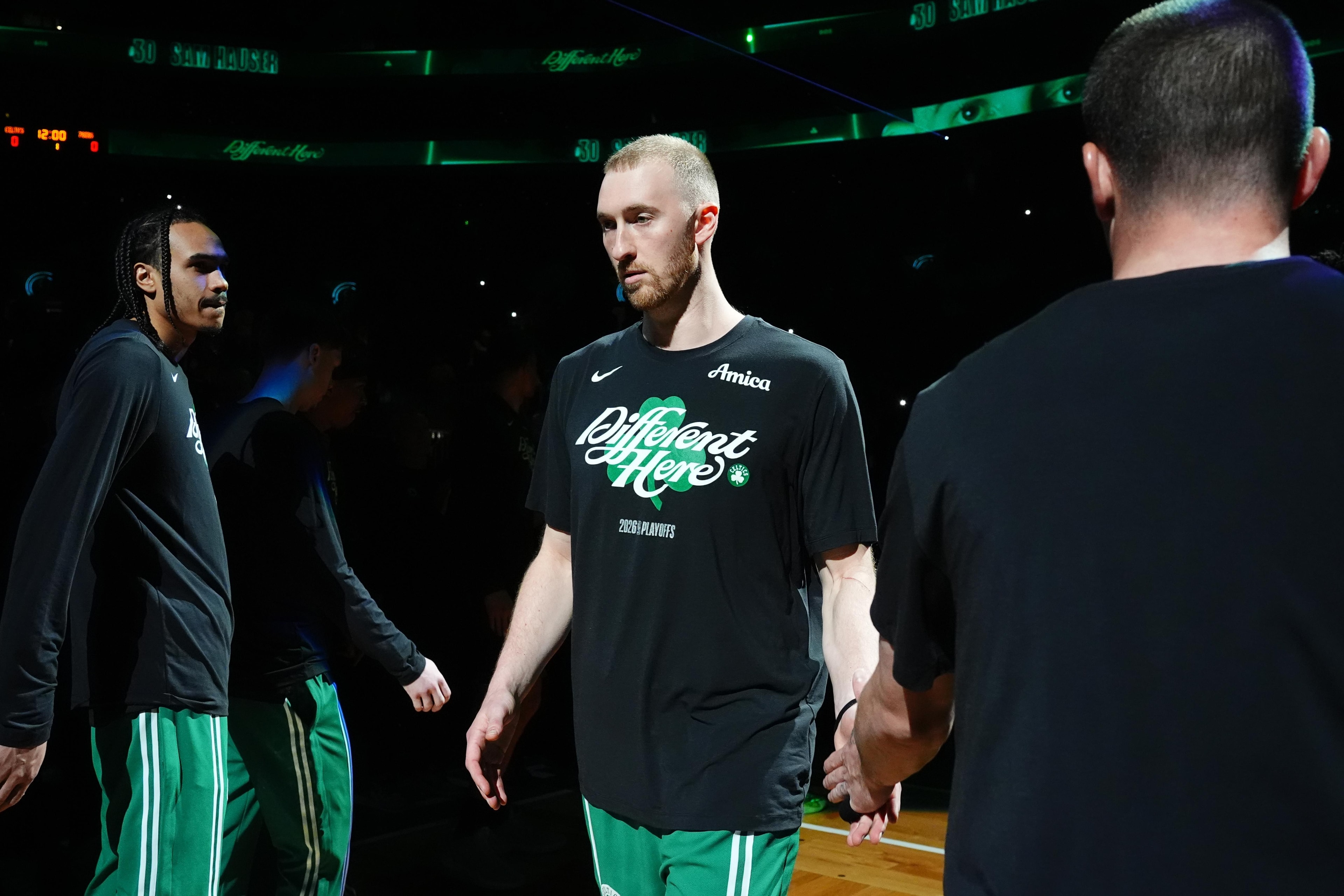
Sam Hauser’s place on the Celtics is getting harder to define as Boston leans into wing depth
With Jayson Tatum and Paul George occupying the standard wings roles and Boston stocking the roster with multiple wing prospects from recent drafts, Sam Hauser’s minutes and matchup-by-matchup value are central questions as the Celtics look to keep their rotation flexible.
Boston’s roster build over the past few years has turned the Celtics into a team with extra wings, not just extra ball handlers. That shift has made one of the franchise’s steadier bench pieces, Sam Hauser, harder to pigeonhole. The question is not whether Hauser is capable of contributing, but where he fits when the Celtics can roll out multiple wing-sized options depending on opponent personnel.
The context begins with who already has the key minutes. Jayson Tatum and Paul George are identified as the starters on the wing, which matters because the Celtics’ top scoring and defensive assignments in many lineups tend to run through those two. When two players are set as the baseline wings, roster spots behind them become more matchup-based, and roles can shrink or expand depending on whether Boston needs more shooting, more perimeter defense, or more length.
The rotation pressure for Hauser is increased by Boston’s recent draft pattern, which has consistently pushed wing talent toward the organization. Yahoo Sports’ analysis points to the Celtics using their top draft pick on wings in three consecutive drafts, adding Jordan Walsh, Baylor Scheierman, and Hugo Gonzalez across the 2023, 2024, and 2025 draft classes. The common thread is that these additions were not selected as niche specialties only, but as players who can play important minutes as the Celtics continue to refine their rotation.
In that sense, Hauser’s identity as a complementary forward becomes a question of operational basketball rather than a question of basic skill. If Boston can spread the floor with multiple wings who can handle the ball some and guard in space, then Hauser’s advantage as a spacing-focused forward has to translate into a clear path to minutes. The Celtics’ ability to run multiple kinds of wing lineups can make it easier to find bodies for defensive schemes, but it can also crowd the same “bench wing shooting” lane that Hauser has often occupied.
Hauser’s case is also shaped by how Boston’s roster flexibility changes with each wing addition. A team that keeps adding playable wings usually reduces the number of “must-play” stylistic specialists, because there are more alternatives for each lineup. Hauser can still be useful as a floor-spacing option and a structured role player, but the Celtics’ wing depth suggests his role may be more situational than absolute, with coaching decisions leaning toward whichever wing best matches a given opponent’s size, speed, and shot profile.
For fans and analysts, the next practical test is how Boston deploys its wings in real game environments. When the Celtics need more perimeter defense against faster wings, they may lean into the longer, more versatile options the recent drafts have provided. When the opponent drops defenders off shooters or wants to sag into the paint, Hauser’s shooting value becomes a natural lever. In a league where rotations are often shortened and matchups can change every few possessions, the “murky” role Yahoo describes is likely to remain the storyline until the Celtics’ coaching staff settles into a repeatable rotation logic.
The bigger picture is that this roster building is not inherently a problem for Hauser, but it does reduce margin for error. As the Celtics keep developing multiple wing options from recent drafts, Hauser will need to look like the best tool in at least one recurring scenario, not just a default steady presence. The Celtics’ title aspirations depend on layering skill sets, and right now, the wing layer is thick enough that defining Hauser’s minutes and matchup niche becomes one of the rotation’s central questions.
Why It Matters
- Rotation roles in Boston can decide game plans, since wing minutes often determine both defensive matchups and spacing on offense.
- If Hauser becomes a situational option, his impact will swing more with opponent style, making lineups less predictable for Boston’s opponents.
- Drafting and developing multiple playable wings can improve postseason reliability, but it can also crowd specialized bench roles.
- How the Celtics allocate minutes among wings will be a key indicator of whether Boston’s depth translates into playoff flexibility.
Key Facts
- Sam Hauser’s role with the Celtics is described as difficult to define because Boston has added multiple wings over several years.
- Jayson Tatum and Paul George are identified as the Celtics’ wing starters, narrowing the available opportunities for other forwards.
- Yahoo Sports notes that the Celtics selected wings with their top pick in the 2023, 2024, and 2025 drafts.
- The wing additions listed are Jordan Walsh, Baylor Scheierman, and Hugo Gonzalez.
- The Celtics’ growing wing depth increases the likelihood that Hauser’s minutes will be matchup-based rather than fixed.