
THE APEX TIMES
Sam Leavitt points to Lane Kiffin’s LSU staff as the “coolest thing” he bought into
The Tigers quarterback, reflecting on why he chose LSU, described what stood out to him about Lane Kiffin’s coaching approach and the larger group around it.
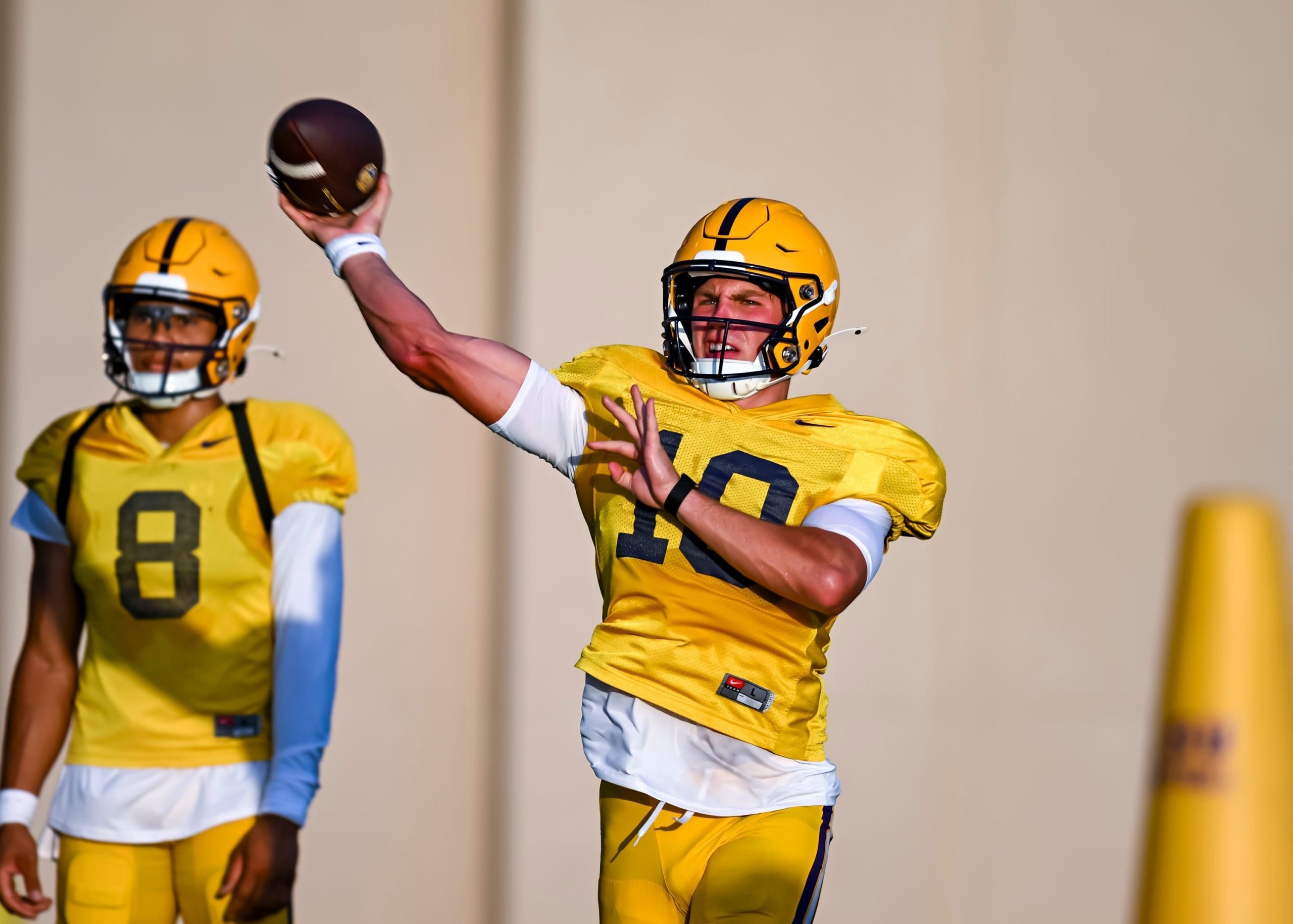
LSU quarterback Sam Leavitt is looking back on the recruiting pitch that brought him to Baton Rouge, and his answer was not about facilities or location. In an interview highlighted by Saturday Down South on September 1, Leavitt said the most compelling part of the decision was Lane Kiffin’s coaching staff, describing it as “the coolest thing” about LSU’s football operation. The comment matters because LSU, like every major program in the SEC, sells a vision of sustained contention, and quarterback recruiting is often where that vision has to become tangible.
Leavitt’s commitment context also centered on the postseason picture. The same report frames his arrival at LSU around an aspiration to help the Tigers return to the College Football Playoff. That is the sort of standard LSU has historically been judged against, and it also explains why quarterback recruits often focus less on single-season improvements and more on whether the coaching staff can repeatedly put a team in position to reach the sport’s top tier.
The “coolest thing” line also indicates something about how Leavitt views the staff structure around Kiffin. Even without detailing individual play callers or coordinator duties, the wording points to a broader impression: that LSU’s offensive ecosystem and weekly preparation are built in a way that feels distinctive to a player. For a quarterback, those day-to-day details typically shape comfort in the pocket, clarity in protections and the consistency of expectations at practice, all of which carry over to Saturdays.
Kiffin’s staff is also a key part of LSU’s identity among recruits, especially in a landscape where programs adjust quickly to trends in tempo, passing concepts and quarterback development. LSU has become known for leaning into modern offensive thinking under Kiffin, and the report’s emphasis on the coaching group suggests Leavitt believes there is an organizational edge, not only a personal favorite coach. In college football recruiting, that distinction often separates “I liked the coach” from “I believed in the system.”
The report places Leavitt’s remarks in the present-tense, but they are ultimately backward-looking, rooted in what sold him when he first came to LSU. That matters because quarterback evaluation rarely ends at signing day. A player’s willingness to stick with an offense through the inevitable learning curve is shaped by whether he feels the coaching staff is aligned with his development, and whether communication is consistent when the playbook gets complicated.
What to watch next is whether Leavitt’s stated confidence in the staff translates into on-field execution as LSU’s season progresses. Fans will be looking for signs of quarterback comfort, decision-making speed, and coherence in the passing game, because those are the most practical ways to measure whether a recruit’s enthusiasm for a coaching approach becomes performance. Until there is more confirmed, detailed reporting from LSU or additional interview specifics, the “coolest thing” framing should be treated as a window into fit and culture rather than a detailed breakdown of schematics.
As of this writing, the available information comes from a single publication highlighting Leavitt’s remarks, and it does not provide a full transcript or additional corroborating details about specific staff responsibilities. Still, the core themes are clear from the report: Leavitt came to LSU with Kiffin’s coaching staff in mind, and his postseason goal has been tied to returning the Tigers to the College Football Playoff. Those are the kinds of commitments that can define a quarterback’s public narrative all season long.
Why It Matters
- Quarterback recruiting and development are often the most direct indicators of whether a program’s championship vision is credible.
- A recruit’s view of the coaching staff can hint at how communication, preparation, and quarterback-development philosophies are expected to work day to day.
- LSU’s stated standard of returning to the College Football Playoff raises the stakes for any quarterback, making fit and staff belief particularly relevant.
- As the season unfolds, the meaningful question will be whether the staff quality Leavitt pointed to shows up in consistent quarterback performance.
Sources
Key Facts
- Sam Leavitt, an LSU quarterback, discussed what he believes is the “coolest thing” about Lane Kiffin and LSU’s coaching staff in an interview highlighted by Saturday Down South.
- The report ties Leavitt’s decision to come to LSU to a hope of helping the Tigers return to the College Football Playoff.
- The “coolest thing” framing is presented as a recruiting-and-fit reflection on the coaching staff, not a facilities or location point.
- The reporting is dated September 1, 2026, and focuses on Leavitt’s perspective on why he chose the program.