
THE APEX TIMES
San Diego Padres’ rookie-level DSL club repeats as DSL Cup champion in refreshed format
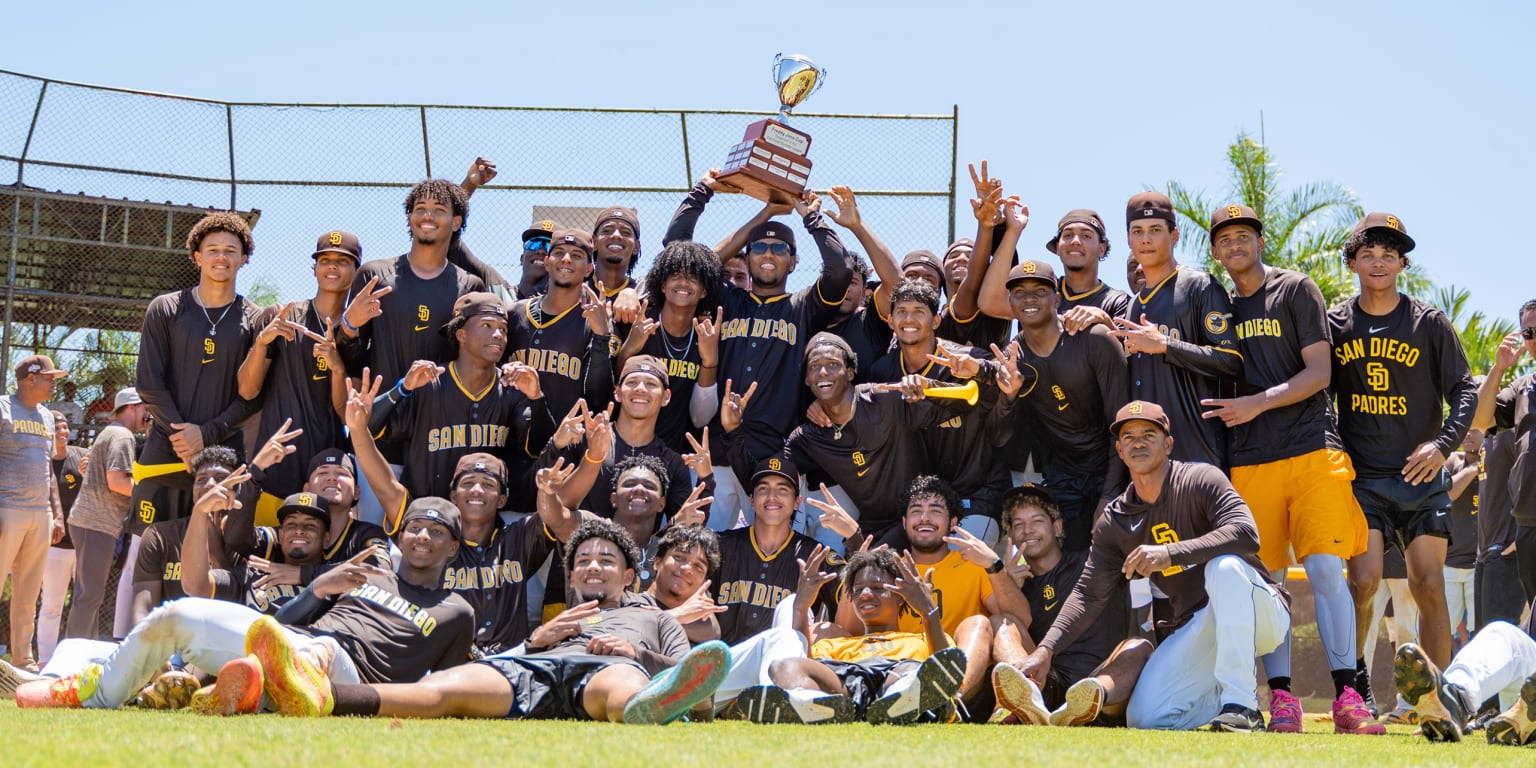
The Padres’ Dominican Summer League affiliate has claimed the second straight DSL Cup title, extending a run of postseason success in the Rookie-level competition.
San Diego’s rookie-level Dominican Summer League affiliate has won the DSL Cup for the second year in a row, giving the Padres organization back-to-back championships in one of its key development pipelines. The league’s postseason picture has been reshaped in recent seasons, and the Padres’ club took advantage of the new two-stage path to the title.
The DSL Cup was introduced as part of a format refresh that began last year. Under the updated system, the top 16 teams in the Dominican Summer League qualify for a postseason made of two phases. Teams first play through pool play, then the competition advances into additional stages that ultimately determine the Cup winner.
In the championship wrap-up, MLB’s team release credited the Padres’ affiliate with winning the DSL Cup again, turning what is often a volatile level of the organization into something more stable. Rookie-level teams change quickly as rosters churn from season to season and prospect cohorts develop at different rates, so repeating in a postseason structure designed to cut across those variations carries weight for the organization’s longer-range evaluation and teaching.
For the Padres, the win is less about a single roster and more about what it reflects in player development and baseball operations at the Dominican Summer League level. DSL teams are often where organizations test fundamentals and conditioning standards with young players, while also building early habits around hitting, baserunning, defense, and pitching routines. A title does not prove future big-league outcomes by itself, but it can be a sign that the day-to-day process is working within the talent group assigned to that affiliate.
The Padres’ back-to-back DSL Cup achievement also comes with a competitive context. The DSL is one of MLB’s most talent-dense entry points for international players, and postseason berths require strong performance across the league’s qualifying window. By reaching the championship again under a postseason format that begins with pool play among the 16 best teams, the Padres’ club demonstrated it could win not only when elimination games matter, but also across the earlier round structure.
The format itself is important to how the Cup is won. Pool play can reward teams that perform consistently across multiple matchups, rather than relying on a single hot streak. It also means that the path to the Cup is shaped by both pitching management and roster usage across a short span, with each game potentially affecting which teams advance into the final phases.
Looking ahead, the DSL Cup results are one of the better indicators of which affiliates are building momentum heading into the rest of the minor-league season. For the Padres, the immediate next question is how the organization’s DSL cohort carries forward into higher levels of development, including whether the same evaluation themes that produced postseason success continue to show up as players move through the system.
If you’re tracking Padres farm development, the DSL Cup run is best viewed as a process marker rather than a prediction. The organization still has to translate those early indicators into improvements over time, and the roster turnover that naturally follows rookie-level seasons means the next Cup chase will look different even if the internal standards stay the same.
Why It Matters
- Back-to-back DSL Cup titles suggest the Padres’ development process at the rookie level is producing consistent postseason-ready teams under the league’s current structure.
- The DSL Cup format emphasizes both consistency in pool play and performance in later stages, which can reflect organization-wide coaching and in-game management.
- For MLB organizations, DSL success can report that talent acquisition and early player development are aligned, even though it is not a direct forecast of major-league outcomes.
- A repeat champion is also a competitive statement in a league known for fast roster turnover and uneven team chemistry from year to year.
Key Facts
- The San Diego Padres’ rookie-level Dominican Summer League affiliate won the DSL Cup for the second straight year.
- MLB’s team release describes the DSL Cup as part of a refreshed postseason format introduced last year.
- Under the updated system, the top 16 DSL teams enter a two-stage postseason.
- That postseason begins with pool play to determine advancement within the Cup structure.
- The Padres’ club repeated as DSL Cup champion in the Rookie-level competition.