
THE APEX TIMES
Sandro Mamukelashvili’s “connector” game continues to shape how the Lakers attack
In a sequence described by Yahoo Sports, the Lakers used Mamukelashvili as a release valve after a ballscreen, turning quick spacing and reads into a late-clock step-back attempt.
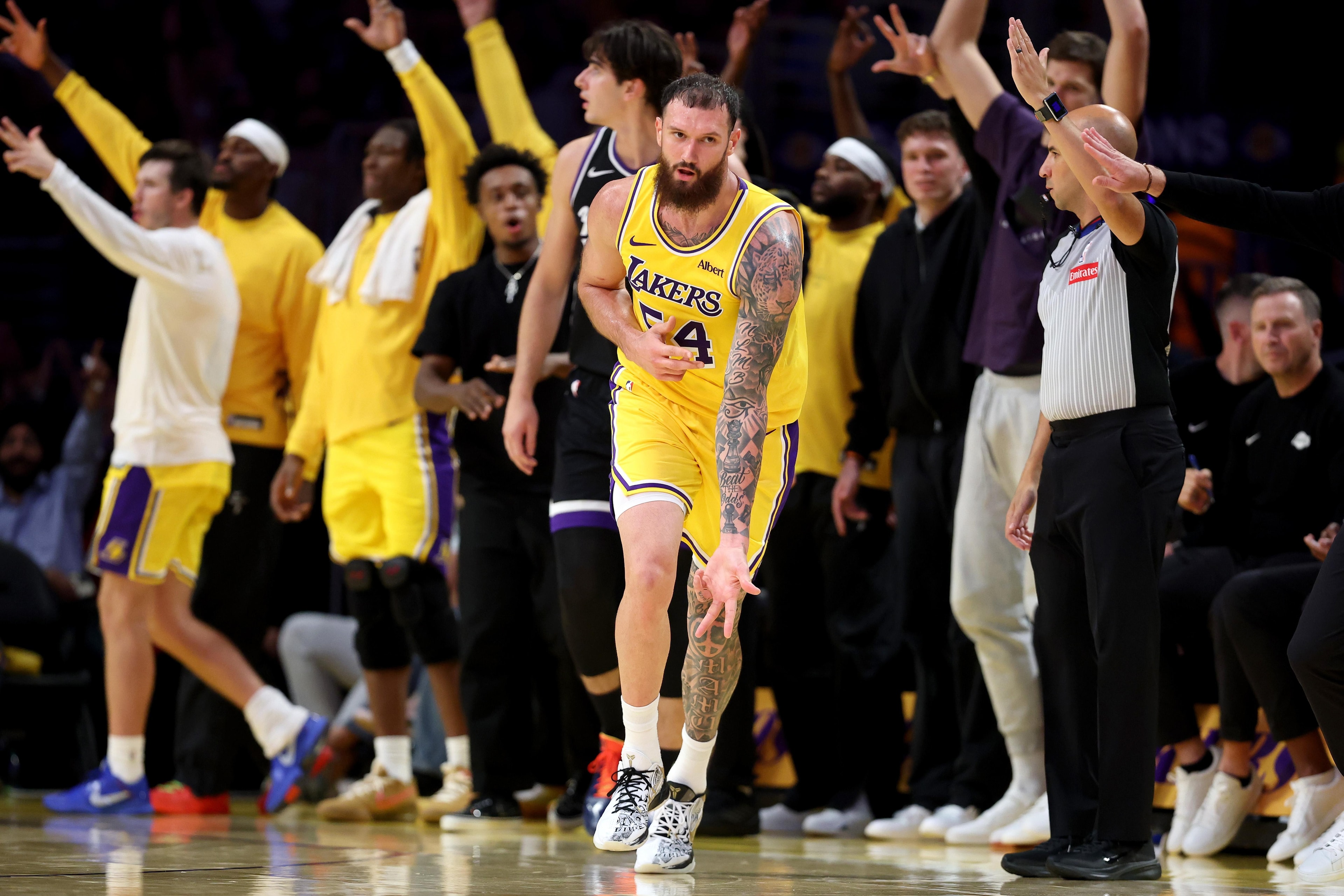
The Lakers’ half-court offense has often depended on players who can connect different actions, turning a screen into a catch-and-score opportunity for themselves or a teammate. In a game sequence highlighted by Yahoo Sports, Sandro Mamukelashvili showed that “connector” role in one possession, popping to the 3-point line after a ballscreen and receiving the ball at the top of the key.
From there, the play described was built around timing and ball control. As Sacramento Kings center Maxime Raynaud raced over to close out, Mamukelashvili kept the dribble alive, moved to his right, then put the ball between his legs before creating space for a step-back 3-pointer attempt.
That kind of action matters because it forces the defense to choose between helping off a man at the perimeter and keeping a big from turning a catch into a shot. The Lakers’ scheme is not only about setting screens and spacing the floor, it is also about what happens immediately after the ball comes off the screen.
Mamukelashvili’s value, as the described sequence suggests, is that he can operate in the gap between traditional big-man roles and wing-like shot creation. A catch at the top of the key after contact traffic gives him both a passing look and the ability to punish over-aggressive rotations, depending on how defenders react.
For the Lakers, that creates roster-level questions that go beyond any single play. When a big can handle, re-dribble, and step back into a shot, it widens the offensive toolkit for the whole lineup, because perimeter defenders can be less comfortable with automatic help patterns.
For the Kings, the implication is straightforward but difficult: if their closeouts arrive too late or their recoveries are too shallow, the opponent’s connector can turn a “stop the penetration” effort into a jump shot. The sequence described by Yahoo Sports illustrates how quickly that can happen when a player is comfortable catching after the screen and scoring on the next beat.
The next thing to watch is whether Mamukelashvili is repeatedly positioned for similar reads, and whether the Lakers keep leaning on him as a secondary option after spacing actions. If the defense continues to treat him as a pass-first player, that leaves him open to the exact kind of step-back creation described in this breakdown.
Why It Matters
- A big who can connect screen-and-catch actions to scoring makes it harder for help defenses to settle into predictable rotations.
- Plays like this can stretch a team’s perimeter coverage, because the defense must respect both the catch location and the step-back release.
- For roster construction, Mamukelashvili’s role influences how the Lakers balance spacing, ball handling, and lineup versatility.
- If the Lakers can repeatedly manufacture these reads, it increases the variety of looks available beyond primary creators.
Sources
Key Facts
- Yahoo Sports highlighted a Lakers possession in which Sandro Mamukelashvili popped to the 3-point line after a ballscreen.
- Mamukelashvili caught the ball at the top of the key as Sacramento’s Maxime Raynaud closed out.
- The sequence included a right-hand dribble, a between-the-legs move, and a step-back 3-pointer attempt.
- The play demonstrated how Mamukelashvili can turn a spacing catch into immediate scoring pressure on the next action.
- Raynaud’s closeout served as the key defensive decision that determined the shot opportunity.