
THE APEX TIMES
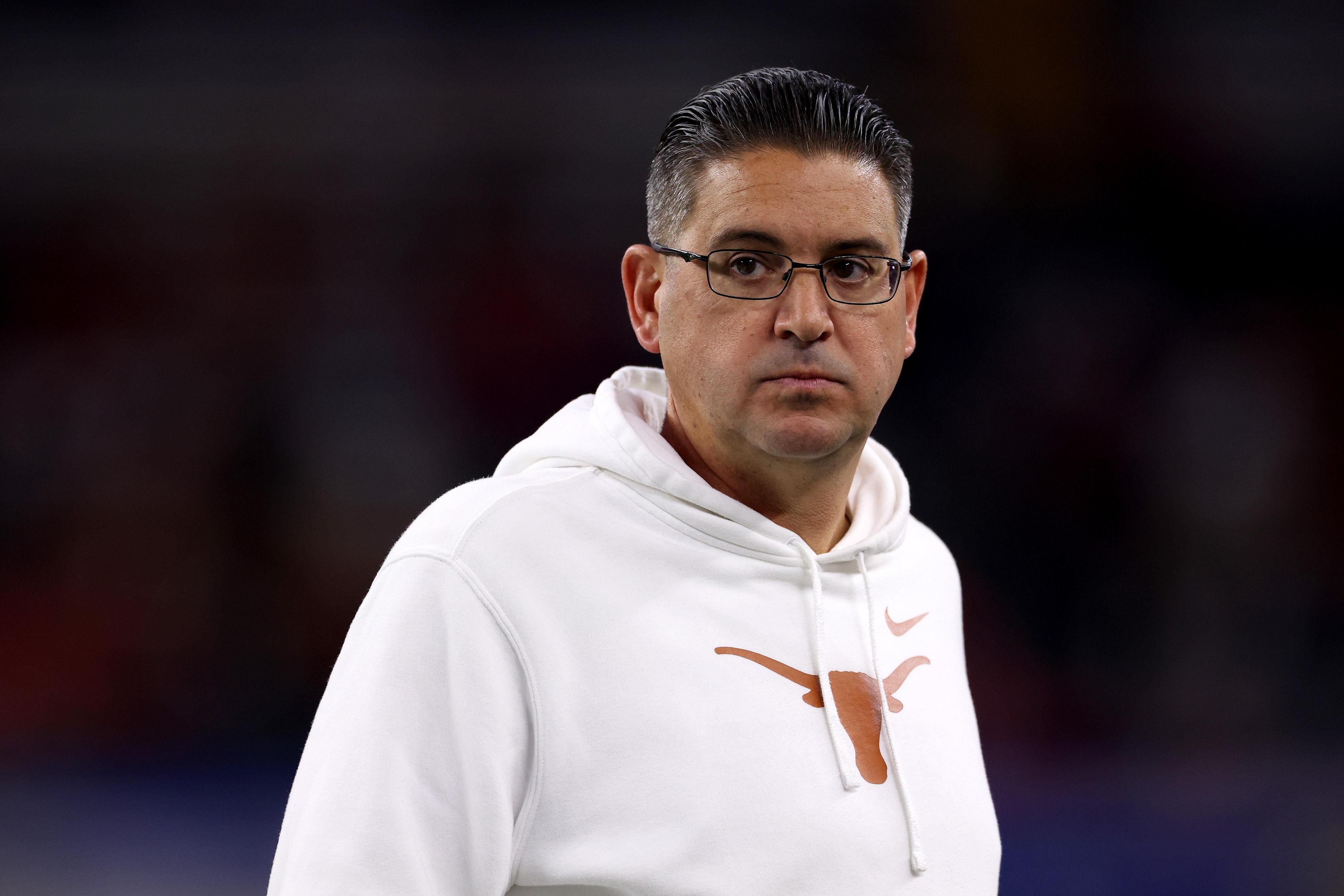
Sarkisian defends Jeff Banks after salary talk puts Texas special teams coordinator in spotlight
Texas head coach Steve Sarkisian pushed back on questions about special teams coordinator Jeff Banks, pointing to the idea that past performance is the best guide for what comes next, amid reporting that Banks is earning $1.2 million in 2026.
Texas coach Steve Sarkisian met questions about his special teams coordinator, Jeff Banks, by stressing continuity rather than novelty. In comments reported by Yahoo Sports, Sarkisian framed the decision process with a straightforward principle: “History is the best indicator of the future,” a line aimed at explaining why Banks remains a central piece of the Longhorns’ football operation.
The backdrop is financial and reputational. According to Yahoo Sports, Banks is making $1.2 million in 2026, a figure described as the highest-paid special teams coordinator in the country last season. The reporting turns a coordinator’s role into a public benchmark, even though special teams work is often evaluated in smaller, more situational ways than offense and defense.
Special teams coordinators sit in a unique part of college football. They are not only responsible for coverage and tackling on kickoffs and punts, but also for the risk-reward decisions that define field position swings. Over a full season, that can mean fewer free possessions for opponents, more pressure on returners, and cleaner execution in the moments that show up in the final margins.
Banks’ job also blends coaching with weekly logistics. Special teams units have to practice communication and timing at high speed, from snap-and-hold fundamentals in the kicking game to the coordinated lanes on coverage teams. That demands consistent preparation, detailed film study, and adjustments for opponent tendencies. Even when the play results do not look dramatic on highlight reels, special teams play can determine whether a team gets the ball at the right time and in the right spot.
Sarkisian’s defense, as reported, was not presented as an argument about one specific matchup or a single phase of the season. Instead, it was about process. The coach’s emphasis on “history” suggests that Texas views Banks’ track record as a report of reliability, which matters in college programs where staff changes can ripple through recruiting priorities, practice culture, and execution standards.
The salary figure adds another dimension to the discussion, because pay is rarely discussed for coordinators whose units can be harder for casual fans to grade. In college football, compensation can reflect both results and institutional trust. That can include how a coordinator handles recruiting relationships with assistants and position coaches, as well as how he builds a system that players can execute under game-day tempo.
For Texas fans and football observers, the most practical question is how the Longhorns will translate that faith into consistent game-to-game outcomes. Special teams is a phase where small errors can compound quickly, but where improvement can also be visible as the season moves forward, particularly in coverage discipline and kicking-game decision-making.
What to watch next is whether Texas’ special teams identity looks like something Banks has already established, or whether the unit’s performance changes in response to personnel shifts and opponent game plans. If the staff’s belief in prior performance is well founded, the unit should keep tightening fundamentals while remaining responsive to game situations. If not, the same salary and visibility that put Banks in the spotlight will make those struggles harder to ignore.
Why It Matters
- Coordinator pay has become a proxy for institutional confidence, and special teams coordinators are now part of a bigger national discussion about value and results.
- Special teams execution can swing field position and game momentum, so continuity in the role can matter as the season’s margins tighten.
- Texas’ ability to maintain an execution standard on kick and punt phases can influence how the team manages risk, time of possession, and opponent opportunities.
- Sarkisian’s comments report that Texas is leaning on established coaching, not treating the special teams role as a short-term experiment.
Key Facts
- Jeff Banks is Texas’ tight ends coach and special teams coordinator, according to reporting referenced by Yahoo Sports.
- Yahoo Sports reported that Banks is earning $1.2 million in 2026.
- Yahoo Sports described the $1.2 million figure as the highest-paid special teams coordinator in the country last season.
- Yahoo Sports reported that Texas head coach Steve Sarkisian defended Banks with the sentiment that “history is the best indicator of the future.”