
THE APEX TIMES
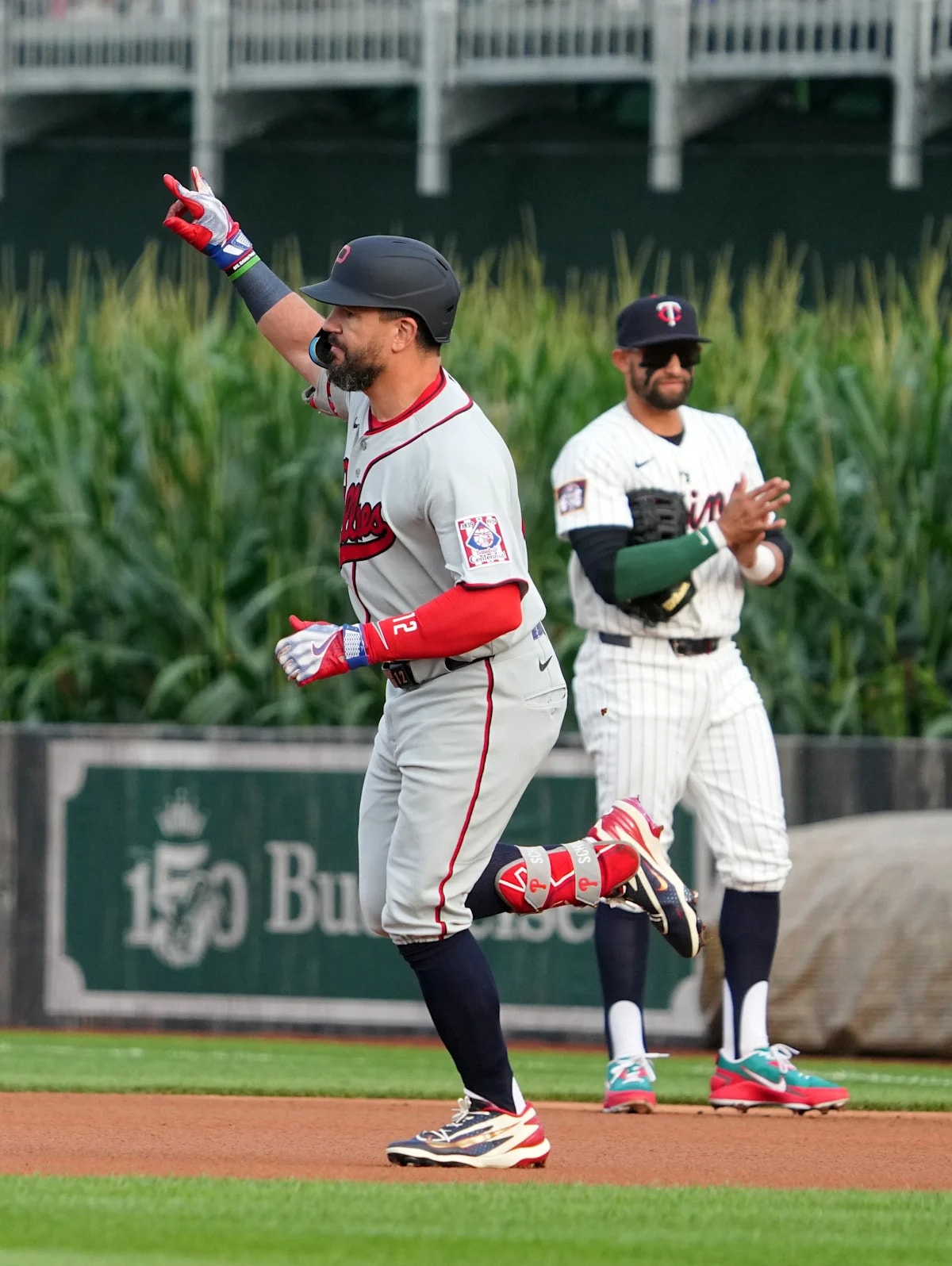
Schwarber’s power writing the next chapter of Iowa’s Field of Dreams, as the night’s edge swung between heroes and hang-ups
In another installment of MLB’s Field of Dreams experience, the conversation centered on who looked most at home in the corn, and on how quickly a single swing can tilt the mood of an entire game.
The Field of Dreams game has always been more than a scorecard. Even in an era when baseball nights can be measured by launch angles and bullpens, the Iowa backdrop has kept its own mythology, one rooted in big moments that feel bigger because they are witnessed in an unfamiliar place. The latest edition brought that same tension to the surface, framing the night as a set of winners and losers in the way such games often become, after the fact, in baseball’s storytelling.
Kyle Schwarber stood out in that narrative. The focus on him was direct: he homered twice, and in a setting where the spectacle invites sentiment, his power play became the kind of headline that looks made for the corn-field stage. When hitters go deep in front of a crowd that knows the movie history as well as the box-score history, it tends to read less like routine production and more like an endorsement of the whole event.
Another storyline tied to the same search for “belonging” was Aaron Nola’s. Yahoo Sports’ winners-and-losers framing described Nola as having “found himself,” an acknowledgment that, for a pitcher, comfort and command can determine whether the night turns into a controlled march or a frantic scramble. In Iowa, where the environment is already part of the script, the difference between steady pitching and visible strain is magnified.
The Field of Dreams trip also leaned hard into baseball’s long-view. Twenty-six Hall of Famers made the trip, according to the same coverage, reinforcing that this is not simply a regular-season road stop. It is a league-sponsored tradition meant to connect generations, and that connection matters because it shapes how the game is remembered, not just how it is played. Hall of Famers in the stands do not change innings, but they do change the texture of the night, the sense that the crowd is watching a brief ceremony as well as an MLB contest.
The event’s emotional benchmark remains rooted in the first Field of Dreams game, which the coverage described as ending with a two-run, walk-off shot by Tim Anderson that disappeared into the right-field corn. That disappearing hit became the symbolic argument for playing baseball in Iowa for years, the kind of image that lingers long after the last out. Even when later games produce different heroes, the memory of that swing creates a standard that other late drama is measured against.
This is where the “winners and losers” format fits best, because the Field of Dreams game is unusually susceptible to narrative momentum. Schwarber’s two-homer showing provided an easy centerpiece, while Nola’s ability to settle gave the night a counterweight that can feel like redemption for a starter when the setting is demanding. Anderson’s legacy moment, meanwhile, continues to function as the emotional measuring stick, even as rosters and circumstances change from year to year.
What to watch next is less about repeating the past and more about whether the league can keep manufacturing the same kind of atmosphere-driven drama. If hitters keep finding the ball in the air, and if pitchers keep finding command before the story shifts against them, the Field of Dreams game will continue to justify its place on the MLB calendar. But baseball also tends to remind people of its unpredictability, and the Iowa magic has always depended on the game being just competitive enough for a single play to feel like the point of the whole evening.
Why It Matters
- The Field of Dreams setting turns standard baseball moments into longer-lasting cultural images, influencing how the sport is marketed and remembered.
- Big offensive outputs and stabilization by a starter can swing a game’s narrative quickly in a venue where the crowd is primed for legacy drama.
- Hall of Famers in attendance reinforce the event’s intergenerational role, which can shape fan expectations for what an “MLB experience” should feel like.
Key Facts
- The Field of Dreams game continues to be framed as a story event in addition to a regular MLB contest.
- Kyle Schwarber homered twice in the game highlighted by the coverage.
- Aaron Nola was described as having “found himself” during the contest.
- The coverage noted that 26 Hall of Famers attended the event in Iowa.
- Tim Anderson’s two-run walk-off shot in the first Field of Dreams game is cited as the enduring sentimental benchmark, disappearing into the right-field corn.