
THE APEX TIMES
Sean Manaea shows velocity uptick in first start back, as Mets fall to Braves
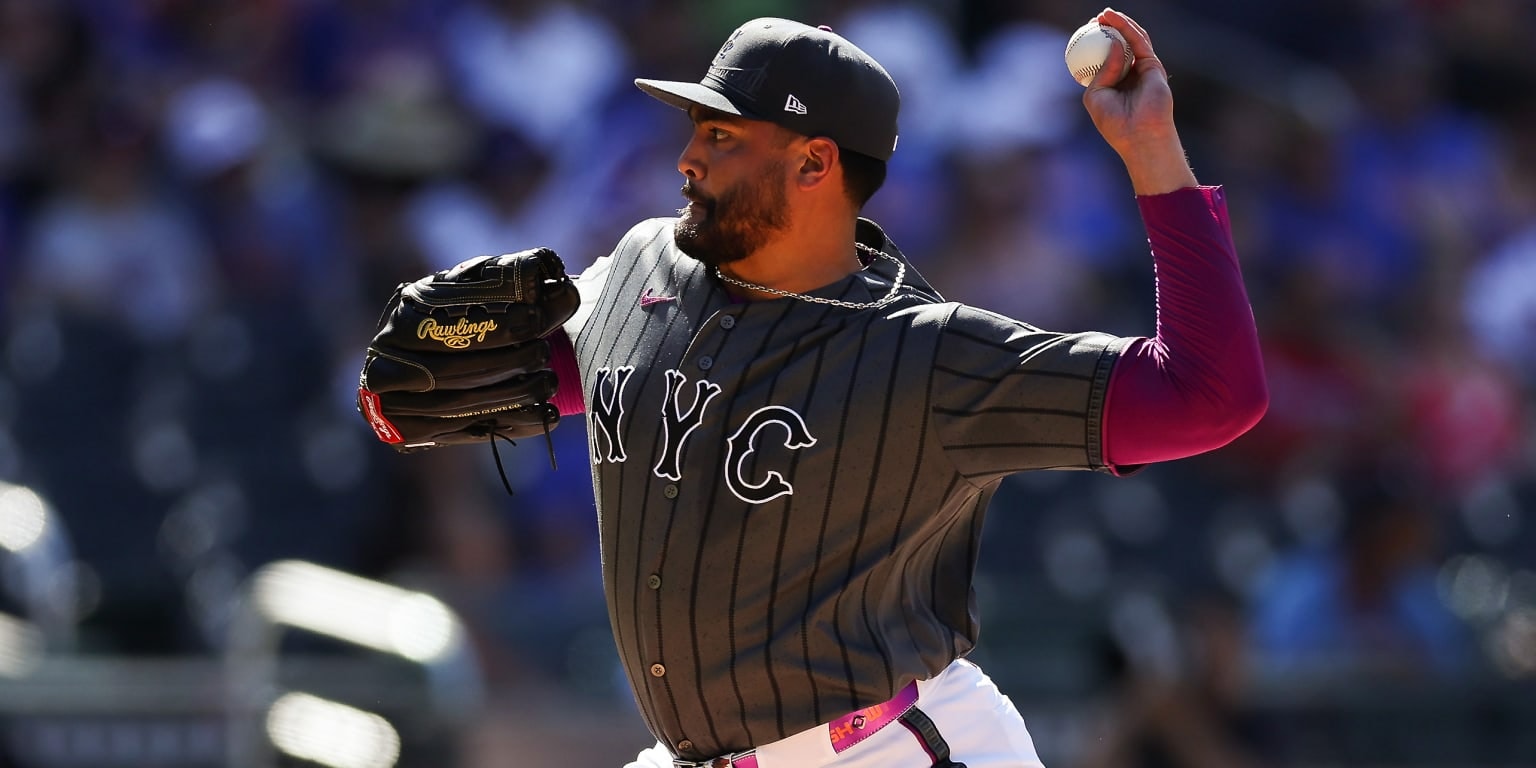
After opening the season with sub-90 mph discomfort, Sean Manaea delivered six strong innings in his first start of the year, indicating a possible correction for a Mets rotation that initially kept him out of the Opening Day group.
Sean Manaea’s first start of the season offered the clearest evidence yet that his early-year velocity problems may have been temporary. In New York against the Braves, Manaea threw six strong innings, a performance that stood in contrast to the season-opening struggles that had him falling below the 90 mph threshold. That dip in speed mattered to the Mets not just as a mechanical concern, but as a decision point for their early rotation plans.
The Mets chose to keep Manaea out of their Opening Day rotation despite what had been a reliable major-league track record and a long-term investment. According to MLB, the organization pointed to his inability to consistently reach 90 mph during the start of the year as the key reason for not including him in the initial rotation group, even with his $75 million contract attached. For a team trying to stabilize the back end of its pitching staff, the front office essentially treated velocity like a gatekeeper statistic, not a detail.
Manaea’s outing against Atlanta therefore functioned as more than a single-game audition. The Mets are operating in a sport where marginal changes to pitch speed can affect the quality of contact and the timing of hitters at every count. When a pitcher has been below a baseline, hitters often adapt quickly, and the margin for error shrinks. A first start back in which velocity rebounds helps reset the equation, both for a pitcher and for the manager planning matchups.
The six innings were also significant because they arrived without the usual “ramp-up” label that teams sometimes use when a pitcher returns after a delayed start. MLB characterized the outing as sharp, underscoring that Manaea’s improvement showed up in-game, not just in bullpen sessions or pregame readings. Even in a loss, the ability to go deep into the game matters for a bullpen that otherwise absorbs late-inning workload and situational stress.
Still, the Mets’ situation is not solved by one performance. The same MLB report that frames Manaea’s recent sharpness also anchors the earlier concern: in the opening phase of the season, he was not cracking 90 mph often enough for the Mets’ comfort. That suggests the organization will likely continue to evaluate consistency, command, and whether the velocity gains can be maintained across starts rather than verified in a single outing.
For Manaea, the next step is to turn this start into a sustained trend. A pitcher coming back from a speed-related issue must show that he can maintain his ability to command offerings as the game progresses and as hitters see him the second and third time through. For the Mets, the decision is whether his updated form can reshape their rotation stability and create clearer paths for other arms behind him, reducing the need to shuffle and protecting the bullpen from early fatigue.
What to watch next is how quickly Manaea’s performance becomes a pattern. If velocity and effectiveness hold, the Mets could have a meaningful boost in late-cycle rotation depth, with additional innings that preserve relief resources. If the speed dips again, this outing will read as an encouraging but unfinished chapter. Either way, Manaea’s start against the Braves gave New York something it had not had at the start of the season: evidence that the earlier velocity concern can be overcome.
Why It Matters
- Velocity is often central to pitching effectiveness, and Manaea’s ability to reach a key speed threshold can affect Mets rotation stability.
- The Mets’ decision to omit him from the Opening Day rotation highlights how quickly the organization reacted to performance indicators.
- Six innings in a regular-season game reduces bullpen strain, which can matter over the course of a long schedule and tight series.
- Manaea’s next start will help determine whether this is a sustained fix or a one-off rebound.
Key Facts
- Sean Manaea threw six innings in his first start of the season in a game against the Braves.
- MLB reported that Manaea struggled early in the season to crack 90 mph.
- Because of that early velocity issue, the Mets initially did not include Manaea in their Opening Day rotation.
- Despite being left out of the Opening Day rotation, Manaea has a $75 million contract.
- Manaea’s first start was described by MLB as sharp, with an emphasis on improved velocity.