
THE APEX TIMES
Service academy football would face a steep climb to a college football national title, but the question is now unavoidable
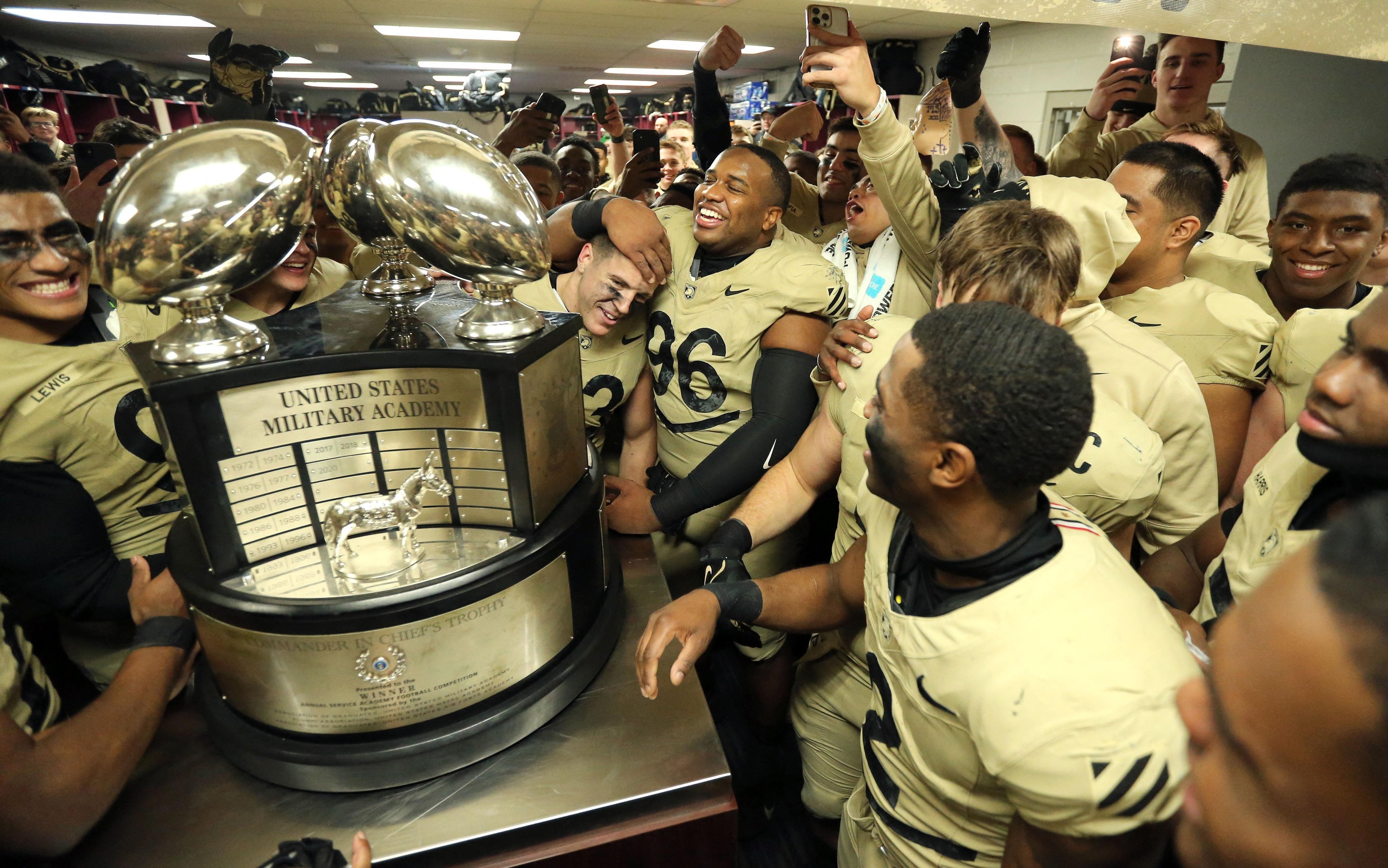
A fresh debate about which service academy, if any, could win a national championship underscores how college football’s modern rules, recruiting ecosystem, and competitive depth have changed the definition of roster-building.
College football national championships increasingly look like exercises in talent consolidation, elite depth at multiple positions, and a recruiting pipeline that can withstand attrition. Against that background, a new discussion has centered on an unconventional premise: if the U.S. Department of Defense were to fully back a service academy football program with today’s resources and incentives, which academy would actually be the most likely to reach the sport’s highest level?
The idea is less about any single year of recruiting and more about structural fit. Service academies operate within unique constraints, from admissions standards and military commitments to program philosophies that differ from traditional power programs. Even when a program is recruiting talent that can compete on the field, sustaining the kind of roster depth required for an entire season and a postseason run tends to be where the gap appears.
In the modern era, the debate also runs through NIL, transfer volatility, and the calendar pressure of recruiting cycles. National championship teams typically benefit from an ecosystem where players can be evaluated and retained efficiently, and where coaches can quickly retool when injuries or unexpected departures occur. A service academy, by design, is not simply “another school that hires great coaches.” It is an institution with a mission that shapes what football can and cannot be.
Different academies would present different theoretical paths. A program’s recruiting geography, its historical ability to develop players into starters, and its typical approach to coordinating talent with disciplined culture all matter. On paper, the academy that can most reliably convert available prospects into high-level starters, while also staying competitive in the transfer-in era, would have the best claim to “getting it done.” But that hinges on how fully those institutional constraints could be overcome, and the question itself assumes an outside level of support that does not exist under normal conditions.
Even if money and resources were not the limiting factor, the “national championship profile” is broader than talent. It includes offensive and defensive line depth to survive attrition, special teams competence that avoids the low-probability mistakes that decide close games, and coaching stability through the season’s most difficult stretches. In the same way, it includes the ability to recruit and retain players who can thrive in the academic and service environment while still producing at a top-division football pace.
The most telling part of the conversation is that it forces fans to consider what can be replicated and what cannot. College football success is often treated like a product of recruiting rankings and staffing, but service academies would still need to match the sport’s modern rhythm: managing roster churn, competing for instant-impact talent, and maintaining performance week after week against the sport’s best coaching and scheming.
What to watch next is not simply which academy “could” win under hypothetical conditions. It is whether the sport’s governance and incentives continue to narrow the competitive path for institutions with mission-first structures, or whether rules and support systems evolve in a way that allows more program archetypes to compete for the title. For now, the debate is a measure of how far college football has traveled from an era where institutional branding could substitute for depth and redundancy. It is also a reminder that a national title is not a recruiting event, it is an endurance test.
Why It Matters
- The question tests whether college football’s competitive advantages are transferable across institutional models, not just coaching styles.
- It puts the spotlight on roster depth and retention, which increasingly decide playoff and national championship outcomes.
- It underscores how NIL and the transfer portal have reshaped what “elite” football program building looks like in 2026.
Key Facts
- The discussion frames service academy football as a hypothetical national championship contender under an extreme level of external support.
- The central question is which academy would be best positioned to overcome modern roster-building challenges in college football.
- The debate highlights the gap between service academy constraints and the sport’s contemporary recruiting, NIL, and transfer dynamics.