
THE APEX TIMES
Shauna Green addresses non-compete clause as she emphasizes her long-term commitment to Illinois
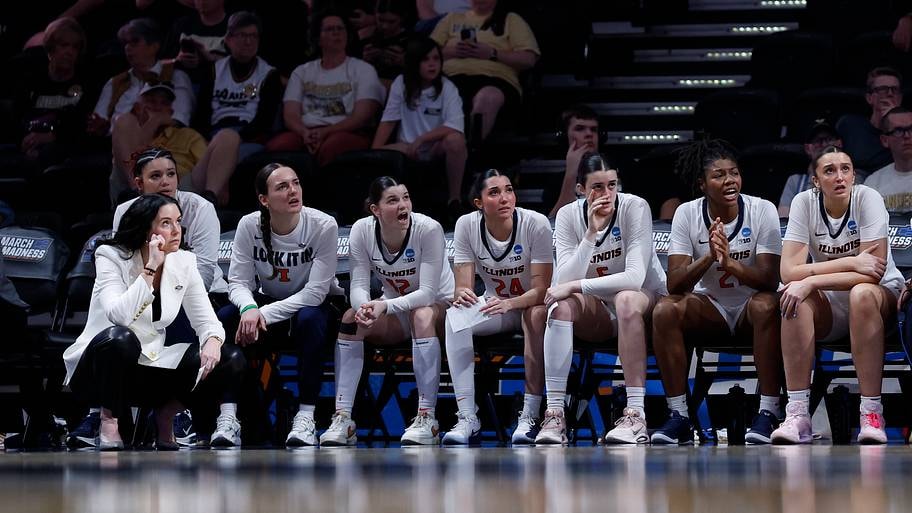
In a discussion tied to her recent contract extension, Illinois women’s basketball coach Shauna Green leaned into what a non-compete clause means and why she sees Champaign as the place to keep building.
Shauna Green’s message to Illinois women’s basketball supporters and the broader coaching carousel is straightforward: she intends to stay and keep building in Champaign. In a recent interview published through Yahoo Sports, Green offered an explanation of the non-compete clause that is part of her contract situation, framing it as a practical reflection of her commitment to the program and her belief in the direction the team is headed.
The non-compete clause matters in college basketball because coaching moves can ripple quickly through recruiting, transfers, and staff stability. Unlike many routine contract terms, these clauses are designed to limit where a coach can go and when, if they depart. For fans, that means it is not just legal fine print. It can become a report about how the university views its long-term investment in its head coach, and how the coach views her responsibility to the program and its players.
Green’s comments arrive after Illinois extended her contract, according to Yahoo Sports. The broader theme, as presented in the report, is that she is treating the extension as more than job security. She described it as evidence of a plan that extends beyond short-term results, including the recruiting pipeline and the culture she is trying to establish.
Context is important when evaluating that kind of language. Program building in the Big Ten is often discussed in terms of player development and schematic identity, but it also depends on consistency. When a coach is firmly in place, assistants can be retained or aligned around shared recruiting goals. Returning players can plan around the same development staff and system. New recruits, especially those who weigh certainty heavily, also tend to value continuity in their decision-making.
Illinois is in a conference where attention is constant and the market for coaching talent is always active. A contract extension that includes a non-compete clause can function as a deterrent against outside approaches, but Green’s framing in the report emphasizes the human side of the decision. In other words, the clause is portrayed as a boundary that reflects what she is already indicating publicly: this is where she expects to compete and improve.
Still, readers should be careful not to overinterpret what a clause “proves” without the contract’s specific terms being publicly available in the report itself. The Yahoo Sports piece focuses on Green’s interpretation and the idea of staying power, but it does not provide the kind of detailed legal language that would allow outsiders to map the clause to a calendar or to evaluate every possible scenario. Any assessment of how restrictive the clause is in practice would require the precise contract language or official documentation.
For Illinois, the operational takeaway is clearer than the legal one. The program is essentially reiterating that its head coach is part of the long-range plan, and the time horizon that comes with that matters for roster continuity. As the season cycle progresses, the proof will show up in recruiting momentum, staff stability, and on-court cohesion.
The next thing to watch is how Green and Illinois translate the message of commitment into concrete offseason and seasonal outcomes. That includes whether the program’s recruiting class fits the style and needs Green has emphasized, and whether the team’s identity tightens as expectations rise. If Illinois can connect stability with improvement, the non-compete discussion will read less like legal commentary and more like a statement of intent.
Why It Matters
- Non-compete clauses are uncommon as day-to-day talking points, but they can influence perceptions of coaching stability in a conference where searches can be rapid.
- Green’s interpretation of the clause indicates how Illinois is positioning its long-term plan around her leadership.
- Stability at head coach level can affect recruiting decisions, transfer conversations, and the ability to maintain continuity in program culture.
- How Illinois converts that stability into development and on-court consistency will shape the program’s trajectory through the Big Ten.
Key Facts
- Yahoo Sports reported that Shauna Green, head coach of the Illinois women’s basketball program, discussed a non-compete clause in connection with her contract extension.
- The report frames Green’s comments as part of her message that she intends to remain in Champaign.
- The article ties Green’s public stance to the idea that her extension reflects long-term commitment rather than a temporary arrangement.