
THE APEX TIMES
Shesterkin’s Lower-Body Scare Clouds Rangers’ Outlook After 3-1 Loss to Capitals
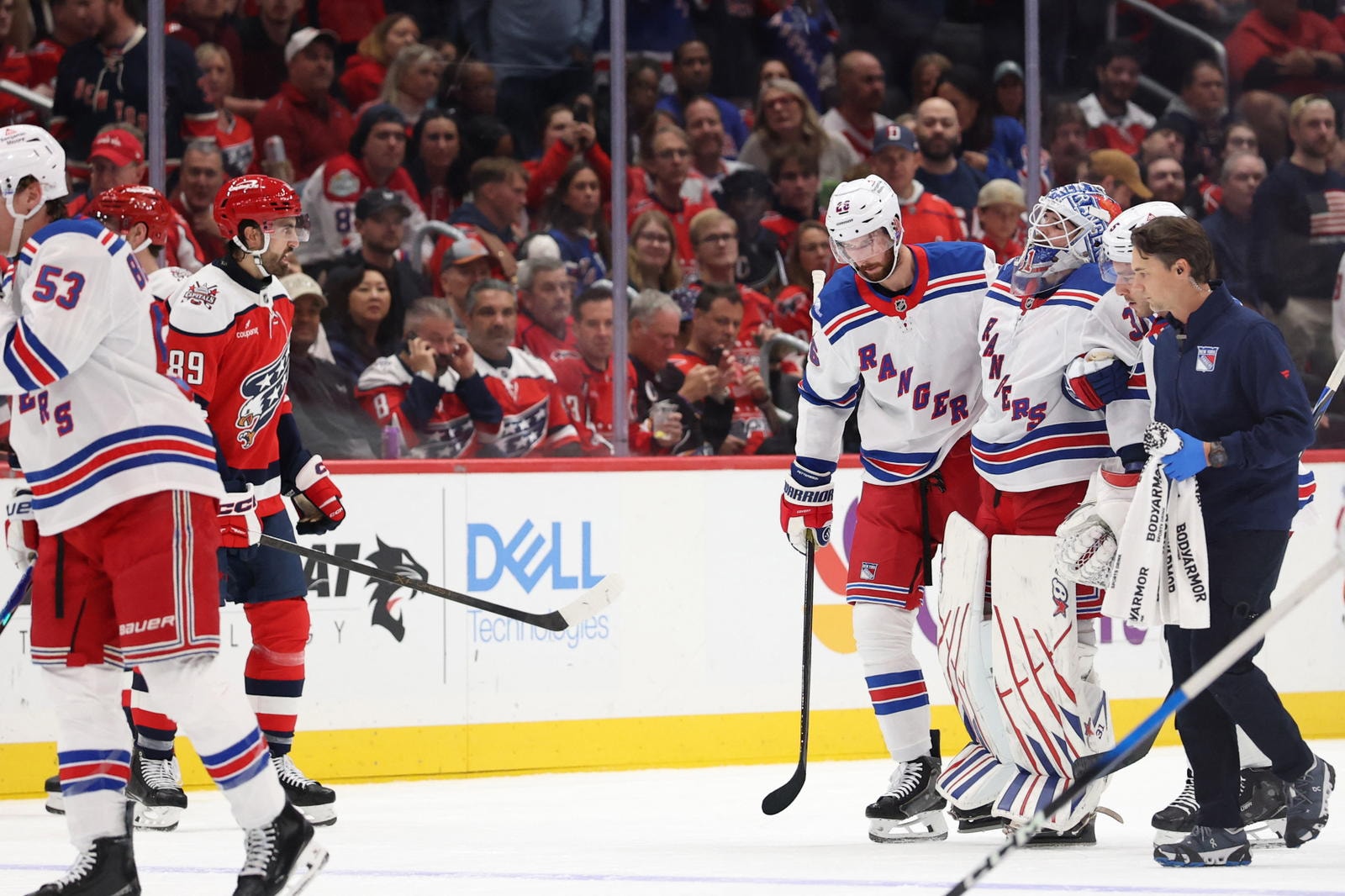
Igor Shesterkin left the ice with a concerning lower-body injury Friday night, turning New York’s 3-1 defeat into a larger worry about its most important position.
The New York Rangers’ 3-1 loss to the Washington Capitals on Friday night came with an unwelcome main storyline: Igor Shesterkin suffered a lower-body injury that was described as “concerning,” overshadowing the result itself. The defeat matters, but in a league where goaltending can decide series and swing momentum, the bigger question now is whether New York’s starting pillar can stay available.
Shesterkin is the type of goalie teams build entire game plans around. His impact is not limited to making saves, it shows up in how a team defends in front of him, how it manages risk in transition, and how quickly it can recover after giving up chances. When a goalie is forced to leave a game unexpectedly, the immediate concern is medical, but the longer concern is continuity, since the position relies on timing, legs, and rhythm.
Against Washington, the Rangers’ evening already tilted toward difficult territory, and the 3-1 final gave New York little margin for error. Yet the injury element changes how the loss will be evaluated internally. Even a relatively ordinary performance from a team can become far more important if it is paired with uncertainty in the crease, because the next games often require the backup plan to function at a different level than most organizations want to ask for early.
The report characterized Shesterkin’s condition as a “scary lower-body injury,” which indicates that the team and staff will treat it as potentially serious until more information is known. Lower-body injuries for goaltenders can affect mobility, push-off strength, and the ability to drop quickly into the butterfly, all of which are core to consistent positioning and save selection. Without confirming specifics or timelines, the immediate focus is simply whether he can progress normally.
If Shesterkin misses time, the Rangers would need someone to stabilize the net in his absence. That means more than replacing one person for one game. In practice, a backup workload can reshape a team’s defensive assignments, pressure triggers, and even how it chooses to play from behind. Rangers players are trained to respond to what the starter provides, including his ability to control rebounds and handle traffic, and that adjustment can take time.
The Capitals, for their part, will take whatever the situation gives them. Washington’s structure and shot volume do not depend on a single circumstance, but an injury to a top goaltender can shift how opponents feel about attacking the middle of the ice and forcing second efforts. For New York, the danger is that the injury becomes a mental drag that carries into the next start, especially if the backup has to face a heavy early workload.
What to watch next is straightforward. New York will need updates on Shesterkin’s status and the organization’s plan for the immediate rotation in net. Equally important is how the Rangers respond defensively in the next game or two, because the team’s ability to protect high-danger areas often determines whether a goaltending adjustment is sustainable. Until the injury picture becomes clearer, the Rangers’ short-term schedule will feel less like a checklist and more like a test of resilience.
Why It Matters
- In hockey, a goaltender injury can quickly change a team’s defensive posture and risk tolerance.
- Even short absences can disrupt a starter-backup rhythm that affects rebound control and coverage in traffic.
- A top goalie’s availability often influences opponents’ shot selection and confidence in creating high-quality chances.
Sources
Key Facts
- The New York Rangers lost 3-1 to the Washington Capitals on Friday night.
- Igor Shesterkin suffered a lower-body injury during the game.
- The injury was described as “concerning,” becoming the dominant storyline over the final score.
- Shesterkin’s status is now the central question for New York’s immediate outlook.