
THE APEX TIMES
SMU coach Rhett Lashlee challenges the preseason habit of ranking teams before kickoff
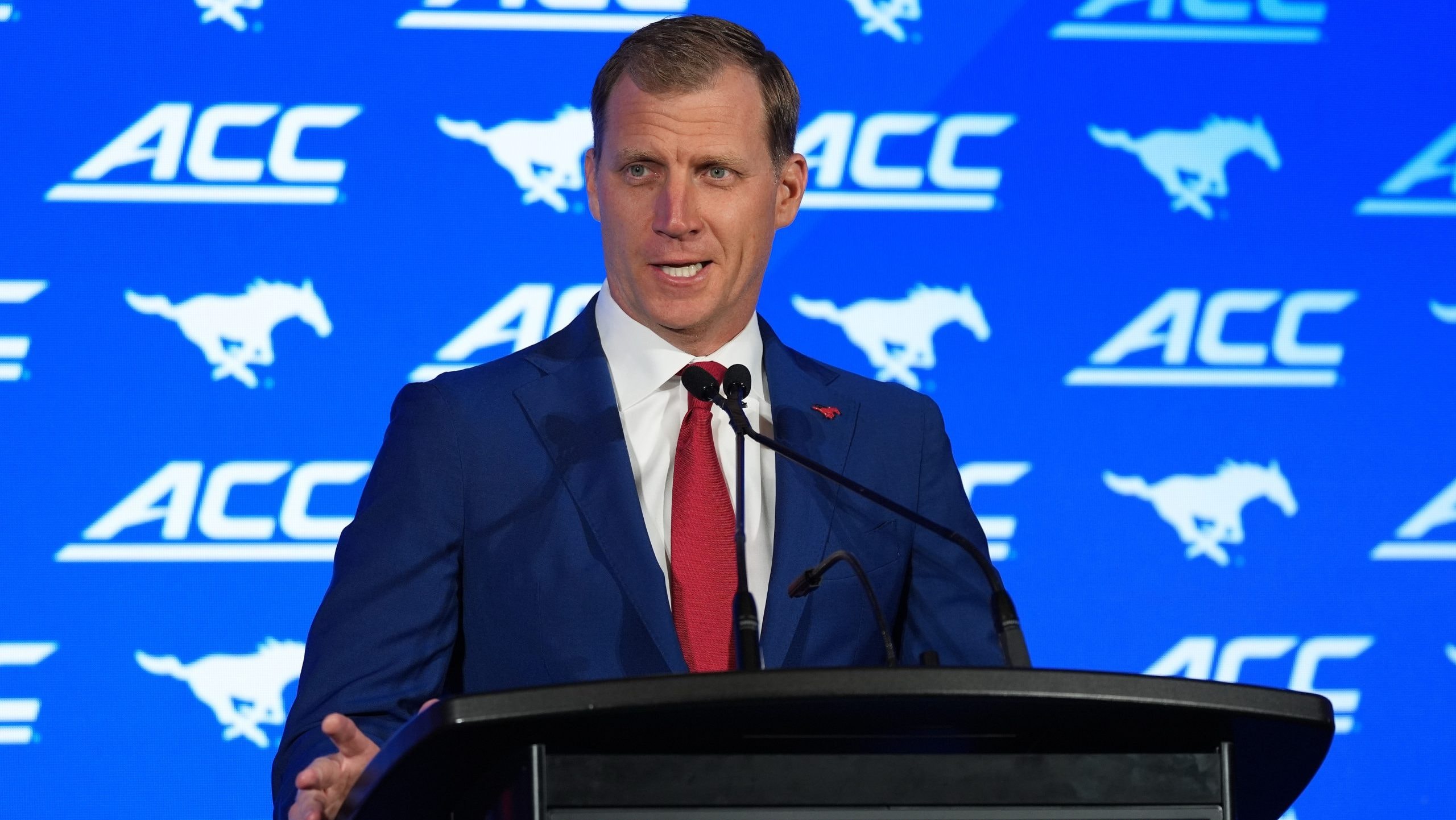
In a dig at the way preseason FPI and strength-of-schedule rankings are built before games are played, SMU coach Rhett Lashlee argued that these models and lists can miss how unpredictable a season is, especially when teams are still forming week to week.
SMU coach Rhett Lashlee used a preseason moment to criticize a college football routine that has become familiar to fans: the preseason stacking of teams using metrics such as ESPN’s Football Power Index (FPI) and published strength-of-schedule (SOS) rankings. Lashlee’s argument, as reported, was not against analysis itself, but against the timing and certainty that preseason rankings project before a snap has been taken.
The thrust of Lashlee’s comments, reported by Saturday Down South, was straightforward. He suggested that assigning meaning to preseason rankings before games are played can create a false sense of accuracy, especially in a sport shaped by late roster changes, game-to-game matchup swings, and how quickly coaching staffs identify what is working. In his view, preseason models can be treated as facts when they are still educated estimates.
For SMU, the message lands in a program-building phase where attention naturally turns to external projections. Mustangs fans and evaluators have to balance curiosity about where the team stands nationally with the reality that preseason tools rarely account for everything that will decide fall outcomes, from early injuries and depth chart evolution to the way a team adapts once it sees real opponents. Lashlee’s critique essentially frames the season as the only true setting for these rankings to be tested.
College football has leaned heavily into projection culture over the past decade, in large part because it creates a shared language. FPI-type systems aim to translate recruiting and returning production, historical trends, and schedule inputs into a forecast. Strength-of-schedule lists add another layer by grading opponents before outcomes are known. But the validity of those inputs depends on what happens after the preseason calendar flips to game weeks, when teams can shift styles, correct weaknesses, and benefit from the specific matchups their opponents present.
What makes Lashlee’s comments notable is how directly they challenge the authority preseason metrics are often given. Instead of arguing that a particular team is overrated or underrated, the coach’s target, as described, is the framework itself. That puts the conversation in front of the sport’s biggest preseason ecosystem question: how much should coaches, players, and fans trust rankings that are inevitably based on imperfect information?
The most immediate watch point is how SMU handles that backdrop during camp and early season preparation. When coaches publicly question external rankings, it often functions as a message of internal standards, a way to keep attention on controllables rather than national estimates. It also suggests SMU will want to establish its own identity quickly, because preseason arguments, positive or negative, can become distractions if results do not follow early.
In the broader picture, Lashlee’s stance is likely to resonate with coaches and programs who feel the preseason machine assigns identities that are difficult to shake. If early results do not match the preseason narrative, preseason rankings can look overstated. If early results do match, they can appear prescient. Either way, the season will supply the data these models were built to predict.
Why It Matters
- Preseason FPI and SOS rankings influence how national narratives form before any on-field proof is available.
- Public pushback from a head coach can reinforce internal priorities and reduce distractions from external expectations.
- The reliability of preseason projections is always tested by early-season matchups and roster development, shaping how quickly a team can respond to its label.
Sources
Key Facts
- SMU head coach Rhett Lashlee criticized the use of preseason Football Power Index (FPI) and strength-of-schedule rankings before games are played.
- Saturday Down South reported Lashlee’s comments as part of a preseason discussion about how rankings are assigned in college football.
- Lashlee’s central issue, as characterized in the report, was timing and the certainty implied by preseason metrics.