
THE APEX TIMES
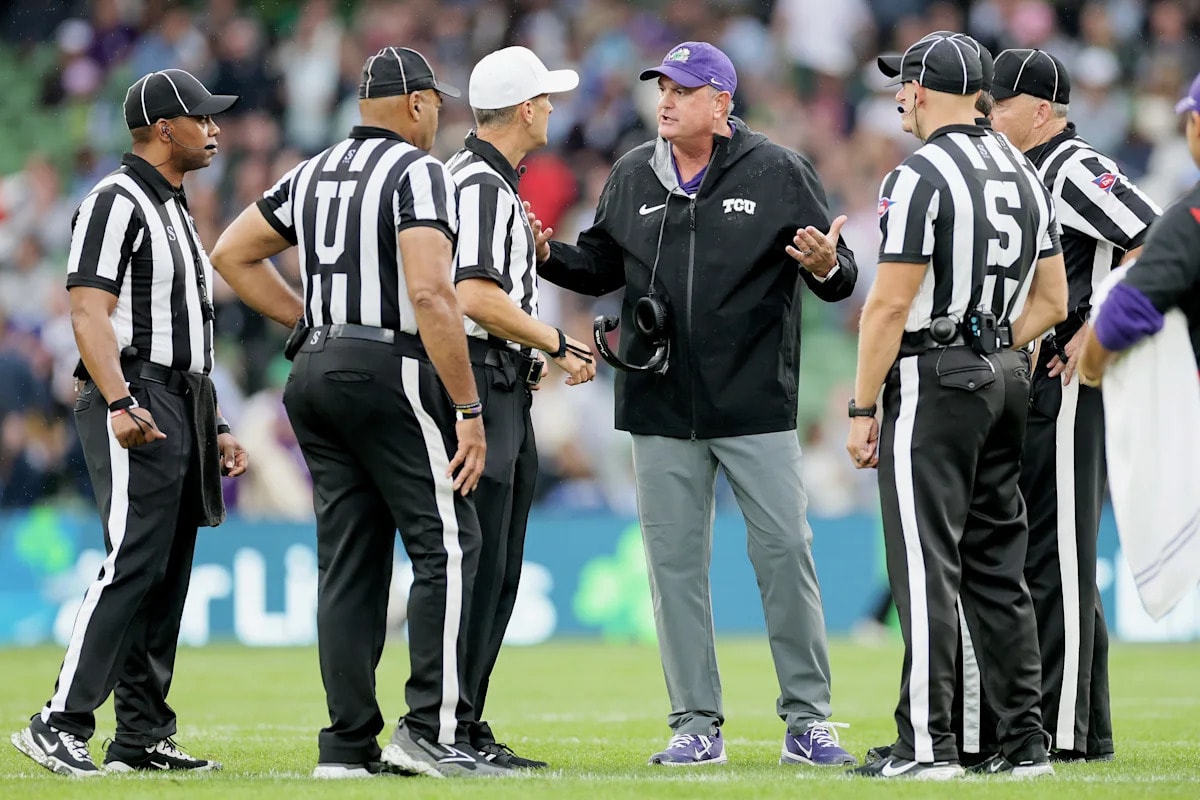
Sonny Dykes criticizes ACC officials after TCU’s rough start vs. North Carolina
TCU coach Sonny Dykes said ACC officiating was a factor in what he described as a disastrous season-opening performance against North Carolina, drawing attention to how nonconference matchups can quickly turn into credibility tests for officials and coaching staffs.
TCU head coach Sonny Dykes took aim at ACC officials after what he characterized as a disastrous opening performance against North Carolina to begin the 2026 season. In the wake of the loss, Dykes publicly pointed to officiating as a major issue, using his postgame comments to frame the game’s early direction and momentum.
For Dykes and the Horned Frogs, the frustration is not just about the final outcome. In a season opener, officials’ decisions can carry unusual weight because they set the tone for how aggressively both sides can play in the first quarter and whether mistakes compound quickly. Dykes’ criticism effectively put the officiating on the same plane as execution, suggesting he believed the game could have unfolded differently under more favorable circumstances.
The matchup also carries an inherent storyline for both programs. North Carolina is an ACC member, while TCU is from the Big 12, making this a high-visibility nonconference meeting with different stylistic tendencies and different officiating expectations across conferences. When coaches from the visiting side complain about conference officials, it tends to resonate beyond the single game because it challenges the perceived consistency of enforcement across leagues.
Dykes’ comments land at a moment when TCU is trying to establish stability and identity. A season opener is often treated as a measuring stick for a new organizational emphasis, whether that is discipline, game management, or attention to detail on the sideline. By calling out officiating, Dykes is also indicating that he wants his staff and players to be judged fairly in the moments that swing play-calling decisions and in-game tempo.
ACC officials, for their part, were the specific target of Dykes’ remarks, according to the report. That means the conversation may extend beyond coach-to-coach rhetoric and into the broader culture of how conferences handle public criticism. Unless the league provides a clarification or review, the debate is likely to remain centered on what Dykes saw in real time and how fans and observers interpret the same set of calls.
What to watch next is whether TCU focuses its internal fixes on controllables that can reduce exposure when officiating is contested. Even when a coach believes calls went against his team, improving readiness for key situations, reducing penalties, and sharpening short-yardage execution often determine whether the next performance looks like a one-off or a pattern.
For North Carolina, the immediate challenge will be turning a contested opener into a clean operational week. Opponents will watch for how the Tar Heels respond to public coaching criticism, particularly in terms of discipline and composure when the game becomes physical or emotional. The season will likely move on quickly, but the officiating controversy can still linger as a reference point for how both teams judge key moments in later conference games.
Why It Matters
- Public officiating criticism can intensify scrutiny on future nonconference contests, especially between conferences with different styles.
- Season openers shape a team’s early confidence and game-management habits, so coach-to-officiating friction can influence how quickly adjustments are made.
- If the controversy is widely discussed, it may affect how fans and analysts interpret later close calls involving either team.
- For TCU, the next game becomes a referendum on whether the team’s problems were systemic or limited to execution under difficult circumstances.
Sources
Key Facts
- TCU head coach Sonny Dykes criticized ACC officials after TCU’s season-opening loss to North Carolina.
- The criticism was made in reaction to what Dykes described as a disastrous showing by TCU in the opening game of the 2026 season.
- North Carolina is an ACC program, while TCU is not, making the officiating storyline notable in a nonconference matchup.
- The report frames the coach’s comments as a pointed reaction to the flow of the game, not only the result.