
THE APEX TIMES
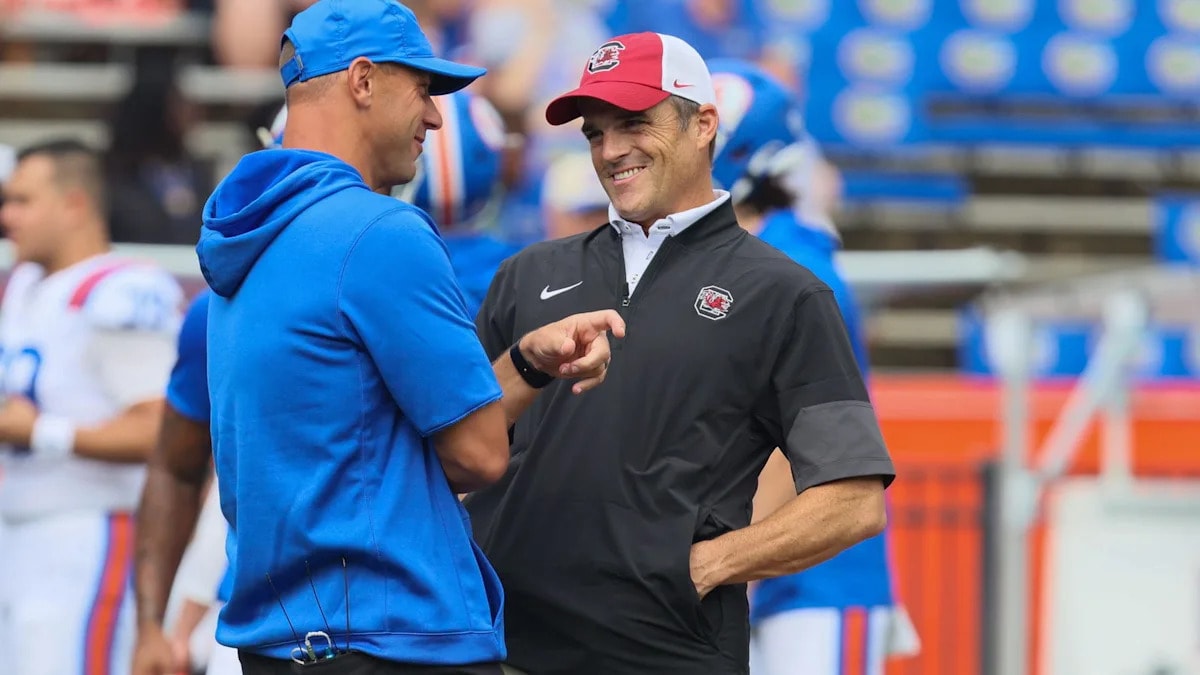
South Carolina’s Coach Shane Beamer and the Message Florida Can’t Ignore
After a demoralizing home loss, South Carolina’s postgame themes point to a team that wants to dictate emotion and physicality, a contrast that can unsettle Florida’s week-to-week rhythm.
South Carolina’s postgame approach, as described in commentary tied to Florida, offered a pointed lesson for the Gators in how momentum can be manufactured after a difficult result. The premise, according to the report, is that Shane Beamer’s mindset and the way the Gamecocks talked after the loss are the sort of “bold plan” that can land with real force, even when the game itself leaves one side reeling.
At the center of the story is the idea that The Swamp is not supposed to be a place where visitors absorb a blow and then leave with a clear emotional script. Yet the report frames South Carolina’s plan to “silence” Florida in a way that implies more than game-week talk. It suggests a team building an identity around grit, preparation, and execution under stress, with the confidence to press its message even after setbacks.
The concern in the column is not simply about one performance. It is about what the Gamecocks’ comments might reveal, if Florida responded the way the report implies. If a visiting coach can publicly define the psychological battle, and if the home team appears short on the toughness required to withstand that framing, the emotional momentum can become a problem that follows a roster for weeks.
The timing also matters for South Carolina’s staff and broader program direction. The report links the Gamecocks’ current posture to Jon Sumrall’s once-promising debut season trajectory, presenting the season as something at risk of derailing. In college football, debut seasons are often judged as far as they can stretch a rebuild or a trend, and a late-season wobble can change both internal confidence and external expectations around a coaching transition.
For Florida, the practical question is how quickly a team can turn away from the noise of a rival’s narrative and back toward its own. Postgame commentary is not a box score, but it can become a recurring talking point inside a program, shaping how practices are framed and how players interpret the next matchup. If Florida is inclined to overlearn from one week rather than correct fundamentals, it risks repeating the same breakdown in a new form.
Beamer’s reputation has long been tied to insisting that players stay “together” in adversity, and the report’s focus on whether Gators players should be bothered reflects that tradition. The underlying message, as framed here, is that toughness is not only what happens on the field, it is also what shows up when the lights are bright and the narrative turns hostile.
What to watch next is less about dramatic claims and more about behavior. Florida’s next responses to a rival’s emotional framing, South Carolina’s ability to keep turning intention into repeatable execution, and whether South Carolina’s staff can maintain the confidence that the report portrays as at issue will all be key indicators as the season moves forward. If Florida regains control of its own week-to-week identity, the sting of this loss will fade quickly. If it does not, the rival’s message can keep echoing.
With the current evidence limited to the commentary described in the report, readers should treat the story as perspective on themes and team-building rather than a verified account of specific events beyond those general circumstances. The clearest takeaway is that coaching narratives and postgame messaging can influence how teams experience a loss, and whether that loss becomes a turning point or a slow-motion derailment.
Why It Matters
- In rivalry games, postgame narratives can become internal motivational tools, and they can also expose perceived weaknesses at the program level.
- A team’s response to a rival’s emotional framing can affect the next week’s preparation intensity and player confidence.
- Coaching transitions are judged on continuity as much as results, and the report suggests momentum is a key issue for South Carolina.
- Florida’s ability to reset after a home loss will influence how quickly it can stabilize the season picture.
- South Carolina’s insistence on dictating the psychological battle can change how often opponents play from behind emotionally.
Sources
Key Facts
- The report discusses a demoralizing home loss involving Florida and South Carolina.
- The commentary centers on Shane Beamer’s postgame remarks and how they could affect Florida players.
- The report characterizes South Carolina’s plan around “silencing” Florida as bold and psychologically pointed.
- The story frames Jon Sumrall’s debut season for South Carolina as once-promising but at risk of derailment.
- The analysis focuses on grit and emotional resilience rather than specific transactions or injuries.