
THE APEX TIMES
Spadaro: Britain Covey keeps embracing the hits on punt returns
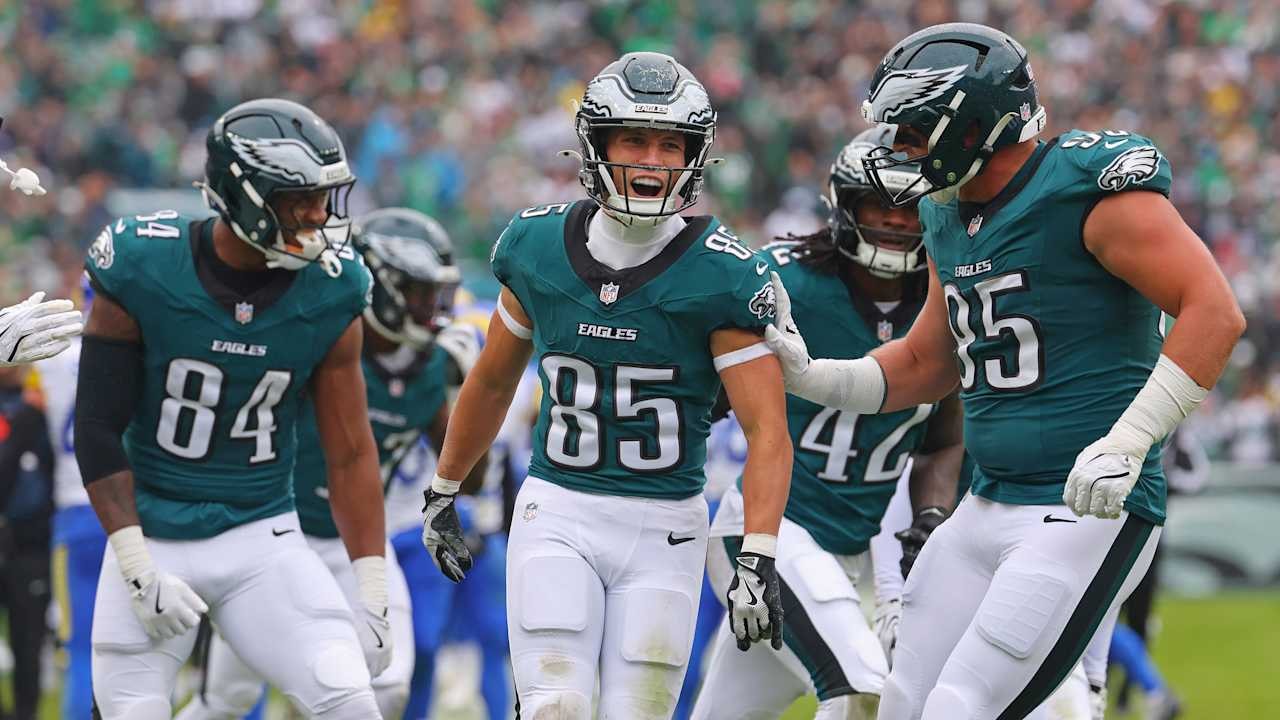
Philadelphia special teams leader Britain Covey has built a reputation for physical, high-engagement punt returns, a style his headliner on-air has highlighted again this week.
Philadelphia Eagles special teams has never treated its return game as a passive unit, and Britain Covey’s approach is a big reason why. In a recent Eagles feature, Eagles analyst and producer Chris Spadaro pointed to Covey’s recurring tendency to attack space on punts even when contact is coming, noting that fans seem to sense a sequence unfolding the moment he fields a kick or punt.
Spadaro’s point is less about one highlight and more about a pattern. He described how Covey has “talked this talk before” because the finish of many returns tends to include something physical and immediate, including big collisions and the emotional reaction that follows. The emphasis is on engagement, not simply return yardage, and on how Covey’s willingness to meet the moment creates a visible swing in the game’s tempo.
The return man’s job is inherently high-variance, and punt returns add another layer: there is less time to process blocks, the window for decisions is narrower, and the margins for mistakes are smaller. Covey’s style, as framed by Spadaro, leans into that reality by staying aggressive through the contact zone rather than trying to slide through it. That choice can be risky, but it also can turn a routine return into a momentum play, especially when the crowd senses the outcome before the whistle.
In the feature, Spadaro also referenced the tone around the return itself. He characterized the end of Covey’s returns as often involving chatter and celebration, suggesting that the return is not only a football action but also a psychological one. When a returner is consistently willing to play through contact and show emotion after a productive return, opponents can feel the pressure not just of yardage, but of intensity.
Covey’s role matters for Philadelphia because special teams possessions can determine field position and game flow, particularly in close, grind-it-out matchups. A returner who can change the feel of a possession forces the coverage team to adjust how it builds angles and how it anticipates contact. Even when a return does not become a long score, the threat of an explosive, physical return can influence how opponents set up their coverage lanes.
What to watch next is whether Covey’s contact-forward identity remains consistent as opponents adapt. Return teams typically scout habits quickly, and coverage schemes often evolve to reduce open space before the returner reaches the deepest lane. If Covey continues to deliver the combination of aggression, physical finishing, and visible celebration after productive returns, it will reinforce why Philadelphia keeps leaning into a return game that plays with the crowd rather than around it.
Why It Matters
- A returner’s willingness to play through contact can shift special teams momentum and change how opponents scheme around punt coverage.
- Visible, high-intensity returns can raise the game tempo and add emotional pressure in late-game possession swings.
- Consistent aggressive return patterns can affect coverage angles, tackling priorities, and how opponents protect against explosive second opportunities.
- Philadelphia’s special teams identity can be strengthened when its return game combines decision-making with physical finishing.
Key Facts
- The Eagles highlighted Britain Covey’s tendency to embrace contact on punt returns in a feature by Chris Spadaro.
- Spadaro described Covey’s returns as often ending with big hits and on-field emotion.
- The feature frames Covey’s style as a repeated pattern, not a one-off moment.
- Spadaro suggested fans anticipate major outcomes when Covey fields a punt because of the physical finish that follows.