
THE APEX TIMES
Steve Sarkisian’s “Fear of God” comparison underscores why Ohio State receiver Jeremiah Smith is hard to contain
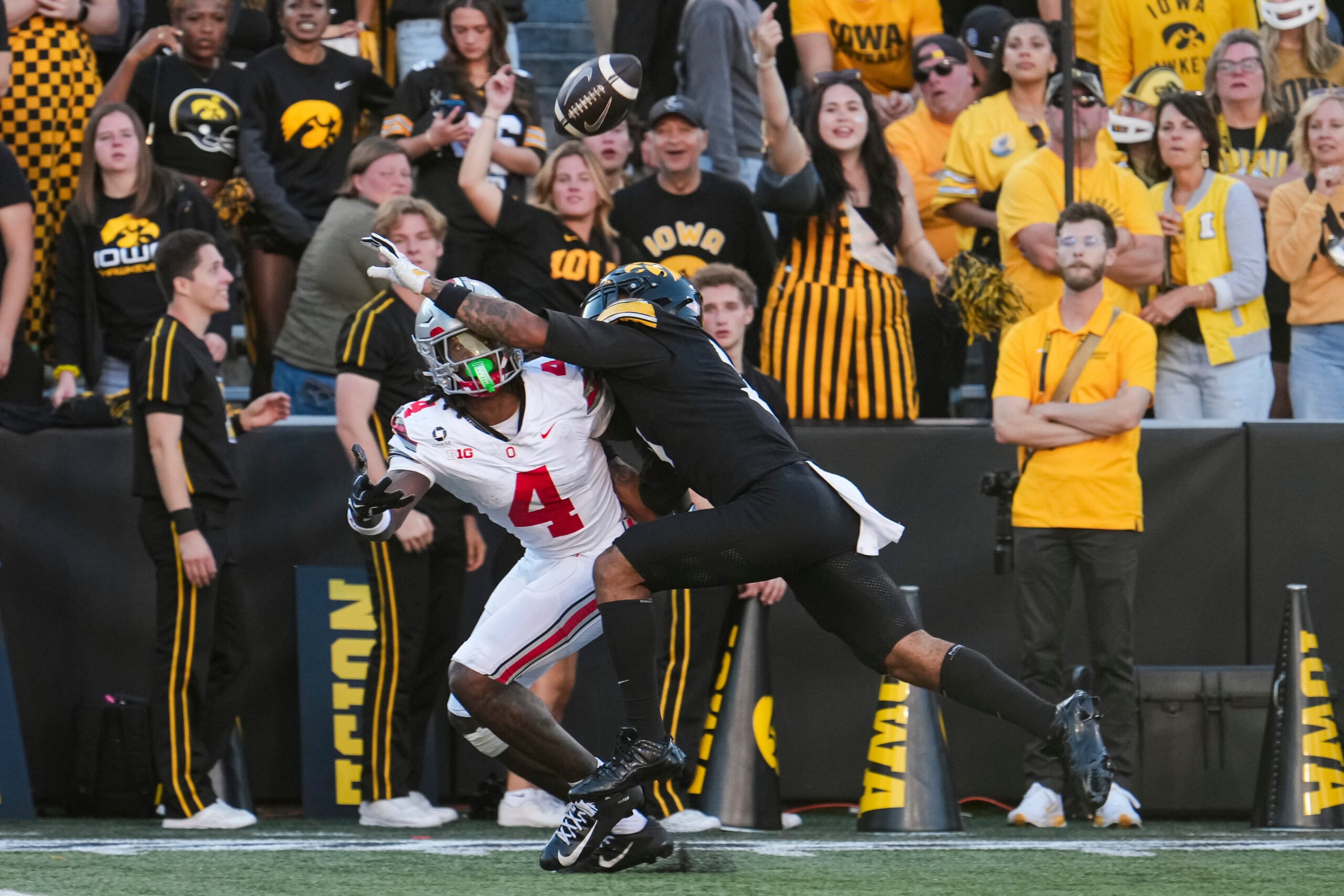
Ohio State’s offense has increasingly run through wide receiver Jeremiah Smith this fall, and head coach Steve Sarkisian’s description of Smith’s coverage problems has turned those matchups into a kind of football case study. The comparison points to a broader truth for defenses: when a receiver creates matchup chaos, it can reshuffle entire game plans.
Ohio State’s 2026 season has put Jeremiah Smith at the center of its passing identity, and a recent look at his impact goes beyond routine production. In a discussion that drew an NFL Hall of Fame reference, head coach Steve Sarkisian framed Smith’s receiving challenge in terms of what defenses feel when they try to take a game-changing player away. Smith’s role, as described in the coverage, has grown into a weekly problem for opponents rather than a matchup that can be solved with simple adjustments.
The framing is the headline here: the “Fear of God” treatment is presented as a way to explain what defenses try to do when they can’t reliably keep a top target in check. Instead of treating Smith like a typical separator who can be bracketed or rerouted, the comparison suggests opponents have to plan for physicality, positioning, and route timing all at once. That kind of coverage burden is often less about a single coverage call and more about how it affects everyone else on the field.
For Ohio State, the ripple effect matters. When a receiver commands that much attention, it can influence how safeties sit, how linebackers handle their first read, and how corners decide between pressing, off-man leverage, or zone spacing. Even if defenses are technically in the right structure, they can still be forced into tradeoffs that open other parts of the offense. In that sense, Smith’s presence functions like an organizational requirement for opposing defenses.
Sarkisian’s role in the comparison also highlights how the coaching staff views the matchup. The discussion ties Smith’s difficulty to coverage angles and assignment stress, implying that the offense is not merely exploiting mistakes. Instead, it is repeatedly creating conditions in which defenders can’t consistently win the route timing and leverage battles that normally decide down-to-down separation.
The Ohio State offense, as characterized in the reporting, is also built to maximize the value of those matchups. Smith’s contributions are described as a major part of what makes the team’s offense work, which suggests Ohio State is comfortable leaning on him while still expecting defenses to adjust in ways that create new opportunities elsewhere. That balance is often what turns a standout receiver into a week-to-week system advantage, because defenses can’t overcorrect without giving something else up.
Still, the most important caution is that this particular piece is centered on interpretation and matchup comparison, not on a detailed play-by-play accounting or statistical teardown. Without additional primary documentation in this material, readers should treat the Hall of Fame reference and the “Fear of God” framing as coaching perspective on coverage challenges rather than as a precise measure of how opponents defend in every single situation.
What to watch next for Ohio State is how defenses respond when the assignment is plainly difficult. If opponents keep using the same coverage posture that teams traditionally use for top receivers and it fails to control Smith, Ohio State’s passing attack will likely keep finding ways to stress those structures. If defenses escalate to more specialized bracket concepts or rotation schemes, the next question becomes whether Ohio State can convert the attention Smith draws into clean looks for the rest of the passing game.
Why It Matters
- A receiver who forces “coverage chaos” can reshape defensive game plans, affecting leverage decisions by multiple defenders at once.
- If Smith continues to pull that level of attention, Ohio State’s passing attack gains both direct value (targets and completions) and indirect value (space for other routes).
- The Hall of Fame comparison frames Smith as the kind of player teams struggle with not just week-to-week, but in how they practice and prepare coverage rules for him.
- Defensive adjustments to a top target often reveal what a team is willing to give up, which can set up the next phase of Ohio State’s offensive matchups.
Sources
Key Facts
- The reporting centers on Ohio State wide receiver Jeremiah Smith and how difficult he has been for opposing defenses to contain in 2026.
- Steve Sarkisian’s discussion includes an NFL Hall of Fame comparison and uses the phrase “Fear of God” to describe the coverage challenge.
- The material characterizes Smith’s performances as a major driver of Ohio State’s offense.
- The emphasis is on defensive coverage difficulty and assignment stress rather than a narrow description of one specific play.