
THE APEX TIMES
Steve Sarkisian says Arch Manning’s last name shapes how his performance is discussed
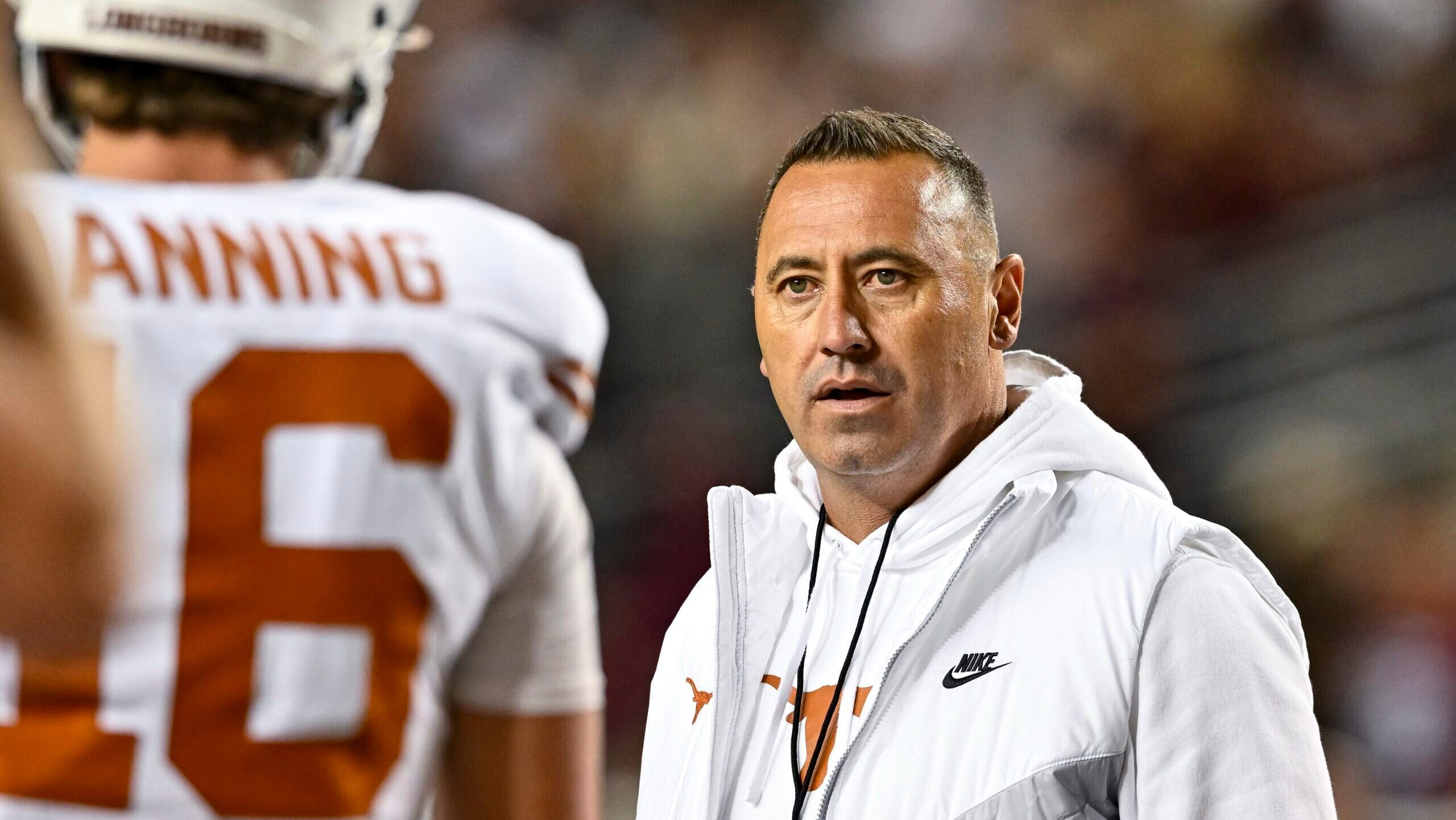
Texas head coach Steve Sarkisian pushed back on the way public expectations follow Arch Manning, arguing fans and media would react differently if the quarterback’s surname were more ordinary.
Texas head coach Steve Sarkisian addressed a familiar modern college football dynamic on Monday, saying the discourse around quarterback Arch Manning is influenced by his last name more than his on-field output. Sarkisian’s point, reported by Saturday Down South, was framed as a counterfactual: if Manning’s name were something like “Joe Smith,” Sarkisian believes the conversation would tilt toward praise rather than scrutiny.
In explaining his view, Sarkisian positioned the way people talk about quarterback play as partly cultural rather than purely analytical. The coach suggested that the “Manning” label primes fans and media to treat his performances through the lens of legacy, which can change how the same reads, decisions, and results are received by the broader public.
For Texas, that framing matters because quarterback evaluation is central to how the program is judged week to week. In college football, offensive production and quarterback decision-making are rarely evaluated in isolation. Media narratives, fan expectations, and historical context can become a kind of second scoreboard, especially for quarterbacks with marquee family backgrounds.
Arch Manning, as The report referenced in the Saturday Down South report notes, is not simply a Texas quarterback. He is part of the Manning family’s football lineage, a detail that naturally attracts attention but also creates a high threshold for how quickly improvement is expected and how forgiving observers are when results do not match the hype. Sarkisian’s remarks underscore that the pressure is not only internal, it is amplified externally by the public story attached to the player.
The most specific claim in the report is Sarkisian’s contention that the reaction to Manning’s season-long work would be different if his surname were not instantly recognizable. That line of thinking reflects a broader debate across the sport about whether players with established brands receive less benefit of the doubt, or whether their play is held to a tighter standard because of who they are off the field.
Even if the quarterback’s performance is evaluated in good faith, Sarkisian’s comments suggest that perception can influence what people pay attention to. If observers are already expecting an “unusual” ceiling, they may weight certain mistakes more heavily or give less credit when the offense settles into predictable patterns. The concern, from Sarkisian’s perspective, is that the narrative can overwhelm the baseline question, which is simply what the quarterback is doing within the team’s system.
What to watch next is not a change in Texas game plan by itself, but how the program and its quarterback are discussed as the season continues. If Sarkisian’s point holds, the same statistical and film-based analysis could generate different headlines depending on the reputation of the player being evaluated, and that could shape how quickly the public treats progress as progress rather than simply “meeting expectations.”
Why It Matters
- Quarterback evaluation in college football is shaped by narrative as much as mechanics, especially for players with major public identities.
- Sarkisian’s comments highlight the pressure that can come from legacy branding, which can affect how quickly fans interpret progress or setbacks.
- Texas must navigate not only game-to-game performance but also the external expectations that influence how the program is covered.
- How the conversation shifts around Manning could affect the public perception of Texas’s offensive development during the season.
Sources
Key Facts
- Steve Sarkisian said fans and media would be more likely to praise Arch Manning if his name were something like “Joe Smith,” according to Saturday Down South.
- Sarkisian’s comments were aimed at the impact of Manning’s last name on how his performance is discussed.
- The remarks connect expectations and public narrative to how quarterback play is perceived in college football.
- The report frames Sarkisian’s view as affecting analysis of Manning’s season-long performance, even when evaluation should be based on play itself.