
THE APEX TIMES
Study Flags Mississippi State as FBS’ Most “Vulgar” Fanbase, Fueling Fresh Debate About College Football’s Online Tone
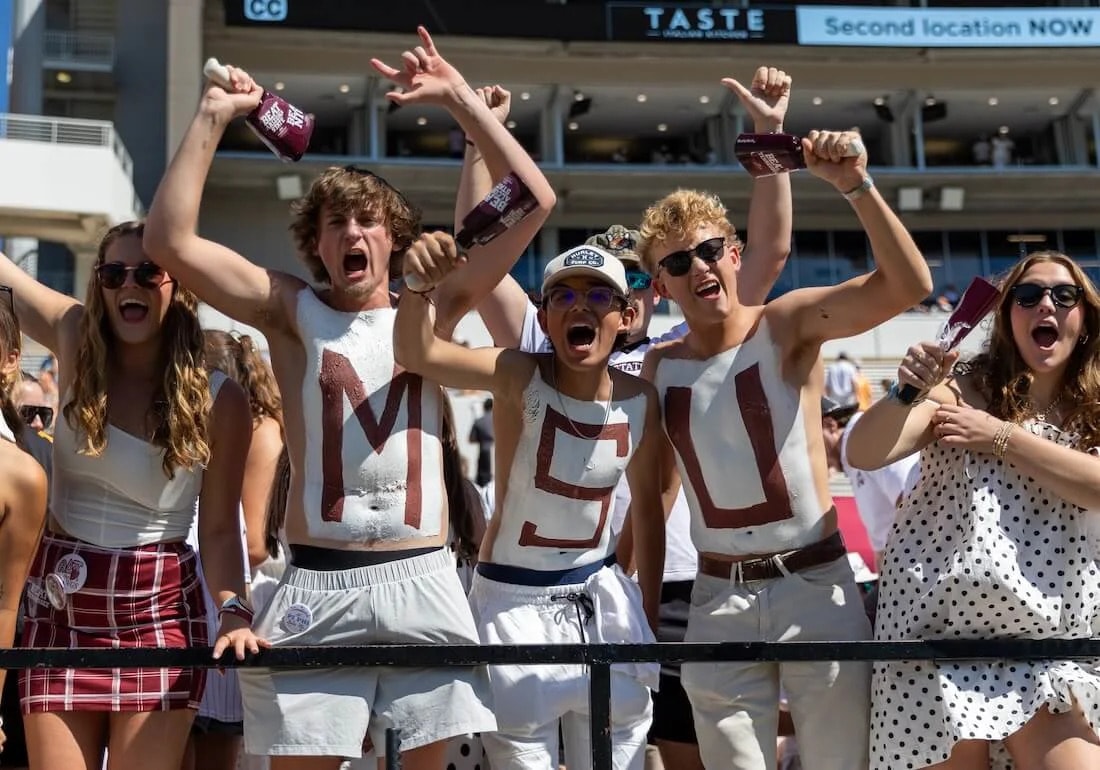
A new analysis of FBS fan communications on social platforms places the Mississippi State Bulldogs at the top for profanity, negativity, and angry-emotion language, a finding that is likely to intensify scrutiny over how college football fandom shows up in public.
A study highlighted by Yahoo Sports on Aug. 27, 2026 ranks the Mississippi State Bulldogs fanbase as the most “vulgar” in college football, using profanity, negativity, and the use of angry emojis as its measurable indicates. The finding puts Mississippi State at the center of a renewed debate over what fans should be allowed to say and how strongly the national conversation around college sports needs to police online behavior.
According to the Yahoo Sports report, the methodology focused on ranking every FBS fanbase by how often supporters used profanity and other negative language in fan communications, and by how frequently they relied on angry-emotion emojis. While the study’s design is meant to quantify tone at scale, it also raises questions about whether the loudest corners of any fan community are representative of the whole group.
The Mississippi State connection matters because the Bulldogs are a major program in the SEC, where football Saturdays and game-day traditions carry enormous attention from both regional and national media. When an SEC fanbase becomes the headline in a “culture” story, it is less about a single game and more about the program’s public identity, including how supporters communicate with rivals, how they react under pressure, and how that reaction travels beyond campus.
Still, there is a clear caveat to separate measurement from meaning. A ranking that depends on publicly posted language cannot capture the full range of fan behavior, including more restrained supporters and the many messages that do not include profanity or emojis. It also cannot reliably establish intent, such as whether the language is directed at individuals versus used in exaggerated sports chatter.
For Mississippi State fans, the study may land as a provocation, a punchline, or an uncomfortable mirror. For the broader sport, it highlights how easily college football’s emotional intensity migrates into online spaces, where crowd dynamics and anonymity can lower inhibitions. That is the tension the study is pointing at, whether or not readers agree with the ranking’s criteria.
Going forward, what to watch is not only whether the story triggers institutional responses, but also how conferences, schools, and platform moderators treat sports-related harassment and profanity when it is tied to organized fan communities. The Bulldogs will continue building their on-field identity through recruiting and coaching, but the off-field narrative will remain part of the same ecosystem, especially when national outlets package fandom into ranking content.
Why It Matters
- It keeps college football fandom’s online behavior in the spotlight, shifting attention from game results to public language norms.
- For an SEC program, a national ranking tied to profanity and negativity can affect how the team is discussed beyond its usual media markets.
- The finding may prompt more scrutiny of moderation and acceptable conduct in sports community spaces.
- It underscores how emotional game-day culture translates into digital messaging, where anonymity can amplify hostility.
Sources
Key Facts
- The Yahoo Sports report published Aug. 27, 2026 says a study ranked FBS fanbases by profanity, negativity, and angry-emotion emoji use.
- Mississippi State Bulldogs fans were ranked No. 1 for the “most vulgar” fanbase category in that analysis.
- The study’s premise is to quantify tone in fan communications rather than evaluate on-field performance.
- The article frames the ranking as an FBS-wide comparison across teams.