
THE APEX TIMES
Superflex drafts turn quarterback scarcity into a roster-building problem, and Chris Allen says to plan for it early
In Superflex and 2QB formats, quarterbacks are not just another position. Fantasy Football analyst Chris Allen lays out an approach built around valuing QB volume, understanding replacement-level collapse, and resisting the instinct to draft purely for role familiarity.
Superflex fantasy leagues do something standard single-QB drafts rarely force you to confront: they turn quarterback scarcity into the central math problem of roster construction. Fantasy Football analyst Chris Allen’s new strategy piece argues that before you enter your next 2QB or Superflex draft, you should build your plan around how quarterback production and quarterback scarcity behave over a full season, not around the comforting idea that you can “find points later.”
Allen frames his approach around the way Superflex rosters reward quarterbacks more than most other positions, because the format effectively gives you an extra slot for premium pass volume. In a league where QBs are at a premium, he emphasizes that decision-making has to start earlier than many managers expect, especially when you are choosing between a “good enough” option and a true edge in week-to-week output.
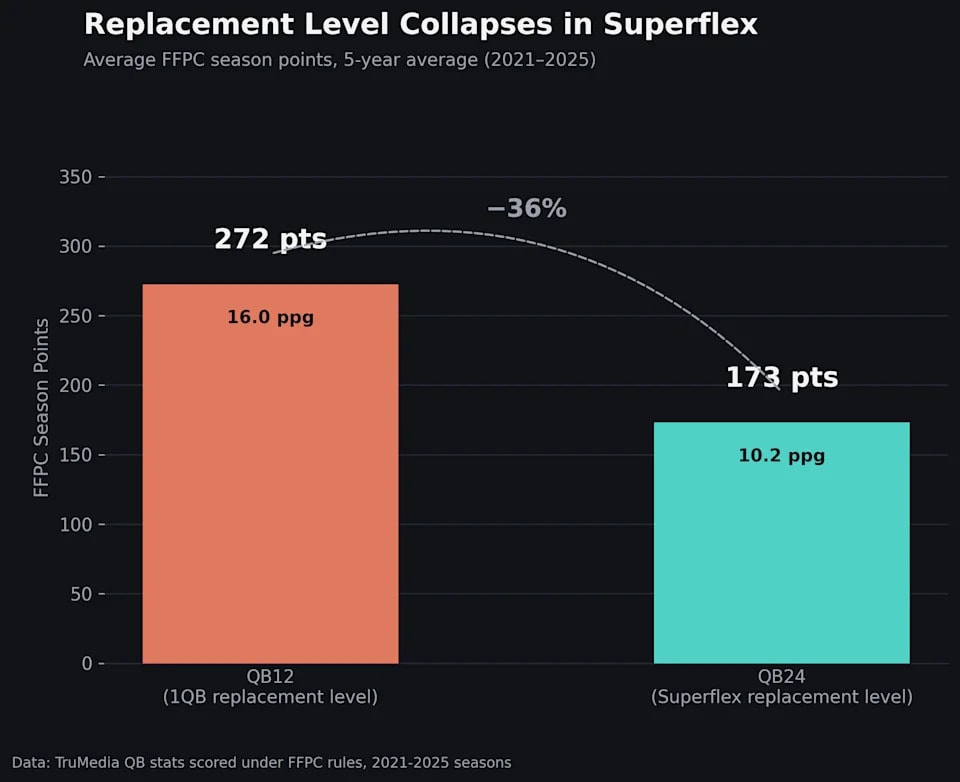
A key element of Allen’s guidance is paying attention to replacement-level quarterbacks, which he describes as a category that can “collapse” in Superflex settings. The practical takeaway is that the quality drop-off between rostered starters and the next wave of available QBs can be steep. If you draft in a way that leaves you scrambling at QB, you can end up with a roster that has usable pieces everywhere except at the position where the format gives you the most scoring leverage.
Allen also ties the strategy mindset to preparation habits. He uses a humorous reference to “earning a PhD” by fully mastering the setup, which in fantasy terms means knowing your rules, understanding the scoring environment, and running your draft day priorities through the lens of scarcity and opportunity cost. For managers who treat Superflex drafts like standard drafts with an extra QB spot, his point is that the difference is not cosmetic, it changes how you evaluate every turn in the draft.
While the piece is primarily about process rather than a specific player list, it highlights the type of planning that matters in 2QB leagues: quarterback tiers, where you expect value to appear, and how much you are willing to pay to avoid being trapped into replacement-level production. Allen’s approach is less about chasing headlines and more about designing a roster so that the QB position is a stable foundation rather than a late-draft gamble.
For fantasy players, the immediate “watch next” item is whether you can translate the concept of replacement-level collapse into your personal rankings. Managers who already separate quarterbacks into more granular tiers are likely to benefit most from Allen’s framework, because the strategy depends on seeing where the cliffs are. If your board is built in the same way as a single-QB league, Allen’s warning is that you may be undervaluing the positional premium that Superflex creates.
Why It Matters
- Superflex formats change the scoring leverage of quarterbacks, so draft plans built for single-QB leagues can fail.
- If replacement-level production is a steep drop-off, avoiding a late quarterback scramble becomes a primary objective.
- The positional premium affects every decision, forcing managers to value QBs differently than other positions.
- Better tiering and board design can help prevent roster imbalance that shows up after the draft.
Key Facts
- The strategy focuses on Superflex and 2QB fantasy formats where quarterbacks are at a premium due to additional QB starting value.
- Chris Allen’s approach emphasizes early roster planning around quarterback scarcity.
- He discusses the concept of replacement-level quarterbacks and how they can collapse in Superflex leagues.
- The article argues that opportunity cost at quarterback is central to draft strategy in these leagues.
- It presents process-focused guidance more than a player-specific recommendation.