
THE APEX TIMES
T.J. Dillashaw says Payton Talbott needs a tougher test, doesn’t have to be Sean O’Malley
After UFC 332, T.J. Dillashaw suggested Payton Talbott’s next challenge should raise the level of competition, though he did not pin that step up specifically on a fight with Sean O’Malley.
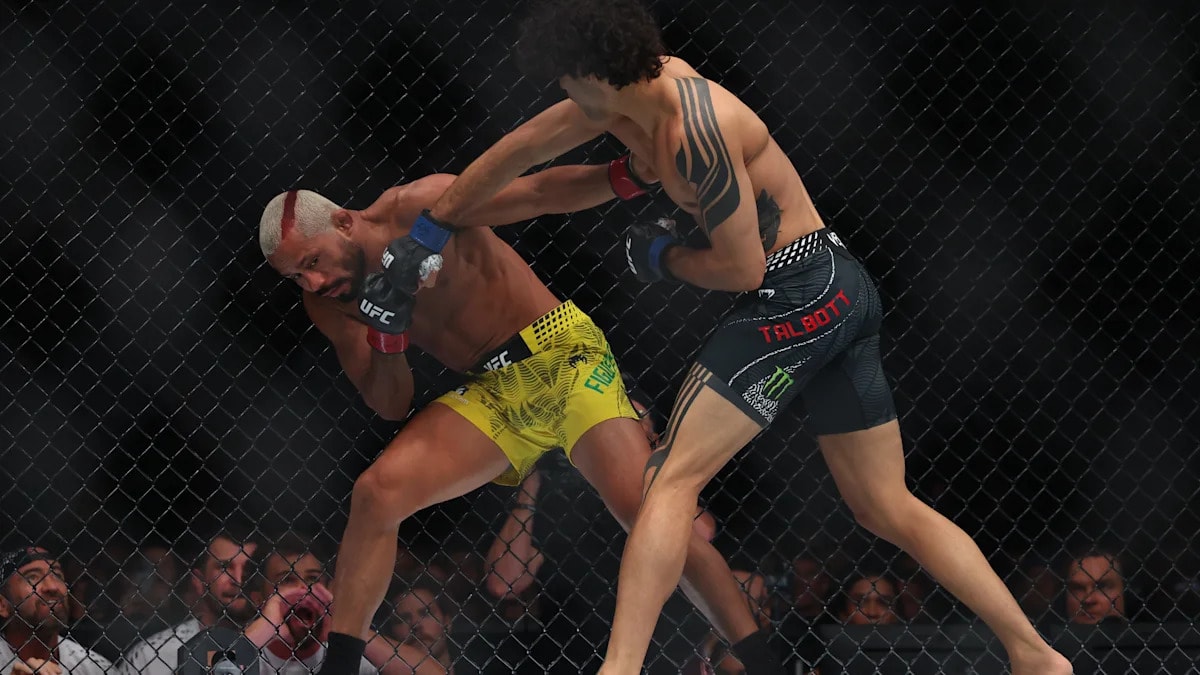
T.J. Dillashaw used his post-UFC 332 comments to frame what Payton Talbott’s next move should look like in the sport. Dillashaw, a veteran who has competed at the highest level of mixed martial arts, said Talbott is in a position where the next opponent should be a clear step up in competition. The message was simple: if Talbott is going to keep building credibility, the path should not be lined with easy matchups.
At the same time, Dillashaw was careful not to narrow that “step up” to one specific name. He acknowledged Sean O’Malley as a significant figure in the division and indicated that O’Malley is “great” for the right kind of opponent dynamic, including the kind of attention and challenge that can come with a high-profile matchup. But Dillashaw’s stance went further than hyping a single opponent, because he also said he likes “other fight” options for Talbott, implying the next test could come from outside O’Malley’s orbit.
That nuance matters because it speaks to how elite fighters think about matchmaking and momentum. In the UFC, a step up in competition often serves two purposes at once: it measures whether a contender’s current performance translates into success against proven opposition, and it accelerates brand-building when the matchup is meaningful to fans and the promotion. Dillashaw’s comments suggest that Talbott’s development does not hinge on one headline name, but on finding a credible ranking-level threat.
For Talbott, Dillashaw’s perspective is effectively a call for the next stage of his career to come with sharper edges. Dillashaw’s approach also reflects a common veteran philosophy in combat sports, where experience is treated as a multiplier rather than a substitute. A fighter can be talented and effective against a certain tier of opponent, but the step-up match is where the sport reveals what adjustments are truly needed.
Dillashaw’s comments also sit in the broader ecosystem around O’Malley, who remains one of the division’s most visible and marketable fighters. By saying O’Malley is “great for Payton Talbott” while stopping short of insisting that O’Malley is the only viable opponent, Dillashaw projected the idea that Talbott benefits from fighting someone who both raises the level of skill and brings the kind of matchup gravity that changes how people view a fighter.
What to watch next is whether the UFC’s matchmaking aligns with the standard Dillashaw described: a clear elevation in opponent quality for Talbott, ideally one that reduces uncertainty about his ceiling. If a fight involving O’Malley materializes, Dillashaw’s comments will read like a direct endorsement of the matchup logic. If not, his “other fight” language points to the possibility that Talbott’s promotion could choose a different opponent who still fulfills the competition step-up requirement.
Because the story here is based on Dillashaw’s public remarks, not an official announcement of a bout, timelines and matchmaking specifics should be treated as open. The most concrete takeaway remains the same, though, Talbott’s next fight should be built to test him, not simply showcase him.
Why It Matters
- Matchmaking is a key part of how UFC contenders move from promising to proven, and Dillashaw’s comments emphasize that standard for Talbott.
- A fight that is framed as a true step up can accelerate a fighter’s standing with fans and the promotion, even before any belt picture is formally declared.
- By not insisting on O’Malley as the next opponent, Dillashaw highlighted that the “quality” of the test matters more than any single big-name matchup.
Key Facts
- T.J. Dillashaw said Payton Talbott should get a step up in competition after UFC 332.
- Dillashaw said Sean O’Malley is “great” for Talbott, while also indicating he does not necessarily need to be the opponent.
- Dillashaw said he likes other fight options for Talbott beyond a matchup with O’Malley.
- The comments were made in the context of how Talbott’s next matchup should reflect a higher level of opposition.