
THE APEX TIMES
Tatum and Brown proved chemistry can’t cover everything
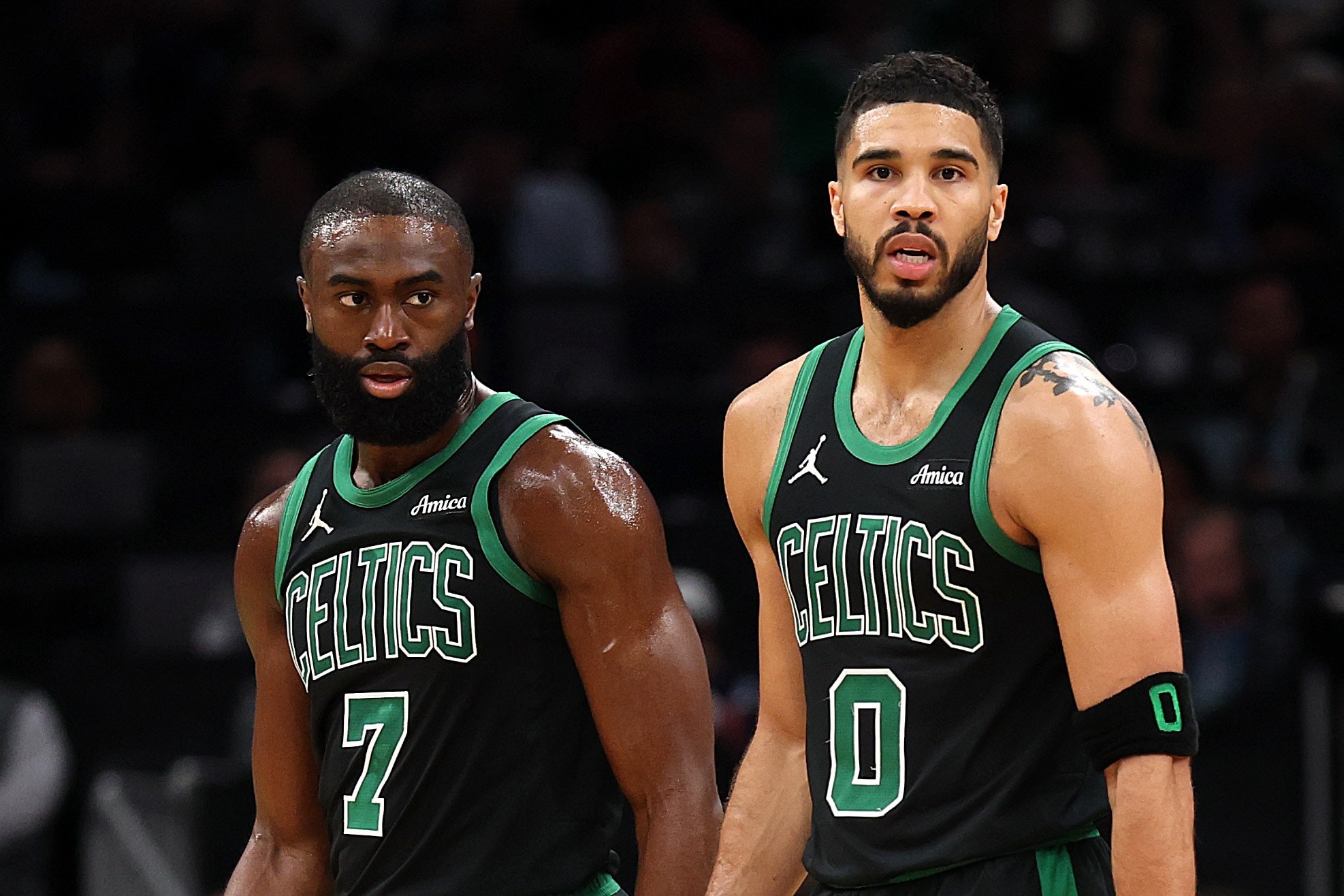
Jayson Tatum and Jaylen Brown have been a driving force for the Boston Celtics, building a partnership that helped the team function in high-pressure moments. But a recent reflection on their on-court relationship raises a harder question: if their teamwork is that strong, why can’t it solve everything that comes with championship expectations?
Jayson Tatum and Jaylen Brown have been more than simply two elite scorers for the Boston Celtics. The argument behind a recent examination of their partnership is that they did not need to be best friends to operate like professionals in sync, turning trust into a stabilizing force when games get chaotic and plans start to unravel. The piece frames their relationship as practical, not sentimental, built around shared responsibility, routine communication, and a willingness to do the unglamorous work that keeps a team coordinated.
In that view, their best advantage was never just talent. It was the way each player handled the other when things tightened, the way their professionalism made it easier for everyone else to trust what would happen next. The article describes a sense of mutual confidence, with Tatum and Brown knowing the other would get their job done, and with that reliability helping teammates run their roles without constantly second-guessing the next read.
The same relationship also showed up in the moments that do not show up in highlight reels. The reflection suggests that even when the Celtics were dealing with setbacks inside a game or across a series, the two stars treated their partnership like a working instrument. They celebrated large outcomes together, but when things went wrong, the tone shifted to complaint and correction, directed at each other and at the process. In other words, the partnership was portrayed as an engine for adjustments rather than a guarantee that adjustments would always be enough.
That is where the question in the headline lands. The piece pushes beyond the feel-good narrative of “great teammates” and asks why that alone has not been the entire answer to what the Celtics have needed in recent playoff runs. A team can have an effective two-man core, it can communicate well, and it can protect organizational roles, and still run into the same problems that separate strong teams from championship teams: defensive matchups, shot quality under pressure, the ability to change games with lineup flexibility, and executing a plan when the opponent forces new problems.
It is also worth noting what kind of story this is. This is not a transaction report or a tactical breakdown of a specific series. It is a character-and-culture analysis of what “chemistry” can and cannot do. The Celtics have long leaned on Tatum and Brown as anchor pieces, and the article’s thrust is that their chemistry is real, but chemistry does not eliminate everything that comes with postseason pressure.
For Celtics followers, the immediate takeaway is less about re-litigating whether the stars trust each other, and more about what Boston still needs to complement that trust. If Tatum and Brown’s partnership already makes things easier internally, then the next improvements likely have to be external to the duo, whether that means tightening defensive execution, improving spacing and shot creation patterns, or sharpening how the Celtics respond when opponents take away the obvious answers.
Looking ahead, the Celtics’ summer and regular-season focus should be judged not only by how the team wants to play, but by how well the group handles the moments when the plan breaks. In that sense, the Tatum-Brown partnership remains a strength and a baseline, but the broader roster construction and collective decision-making will determine whether “one of the most successful partnerships” can finally become the kind that answers the championship question in full.
Bottom line, the partnership described here sounds like what you want from a star duo. The harder lesson is that even a well-oiled machine can still be outmatched when the postseason demands more than reliability and momentum. The Celtics’ challenge is to keep their internal trust while finding the additional edges that turn trust into titles.
Why It Matters
- If a star duo already provides stability, remaining gaps are likely tied to team execution, role clarity, and in-game adaptability beyond the two-man core.
- Postseason success often hinges on how teams respond when initial plans fail, not only on baseline chemistry.
- Boston’s next steps may depend less on whether Tatum and Brown work well together, and more on what roster and tactical complements make that partnership decisive.
- The distinction between “great teammates” and “championship answers” shapes how fans and the organization evaluate progress.
Sources
Key Facts
- The article argues that Jayson Tatum and Jaylen Brown did not need to be best friends to build a productive partnership.
- It describes their relationship as built on trust, with each player doing their part when games get hectic.
- The piece portrays their communication style as both celebratory in big moments and corrective when things go wrong.
- The central question raised is why their teamwork, despite being effective, has not answered all championship-level needs.
- The argument is presented as a culture and partnership analysis rather than a specific game recap.