
THE APEX TIMES
Terry Bradshaw, Hall of Famer and broadcaster, opens up on depression and divorce in a new memoir Q&A
In a wide-ranging conversation ahead of the release of his memoir, Pro Football Hall of Famer Terry Bradshaw discusses the personal challenges that followed his gridiron rise, including depression and divorce.
Terry Bradshaw is still talking, still framing the game through the prism of his own life. In a Q&A published ahead of the release of his memoir, the Pro Football Hall of Famer discusses more than football history and television success. He addresses personal struggles, including depression and the breakdown of his marriage, and he also reflects on a coach who, according to the themes of the interview, “never believed in him.”
The interview positions Bradshaw’s story as both a sports memoir and a reckoning with what happens after the roar of Sundays fades. Bradshaw, who became one of the NFL’s defining quarterbacks of his era and later built a second career in broadcasting, uses the platform not just to revisit his professional arc, but to explain what he carried through it. The tone in the Q&A preview is direct, with an emphasis on candor and the unfinished work of telling the truth about a public career and a private life.
Even for fans who know the highlight-reel version of Bradshaw, the larger implication is that elite performance has never meant emotional ease. Bradshaw’s decision to put depression into the center of the conversation adds to a growing body of athlete disclosures that treat mental health as a core part of the football story, not an afterthought. By weaving those topics into a memoir release conversation, he is also turning the spotlight back on how much athletes may keep hidden while they are still winning.
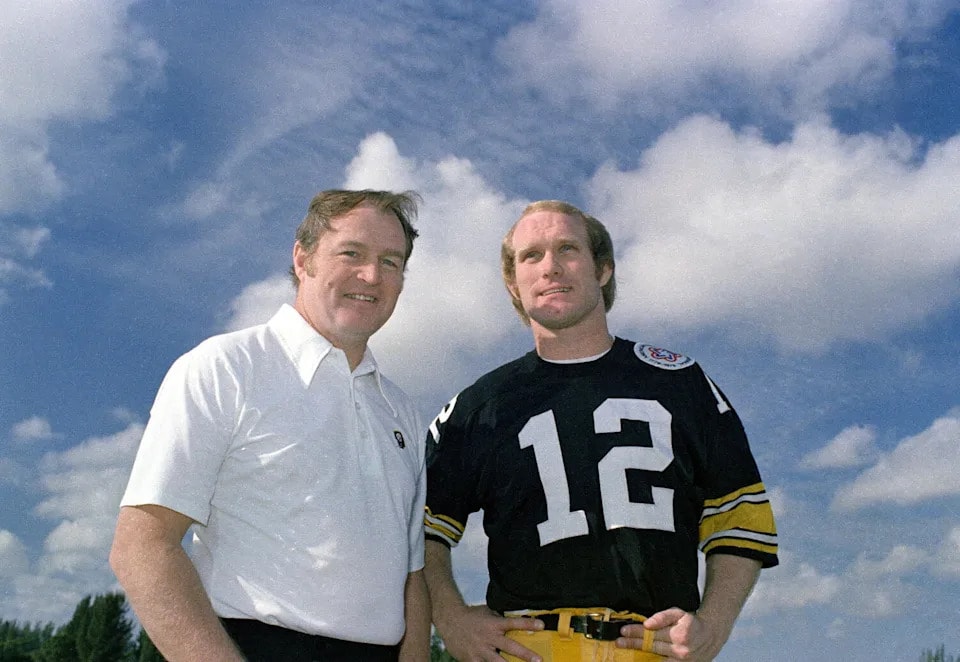
Bradshaw’s NFL identity is closely tied to the Pittsburgh Steelers and their championship-era culture. An image caption included with the interview notes Steelers coach Chuck Noll standing beside Bradshaw in December 1975, a reminder of the coaching environment and era in which Bradshaw’s rise took place. In this Q&A, Bradshaw is described as looking back at the figures who shaped his career, including the coach figure who did not believe in him, even as he credits the larger system that helped make Pittsburgh’s success possible.
The divorce portion of the Q&A themes also speaks to a different kind of game: the long, difficult work of life management outside the lines. For a player whose name became synonymous with big moments, the memoir conversation indicates that the most consequential moments can be the ones that never make the broadcast. Bradshaw’s approach, as framed by the interview’s advance material, suggests a willingness to connect those personal events to the broader story of resilience.
For readers and viewers tracking the latest chapter in Bradshaw’s public life, the key question now is how the memoir translates these topics into narrative detail. The Q&A preview makes clear that the book is not only about football achievements, but about the emotional cost of a career lived under intense scrutiny, and the aftermath that can arrive long after the final whistle.
Why It Matters
- When a Hall of Fame quarterback puts depression into a public memoir conversation, it reinforces that mental health is part of the football ecosystem, not separate from it.
- Bradshaw’s focus on divorce adds perspective on how personal life can be strained by high-profile athletic careers and the spotlight that follows them.
- The “coach who never believed in him” framing highlights how quarterback development narratives can include doubt, not just mentorship myths.
- As Bradshaw continues to shape the public conversation through media, the memoir may influence how fans understand the full arc of player legacies.
Sources
Key Facts
- Terry Bradshaw, a Pro Football Hall of Famer, discusses depression and divorce in a Q&A ahead of the release of his memoir.
- The Q&A is framed around both his NFL career and his post-playing work in television.
- The interview themes include reflection on a coach who “never believed in him.”
- The accompanying materials identify Steelers coach Chuck Noll in an archival photo with Bradshaw from December 1975.