
THE APEX TIMES
Texas A&M drops further in ESPN FPI after Missouri win, underscoring offensive concerns under Mike Elko
The Aggies’ loss to Missouri in Week 6 left them at 3-3 overall and 1-3 in SEC play, and ESPN’s Football Power Index reflects the widening gap between Texas A&M’s ambitions and its current form. The picture, according to the latest FPI update, is especially tied to offensive production and quarterback play.
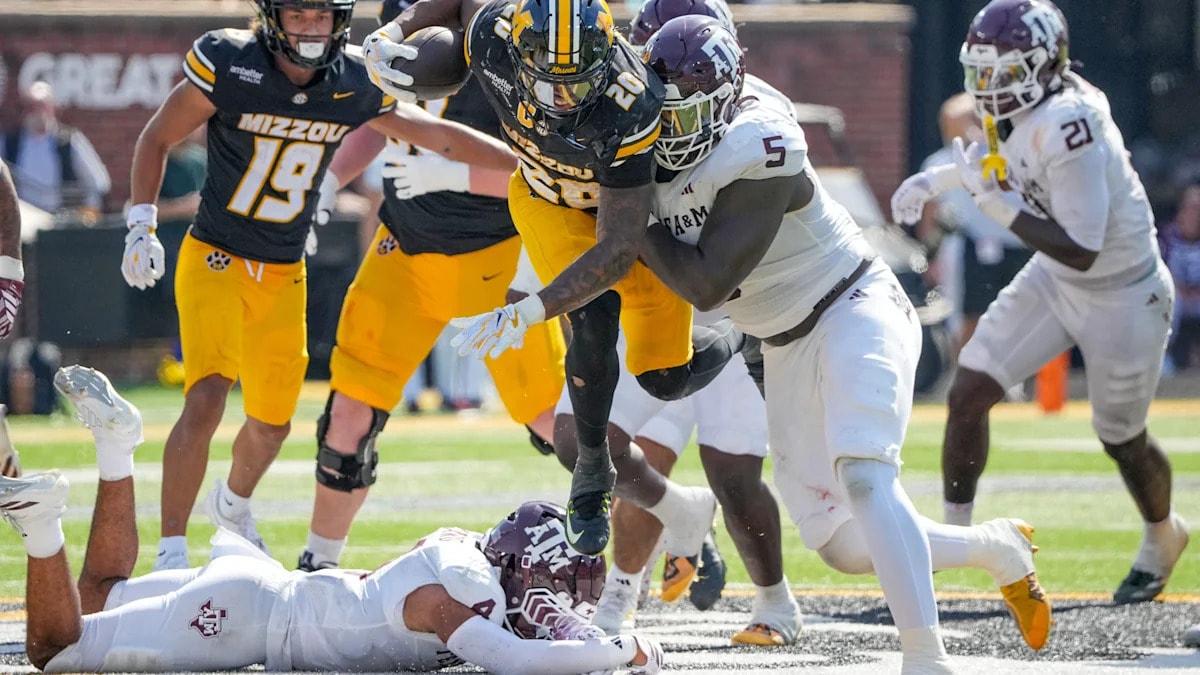
Texas A&M’s Week 6 setback to Missouri did more than worsen the Aggies’ record. The loss, 27-6, reshuffled how ESPN’s Football Power Index views the program’s strength for the rest of the season, placing the Aggies at a lower point in FPI than they had been prior to the defeat. With the offense struggling to generate sustained scoring, the change in projection helps explain why the season in College Station has taken on an increasingly urgent tone.
After the loss, Texas A&M sits at 3-3 overall and 1-3 in Southeastern Conference play. In practical terms, that conference mark matters because it narrows the margin for error in the SEC, where multiple teams are separated by a small number of games. The Aggies’ path forward now hinges on closing the gap quickly, since the calendar does not reset simply because expectations are high for a program at this level.
The FPI update also points to the most consistent issue emerging in the early part of the schedule: offensive execution. According to the Yahoo Sports overview of ESPN’s latest FPI standings, the Aggies’ drop is largely tied to offensive problems, with a particular emphasis on the play of starting quarterback Marcel Reed. Reed’s performance, as characterized in the report, has been a central factor in Texas A&M’s inability to convert opportunities into points.
That quarterback emphasis is notable because it reaches beyond any single series. When a team cannot reliably move the ball or maintain tempo, every defensive stop becomes more valuable, and offensive units often have to force plays to manufacture production. Over the span of a season, that dynamic can show up in analytics as both a ceiling limitation and an increased volatility. In FPI terms, it can lower the baseline quality of the offense and, by extension, the team’s projected outcomes against future opponents.
Texas A&M is coached by Mike Elko, now in his third year. The FPI conversation comes at a point where the staff’s identity and system should be more established than in earlier seasons. The Yahoo Sports piece frames the challenge as one of management and response rather than reaction for its own sake, suggesting that the priority is not simply to absorb criticism but to find functional fixes that can change results quickly.
For Texas A&M, the immediate question is what kind of offensive adjustment can stabilize the week-to-week performance. The report’s focus on starting quarterback play implies that the staff’s next steps will likely be measured by how effectively the offense can sustain drives, protect the ball, and generate scoring chances even when an opponent adjusts. If the Aggies can reduce offensive breakdowns, their underlying projection could improve faster than their record alone would suggest.
The bigger watch list is how Texas A&M carries this into the remainder of SEC play. With a 1-3 conference record, there is no surplus of games to experiment with major swings in approach, especially in the SEC where matchups and defensive pressure can magnify inefficiencies. The next few contests will show whether the FPI drop is a temporary reflection of an off offensive stretch, or whether it indicates a more durable mismatch between talent, execution, and system fit.
Why It Matters
- The FPI movement reflects how Texas A&M’s current team profile compares with the rest of the SEC, not just the impact of one result.
- With a 1-3 conference mark, the Aggies have less room for offensive inconsistency to cost them critical SEC games.
- Quarterback performance is central in the report’s explanation of the team’s projection, making offensive stability a primary development goal.
- How Texas A&M responds to the FPI drop will shape expectations for the remainder of the season under Elko’s third-year framework.
Key Facts
- Texas A&M lost to Missouri 27-6 in Week 6.
- After the defeat, the Aggies are 3-3 overall and 1-3 in SEC play.
- ESPN’s Football Power Index update lowers where Texas A&M sits after the Missouri loss.
- The reported drivers of the FPI shift are offensive issues, with particular focus on starting quarterback Marcel Reed’s play.
- Mike Elko is in his third year as Texas A&M’s head coach.