
THE APEX TIMES
Texas tight end production sliding as the group’s “versatility” fails the passing-game test
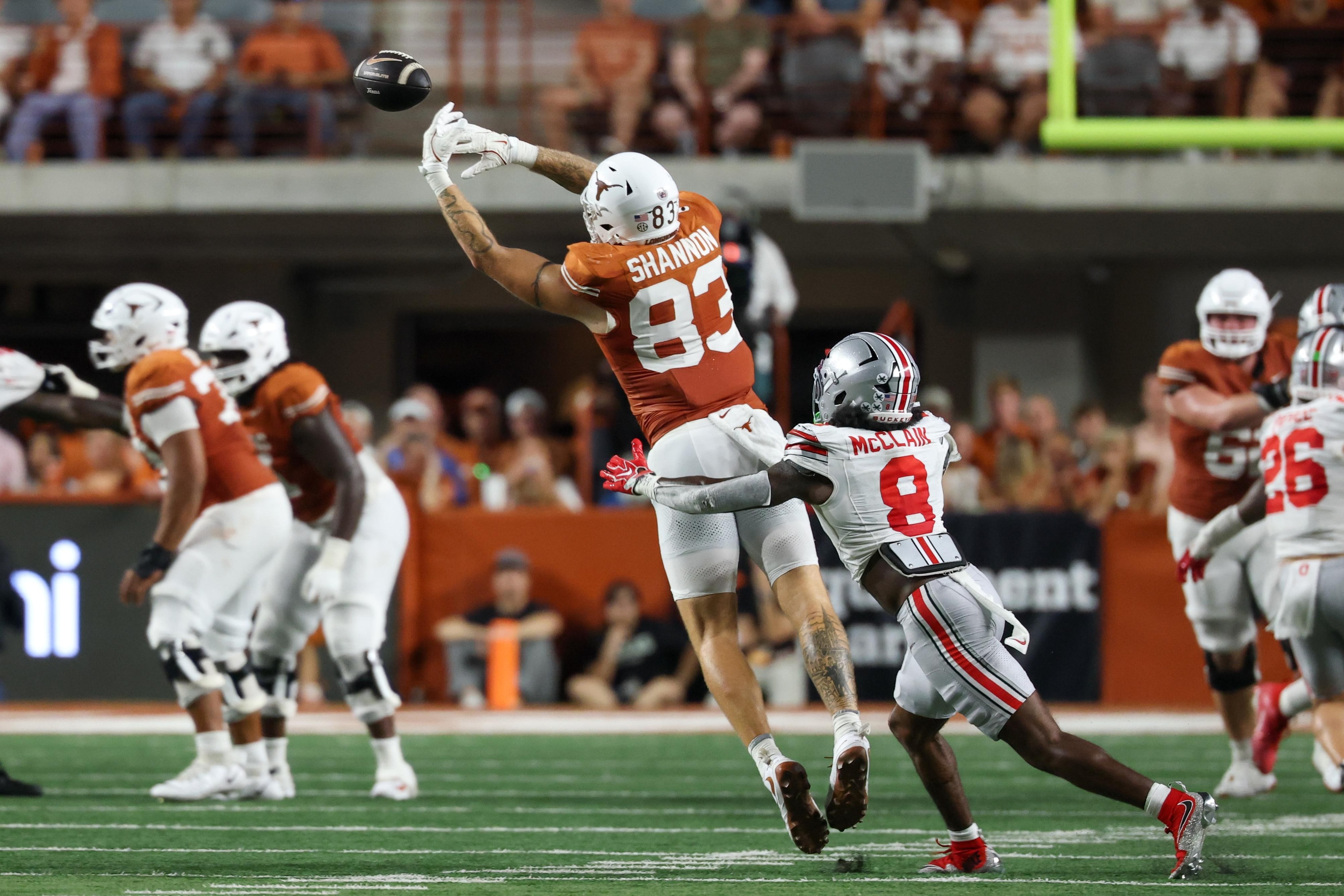
An already-low-looking tight end target share has Texas on track for its least productive pass-catching season from that position group since 2021, raising questions about how much the Longhorns can get from a traditionally important middle of the offense.
Texas’ tight end group is facing a troubling measuring stick for a role that is supposed to create easy completions and stress defenses underneath. A look at the Longhorns’ recent tight end production suggests that “versatility” is not translating into meaningful receiving results, with Texas reportedly on track for its worst pass-catching season from the position group since 2021.
The issue is not that Texas has been without recognizable personnel. From 2022 through 2024, Texas tight ends averaged almost 800 receiving yards and six touchdowns per season while totaling about 65 receptions. The production numbers point to an active role in the passing game over that stretch, and they also explain why coaches and analysts have often described the position group as capable of doing more than one thing.
But the current season’s trajectory, as described in reporting, is that the production is headed downward in a way that makes the tight ends look less like reliable playmakers and more like an interchangeable option. When a group is framed as “versatile,” it typically suggests the offense can deploy tight ends in different alignments and routes to generate matchups. The reported concern is that, in practice, the passing game is not getting the same return from those mismatches.
Texas’ star power has been part of that discussion. Reporting points to Ja’Tavion Sanders and Gunnar Helm as key names in the tight end room, both as the type of player Texas wants to lean on and as evidence that the talent level is not the only variable at play. The broader concern, then, becomes whether Texas’ offensive structure is maximizing what those players can do as receivers.
The tight end role matters in college football because it often sits at the hinge point between the run game and the routes behind it. In many offenses, tight ends help extend drives by catching short and intermediate passes, then turning those catches into chunks of yardage. If Texas’ tight ends are not producing at the level the program needs, defenses can treat the group as less of a priority and allocate coverage resources elsewhere.
For the Longhorns, this is also a personnel-development storyline. Teams build tight end rooms with the expectation that multiple players can contribute. The reporting focus on the group’s passing productivity implies that Texas may need to identify what is limiting targets, catch rate, or route effectiveness, not just whether tight ends are “involved” in the broadest sense of offensive participation.
What to watch next is whether Texas’ game planning begins to re-center the tight end spot in its passing design. If the coaching staff continues to describe the room as versatile, the next step will be seeing whether targets and production reflect that claim across different down-and-distance situations, not only in isolated moments.
Why It Matters
- Tight ends often shape the balance between underneath passing and the run game, so reduced receiving production can affect how defenses play Texas.
- If Texas cannot generate consistent completions from the position, opponents can shift coverage to other receiving threats and reduce the value of tight end matchups.
- A drop from recent baseline production raises questions about route design, target distribution, and how the offense is using its personnel.
Key Facts
- Texas is reported to be on track for its worst pass-catching season from the tight end position group since 2021.
- From 2022 to 2024, Texas tight ends averaged nearly 800 receiving yards and six receiving touchdowns per season.
- Over that same 2022 to 2024 span, Texas tight ends totaled about 65 receptions per season.
- Reporting attributes the tight end room’s recent identity in part to players including Ja’Tavion Sanders and Gunnar Helm.
- The central critique is that the tight ends’ advertised “versatility” is not showing up in Texas’ passing-game production.