
THE APEX TIMES
The Athletic’s mock NHL Expansion Draft would have Calgary losing goalie Devin Cooley while protecting Dustin Wolf
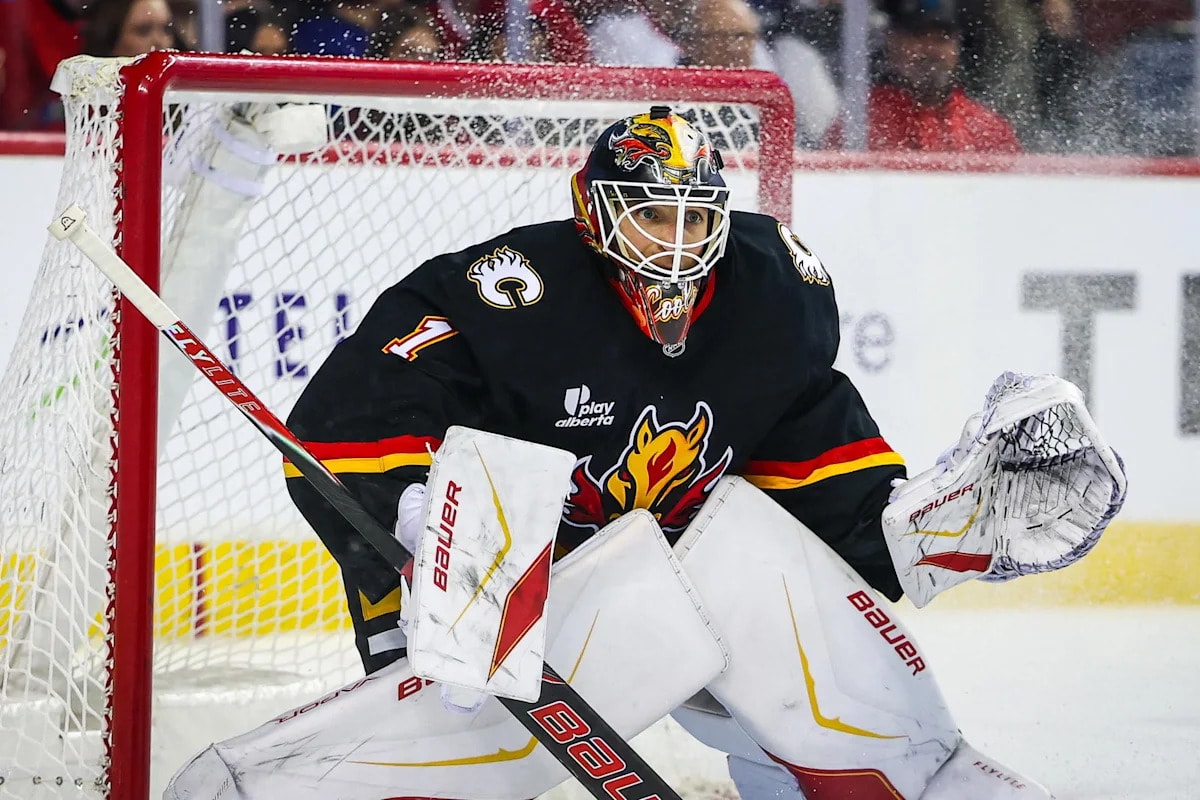
In a fictional 33rd-team scenario built from 2026-27 rosters, Calgary’s protection list centers on its goaltending plan, with the “backup” Devin Cooley the one projected to be taken.
Expansion-draft talk is back, at least in the imagination of hockey writers. The Athletic has published a mock NHL Expansion Draft that uses 2026-27 rosters and projects which players the Calgary Flames would expose if a new 33rd team entered the league.
In that scenario, the Flames are portrayed as protecting their established goaltending anchor, Dustin Wolf, while the goalie thought of as his backup, Devin Cooley, would be the casualty. The premise matters even when it is hypothetical, because it highlights how teams with a rebuilding or re-tooling identity tend to make hard choices at the position where stability can be both a necessity and a luxury.
The mock draft is built on the idea that the league could eventually add another franchise beyond its current 32-team structure. The concept of expansion has returned in the offseason conversation repeatedly, and The Athletic’s project treats the situation as an inevitability rather than a near-term promise. That distinction is important: a fictional projection is not the same thing as an actual protection list, actual player availability, or a confirmed timetable for league growth.
For Calgary, the logic of the projection is straightforward. When a team has a clear top goalie, its protection strategy often revolves around locking in that starter. Everything else, including even a second goalie with a more limited track record, becomes more negotiable if the exposure rules and roster limitations force tough selections.
The Athletic’s write-up frames Calgary as working around its “rebuilding core,” which adds another layer to the protection calculus. During rebuilds, teams typically want maximum flexibility to keep their most important foundational pieces. By centering Wolf as the protected goaltender, the mock assumes the Flames would prioritize perceived long-term stability over short-term depth at the position.
However, even in a fictional setup, the outcome depends heavily on assumptions that would vary in real life. Which goaltender would be viewed as the starter heading into the draft, how many players a team can protect under the draft rules, and who is considered available based on roster constraints are all moving parts that could swing the result. The projection also should not be read as a prediction of roster moves, because a mock expansion draft is about possibilities, not confirmed transactions.
What to watch next for Calgary is less about whether the team “loses” anyone in the imagination of a draft simulator, and more about how the organization’s goaltending hierarchy is shaped as the 2026-27 season approaches. If Wolf remains positioned as the clear starter, the model’s logic would keep pointing at Cooley as the more exposed option. If that hierarchy were to change, the protection math in any future draft scenario would follow.
In the broader NHL picture, the mock underscores why expansion drafts are so consequential. They do not just reshuffle depth charts, they can reset organizational planning, forcing teams to value certain players more than others under a hard set of constraints. Even when expansion never comes in the next offseason, the exercise can still illuminate how teams think about their roster building priorities.
Why It Matters
- Goaltending is often the hardest position to replace during roster planning, so protection choices there can reveal a team’s long-term priorities.
- Mock expansion drafts provide a template for how rebuilding teams might decide which core pieces must be kept under draft constraints.
- If a real expansion process ever materializes, scenarios like this show how quickly depth can become vulnerable, even for promising backups.
- The exercise also highlights the importance of who is viewed as the starter heading into any expansion framework, since that role typically determines who gets protected.
Key Facts
- The Athletic published a mock NHL Expansion Draft scenario involving a fictional 33rd team built from 2026-27 rosters.
- In the projection, the Calgary Flames protect goalie Dustin Wolf.
- In that same projection, the Flames are portrayed as losing goalie Devin Cooley, described as Wolf’s backup, in the mock expansion selection.
- The Athletic frames expansion talk as recurring every offseason and anticipates that the NHL could eventually add additional franchises beyond 32 teams.