
THE APEX TIMES
The Daily Drive: Lions face secondary competition after Terrion Arnold arrest, while position-group outlooks shape 2026 NFL offseason focus
Detroit’s outlook for 2026 is influenced by two parallel storylines: a thin cornerback picture that opens opportunities on defense, and a league-wide evaluation of how wide receiver, tight end, and running back groups stack up across NFL teams.
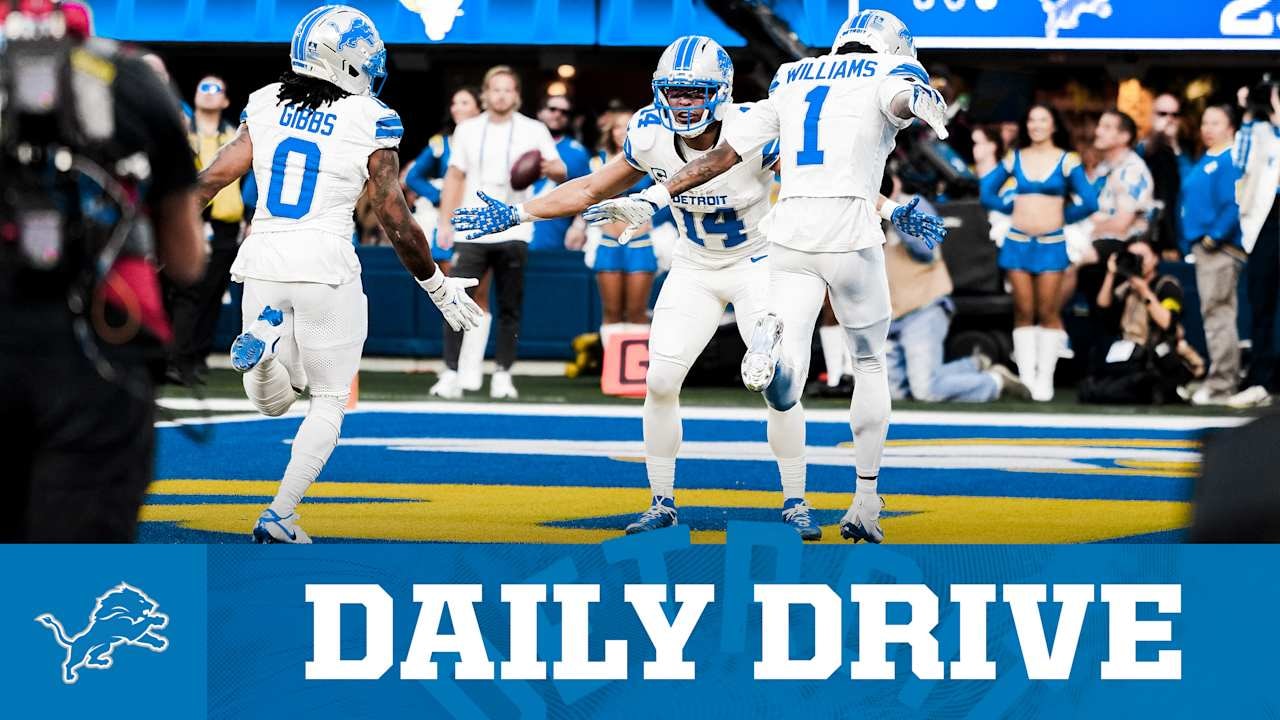
The Detroit Lions’ 2026 team-building conversation is taking shape around roster competition, with the club’s own offseason ranking exercise also highlighting a potential opening in the secondary. In its “The Daily Drive” preview, Detroit pointed to being “thin at CB” and noted an additional wrinkle tied to Terrion Arnold, referencing his arrest, as a factor that could shuffle internal competition and depth planning heading into next season.
Beyond that immediate defensive concern, the Lions’ year-ahead framing comes from a broader analytical exercise that ranks NFL position groups for 2026. The Lions’ publication focused specifically on the wide receiver, tight end, and running back rooms, an angle that matters because those three groups tend to define the day-to-day identity of offenses, from third-down passing efficiency to red-zone route design and run-game matchups.
A position-group ranking exercise is also a useful lens for fans trying to understand why some teams can absorb injuries or schematic shifts more smoothly than others. Wide receiver corps are typically tested by coverage rotations and pass-protection requirements for the route-based portion of the offense. Tight end depth can determine how consistently teams can stay balanced without forcing the play-caller to abandon run concepts or throw longer-developing routes into tight windows. Running back depth often becomes decisive late in games and across the season, particularly when the offensive line faces attrition.
For Detroit, the defensive “CB” comment acts as a reminder that roster evaluation rarely happens in isolation. Even if an offense projects well on paper, defensive availability and cornerback depth can affect how aggressively opponents challenge downfield passing. If Detroit enters 2026 with a need for more bodies or more reps at the position, those reps can accelerate younger players’ readiness and also influence how the staff manages coverage disguises and matchups.
The Arnold arrest reference adds a layer of uncertainty. Without treating this as an assumption about future eligibility, availability, or discipline, it is still clear why a team would flag it in the context of “competition.” In the NFL offseason, the balance between talent and availability can be the difference between a plan that is mostly execution-based and a plan that becomes contingency-based.
What to watch next is how Detroit’s cornerback group is built and stabilized through training-camp reps, preseason deployment, and internal depth-chart clarity. On the offensive side, Detroit’s participation in a league-wide WR, TE, and RB ranking conversation suggests the organization will continue to stress how its skill-position rooms can be sustained through the season, particularly if the team wants to keep its offensive identity intact when opponents change coverages.
In the bigger picture, this kind of ranking work does not predict outcomes by itself, but it does telegraph where teams believe the competitive edge could come from in 2026. If the Lions can turn their secondary competition into productive, reliable play, they can better leverage whatever strengths exist in the pass and run game, regardless of how opponents’ rosters evolve over the offseason.
Why It Matters
- Cornerback depth and availability can quickly influence a defense’s ability to manage coverage matchups and pass-rush schemes, especially when the unit is thin.
- Skill-position stability in WR, TE, and RB groups often determines how consistently an offense can execute its identity across different down-and-distance situations.
- Roster competition caused by off-field uncertainty can accelerate younger players, but it can also require contingency planning for coaching staffs.
- League-wide position-group evaluations help set expectations and can indicate which teams appear to be better equipped to weather injuries and schematic changes in 2026.
Key Facts
- The Lions’ official site published “The Daily Drive” as a 2026-focused ranking exercise for NFL position groups.
- Detroit’s piece emphasized that the team is “thin at CB,” creating an opportunity for competition.
- The Lions’ preview also referenced Terrion Arnold’s arrest as a complicating factor.
- The ranking exercise focused on wide receiver, tight end, and running back groups across the league.
- The topic is framed as part of how teams should evaluate 2026 roster construction at skill positions and depth areas.