
THE APEX TIMES
Thursday Rockpile: Rockies can learn from the “failure to launch” phase around MLB’s rebuilds
The Athletics’ struggles and the faster turnarounds seen with the Marlins and White Sox offer a checklist the Rockies can use as they look for a steadier climb out of the basement.
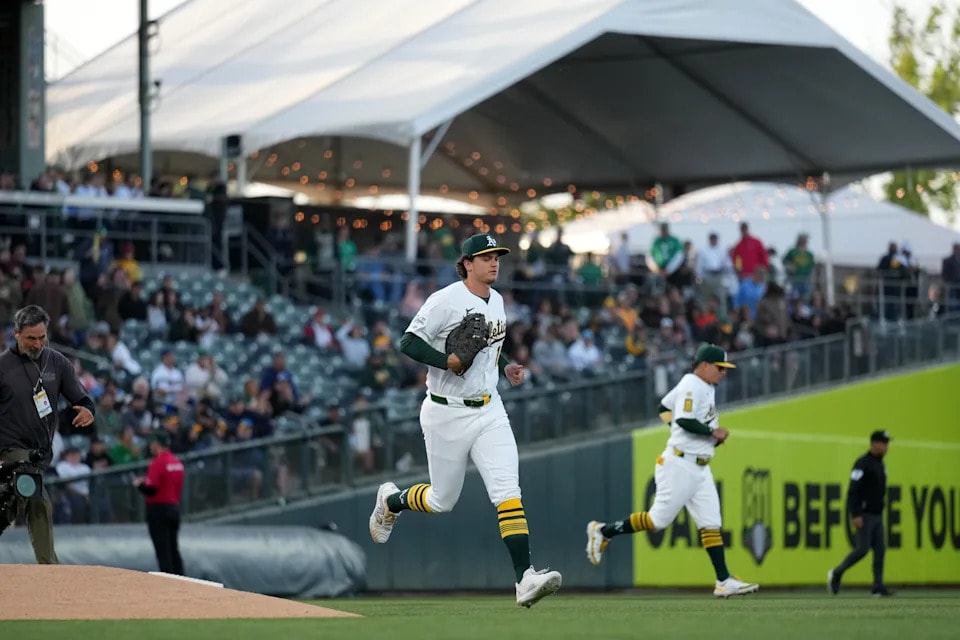
There is a particular kind of rebuild failure that does not show up on a single stat line. It shows up in the rhythm of a season, when young players keep arriving but the team never quite moves in the same direction, when development feels episodic rather than cumulative, and when every good week is followed by a reset. A recent look at MLB rebuilds uses that framing to examine the Athletics’ “failure to launch” period, then asks a more immediate question for the Colorado Rockies: what has to be true for the climb to start working before time runs out.
The comparison matters because Colorado’s organizational challenge is familiar across the league. A club can stockpile talent, chase upside, and still end up stuck if the internal pieces do not align: player usage, roster balance, and a clear plan for how wins will be produced at the major league level. The Athletics’ experience, as described in the column, serves as the cautionary counterpoint to teams that managed to create stability and momentum quickly enough to change their trajectory.
Within the same framework, the column points to two clubs as examples of how turnaround timelines can compress. The Miami Marlins, it notes, went from a 100-loss season in 2024 to an “almost.500” profile in each of the last two seasons. That is not just a marker of better results. It suggests the roster and the day-to-day decisions began producing closer-to-expected outcomes more consistently, which is typically what distinguishes a near-term fix from an extended rebuild.
The Chicago White Sox are offered as another reference point, especially for how quickly a franchise can reconnect with postseason football after a historically grim year. The column highlights that Chicago reached the playoffs just two seasons after losing 121 games in a single season. The implication for the Rockies is that the difference between collapse and contention is often not one blockbuster move, but a coordinated shift in performance drivers, from on-field execution to the way talent is integrated.
What, specifically, can Colorado take from those contrasts? First, the lesson is about sequencing. A rebuild that waits for every prospect to be ready can drift, while a rebuild that builds a baseline identity, then layers on growth, can create enough wins to make improvement feel sustainable. Second, it is about decision-making consistency. The “failure to launch” label fits situations where experimentation never gives way to a stable core. Third, it is about timelines. Turnarounds like Miami’s and Chicago’s do not happen in a vacuum, but they show that a steep climb is possible when the organization commits to a coherent approach early enough.
There is also a caution that should travel with any comparison. Each franchise’s resources, player pool, and baseball environment differ, and MLB seasons are noisy. A team can adopt the right plan and still struggle if roles do not fit or if variance overwhelms the early data. Still, the fact that the Marlins and White Sox are cited for fast improvements underscores a common theme in effective rebuilds: they do not only develop players, they convert player development into repeatable major-league performance.
For the Rockies, the next checkpoint is less about declaring a turnaround on a single stretch of games and more about watching for signs of structural progress. Does the club look more consistent in roster construction? Are younger contributors being used in ways that increase their likelihood of impact? Does the team’s performance pattern start to resemble the “almost.500” type trajectory described for Miami, rather than the stalled pattern implied by the Athletics’ experience? Those are the tells that determine whether this is another “wait-and-see” year or the start of a climb that lasts.
Why It Matters
- Rebuild momentum is as much about consistency and roster integration as it is about acquiring talent.
- Fast turnarounds, like the examples cited for Miami and Chicago, change what an organization can expect from its core players and decision-makers.
- For the Rockies, the practical implication is to identify early signs of “conversion” from development to repeatable major-league performance.
- Watching performance patterns, not just outcomes, can help distinguish a stalled rebuild from a climb that is beginning to work.
Sources
Key Facts
- A column frames the Athletics’ recent period as a “failure to launch” and uses it as a caution for how rebuilds can stall.
- The same discussion points to the Miami Marlins turning from a 100-loss season in 2024 to an “almost.500” profile in each of the last two seasons.
- The column notes the Chicago White Sox reached the playoffs two seasons after a season in which they lost 121 games.
- The core question posed is how the Colorado Rockies can avoid falling down during a rebuild climb.
- The article is structured as a comparative lesson across MLB turnaround timelines.