
THE APEX TIMES
Titans and 49ers trade looks in joint practice at Santa Clara, with emphasis on early timing, physicality, and situational execution
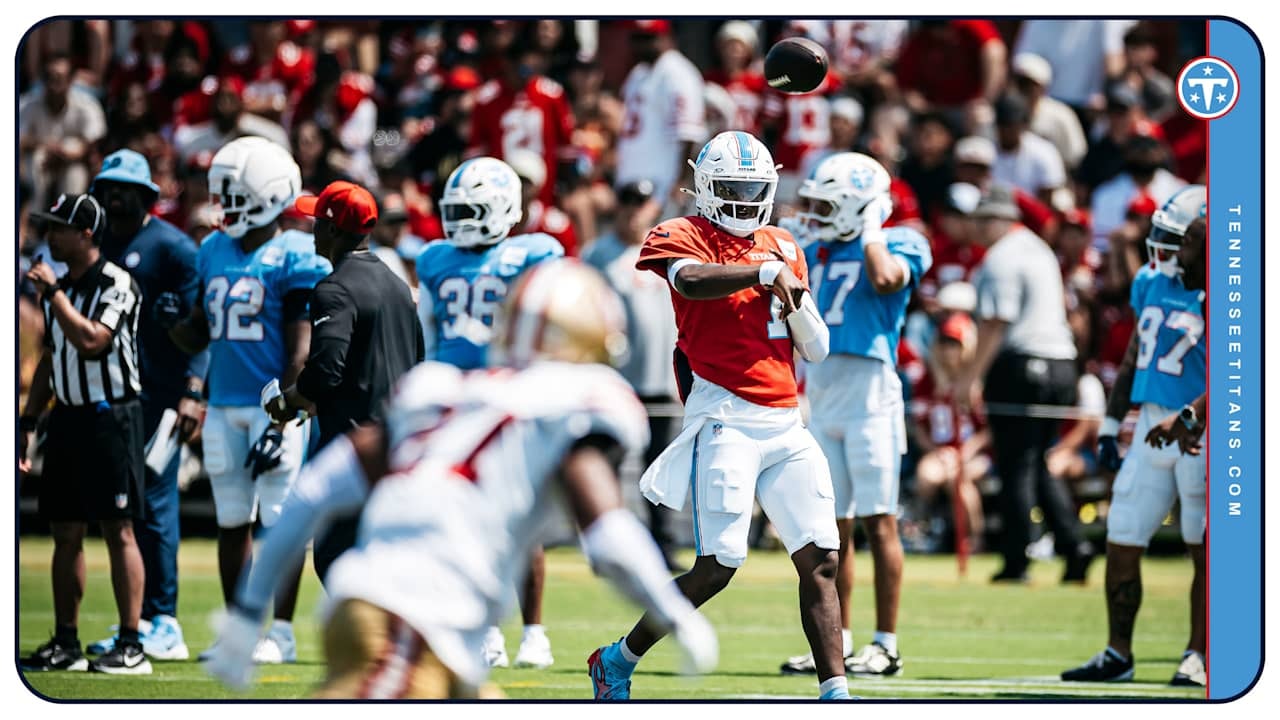
A Tuesday joint practice gave the Titans fresh work against the San Francisco 49ers, with veteran and coordinator-level themes on display as both teams sharpen their preseason tempo.
The Titans returned to the practice field on Tuesday for a joint session against the San Francisco 49ers in Santa Clara, a setting NFL teams use to evaluate readiness under live-fire conditions. The session was covered by Titans senior writer and editor Jim Wyatt, who published “Ten Observations From Tuesday’s Titans vs 49ers Joint Practice” to capture what stood out as practices moved from warmups into higher-intensity periods.
Joint practices like this one are typically structured to test fundamentals that can be difficult to measure in standard work, including whether timing and spacing hold up when an opponent is aligned with similar tempo. For teams at this stage of training, that means coaches want to see the offense reach the right protections and the defense match formations without hesitation. The underlying purpose is less about “winning” drills and more about identifying how quickly units can execute the plan when the other sideline is not doing the same thing.
Wyatt’s observations, as presented in the Titans’ team report, focus on what emerged during the practice rather than a game-style scoreboard. In that format, attention often shifts to the parts of football that can create repeatable problems: third-and-medium decision-making, red-zone rhythm, and whether play-calling concepts translate when the defense is attacking with full effort. The matchup setting matters too, because the Titans can compare their answers to what the 49ers look to do structurally at full speed.
For the 49ers, the value of a joint practice is equally practical. Facing another NFL opponent allows their coaching staff to look at coverage and rush execution with an offense that has its own cadence, blocking assignments, and route timing. It also gives a direct look at how defenders handle movement and adjustments when the offense is not operating with the same constraints as a controlled scrimmage setting.
One consistent theme in practices of this nature is the separation between clean execution and sustainable execution. Teams may string together sharp sequences early in a session, but the measure coaches care about is whether those details remain intact through different situational stretches and tempo changes. That is why joint practices can be more revealing than an extended walkthrough day, particularly for units learning new wrinkles in install phases.
Looking ahead, what to watch from a report like Wyatt’s is not just isolated flashes, but what the most important reps seemed to emphasize. For the Titans, that typically means whether offensive timing matched up with defensive pressure looks. For the 49ers, it often means whether their front and secondary could stay organized while absorbing the opponent’s answers. The next steps after Tuesday will be built around turning the most instructive observations into corrections, especially in the lead-up to preseason action.
Why It Matters
- Joint practices provide a cleaner read on whether offensive and defensive plans work under real opponent look and tempo.
- Early preseason readiness often hinges on repeatable situational execution, not just isolated good plays in drills.
- The Titans and 49ers both benefit by comparing schemes and adjustments against a live NFL opponent.
Sources
Key Facts
- The Titans held a joint practice Tuesday against the San Francisco 49ers in Santa Clara, California.
- The Titans’ team website published coverage of the session titled “Ten Observations From Tuesday’s Titans vs 49ers Joint Practice.”
- The report was authored by Titans senior writer and editor Jim Wyatt.
- The practice is presented as a full-speed evaluation opportunity rather than a game result.