
THE APEX TIMES
Titans reshape tight end depth chart, with Daniel Bellinger and Gunnar Helm at the center of the projection
A new way of building Tennessee’s 53-man roster is taking shape at tight end, after major offseason turnover and fresh additions meant to broaden roles in the passing game and in-line production.
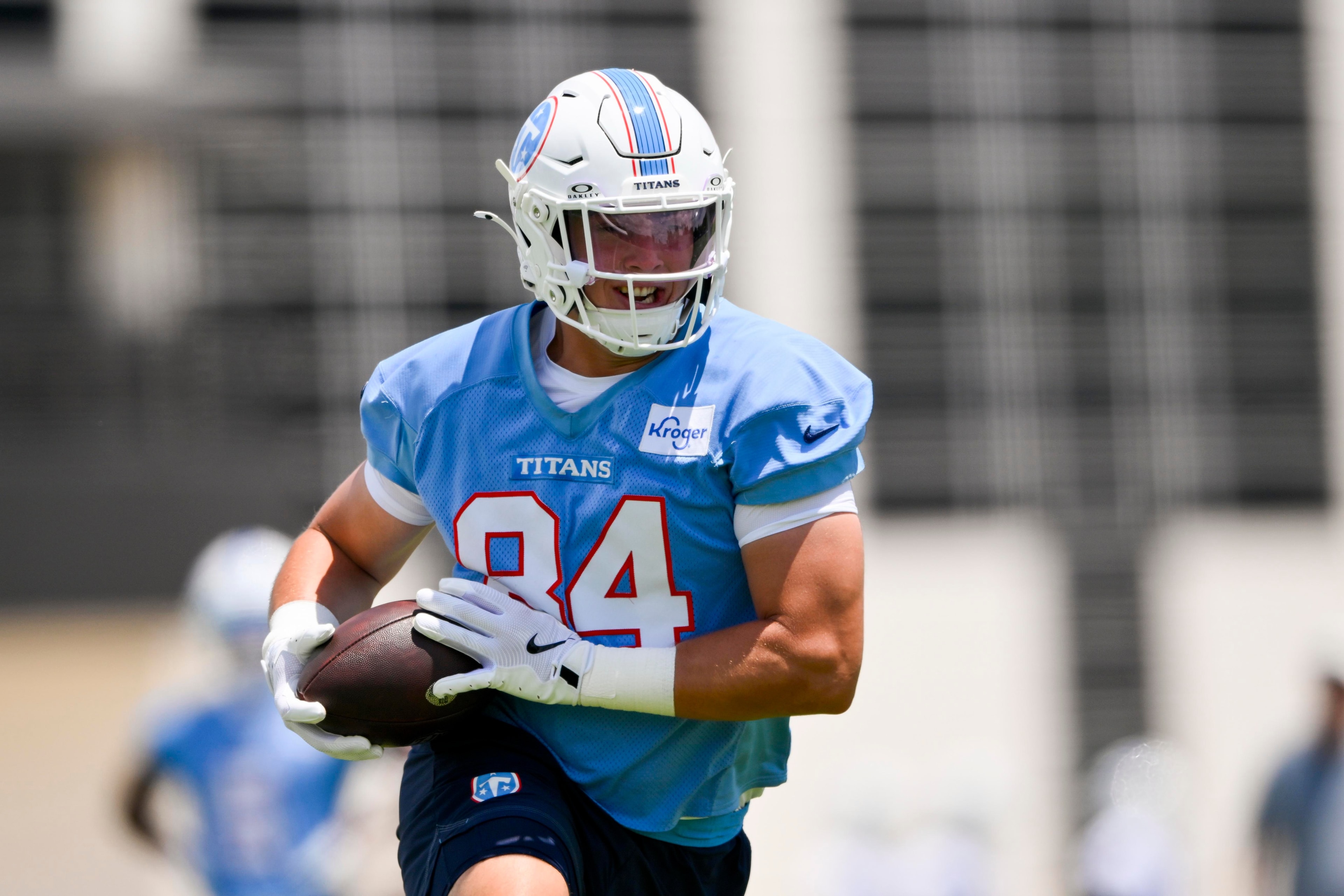
The Tennessee Titans’ tight end room looks meaningfully different as they move toward the start of the regular season, and one of the clearest signs is how their projected 53-man group is being evaluated from top to bottom. In a personnel-based look at the roster, Tennessee’s top tier begins with Daniel Bellinger and the promotion of Gunnar Helm, two changes that reflect the team’s intent to redefine what it asks tight ends to do week to week.
Bellinger’s place near the top of any projected pecking order is supported by the market Tennessee made for him in free agency. The Titans signed Bellinger to a $24 million contract, according to the report, a figure that indicates the team viewed him as a true organizational piece rather than a depth flier. That kind of investment typically comes with expectations tied to route running, target volume, and in-game versatility across formations.
At the same time, the offseason did not treat every previous piece as part of the plan. Chig Okonkwo was allowed to leave in free agency, per the same report. When a team moves on from a tight end who had an established role, it often forces a reallocation of snaps, routes, and blocking assignments, meaning the remaining tight ends do not just compete for a roster spot, they also compete for role certainty and trust in specific packages.
The ranking framework also highlights how Tennessee is re-stacking the rest of the depth chart. Gunnar Helm is being promoted, which in a roster-projection context generally points to more meaningful involvement than a purely developmental role. The report also links Tennessee’s plans to new veteran and rookie options, including Kylen Granson’s signing and the team’s selection of Jaren Kanak in the draft. Those additions suggest the Titans want multiple tight end profiles available, from the style of player who can contribute in condensed passing looks to those who can stabilize the in-line duties.
Still, a tight end ranking for a projected 53-man roster is not the same thing as a guaranteed depth chart on game day. Training camp and preseason snaps tend to decide who truly separates, especially at a position where teams shift responsibilities based on opponent tendencies, red-zone personnel groupings, and how the offense wants to manage matchups across downs.
What to watch next for Tennessee is how the tight end roles sort themselves out in practice and preseason: whether Bellinger’s contract-level investment translates into a consistent target share, whether Helm’s promotion is tied to specific packages or broader usage, and whether Granson and Kanak carve out defined roles that prevent the position from becoming overly dependent on just one or two players. The Titans’ early-season offensive identity could hinge on those answers, because tight ends often determine how efficiently an offense can transition from short passing concepts to deeper routes and from spread looks to heavier sets.
Why It Matters
- Tight end depth affects how Tennessee packages the offense, especially in red zone formations where personnel groupings vary quickly.
- Replacing a departure like Okonkwo can change snap distribution and who becomes trusted in key coverage areas and run-game assignments.
- Bellinger’s contract size suggests the Titans expect immediate, measurable impact, which could shape the passing-game read structure.
- Helm’s promotion and the addition of Granson and Kanak indicate the team is trying to build multiple tight end profiles rather than relying on one archetype.
Key Facts
- A report projects the Tennessee Titans’ tight ends for the 53-man roster from best to worst ahead of the season.
- Chig Okonkwo was allowed to leave in free agency, according to the report.
- Gunnar Helm is being promoted, according to the report.
- Daniel Bellinger was signed to a $24 million contract, according to the report.
- The Titans also signed Kylen Granson and drafted Jaren Kanak, according to the report.