
THE APEX TIMES
Todd Bowles’ fourth-quarter gamble looms large in Buccaneers’ Thursday-night stand against Dallas
With Tampa Bay leading 24-10 and time still on the clock, the decision to pass instead of taking points became a central storyline after a late-game choice swung momentum.
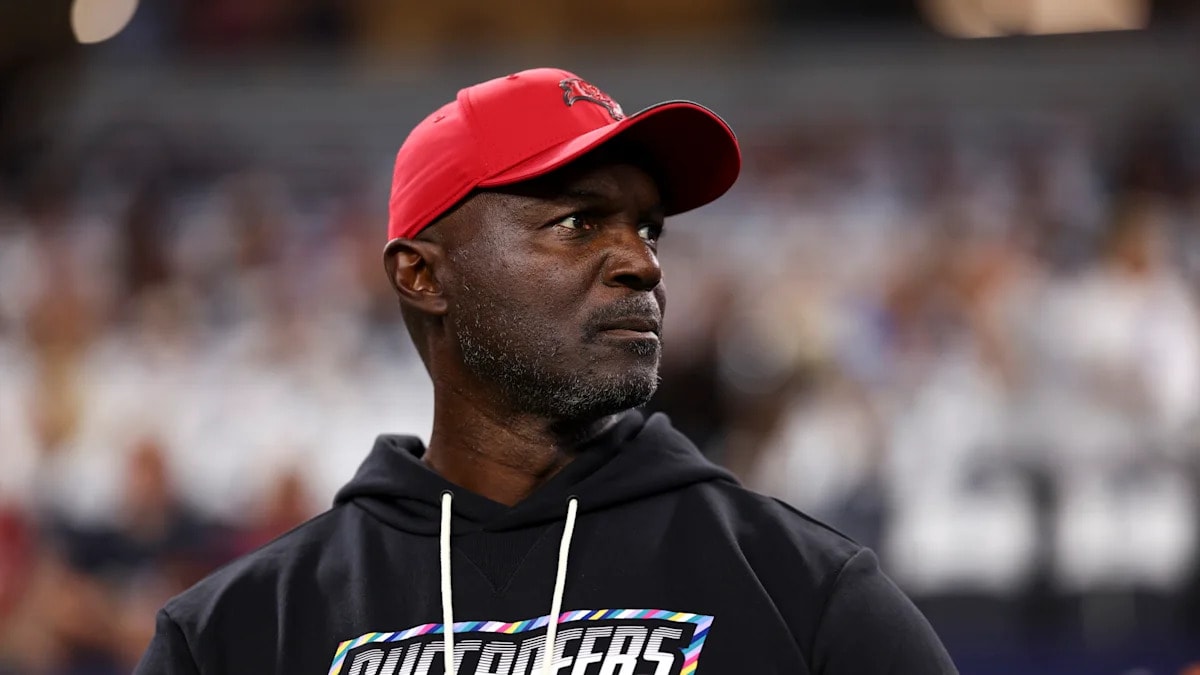
Down the stretch of Thursday night’s matchup, the Buccaneers appeared in control. Tampa Bay carried a 24-10 lead with 8:36 remaining against the Cowboys, a cushion that typically invites a conservative push toward the end zone or at least a field goal to extend the margin. Instead, Tampa coach Todd Bowles faced a familiar high-leverage call: when the game is still far from finished, does a team bank the sure points or keep pressing the advantage with a play that carries more risk?
According to Yahoo Sports’ account, Bowles “flirted with disaster” by electing to pass rather than take the field-goal option late in the fourth quarter. In situational football terms, those are the moments where coaching philosophy meets game-state math. A field goal is not just points, it is clock, field position, and a buffer against late-game variance. Passing can still work, but it also creates additional failure paths, including turnovers and stalled drives that can flip momentum with limited time remaining.
The underlying tension in the decision is straightforward. Tampa Bay’s two-possession lead still mattered, but in the NFL, a lead is only as stable as your ability to keep the opponent from getting back into scoring rhythm. Choosing to pass when time is not yet “garbage time” indicates trust in the offense, confidence in execution, and an assumption the play will produce either a first down or a bigger payoff than a kick.
At the same time, the risk profile changes because the coaching choice happens while the defense still has to manage what follows. If the pass fails to convert, the offense can lose downs, the clock can tick away without adding points, and the opponent gains a shorter field and a greater sense of urgency. That is why these calls are often judged harshly after the fact, even when they originate from a reasonable desire to be aggressive.
Bowles’ decision also highlights the contrast between “control the game” and “decide the game.” Teams that prioritize control often aim to reduce volatility with conservative scoring plays once they reach a safe enough margin. Teams that prioritize deciding it early tend to keep the foot on the gas if they believe their matchup advantage will break the opponent’s plan. Thursday’s moment, as framed by Yahoo Sports, tilted toward the latter even with a comfortable lead.
For Tampa Bay, the immediate question that lingers is not whether aggression is good or bad, but whether the risk matched the context of Dallas’ ability to respond. In the NFL, the final tally is influenced by just a few possessions, and coaching decisions in those late-quarter sequences can become the difference between “efficient management” and “could have been two possessions plus change.”
What to watch next is how Bowles and the Buccaneers adjust their late-game decision-making process when similar score and clock thresholds appear. The league will keep presenting these coaching crossroads, and Tampa Bay’s approach in future closeout situations will offer a clearer picture of whether Thursday’s choice was an outlier judgment or a repeatable report of the team’s identity under pressure.
Why It Matters
- Late-game coaching decisions can quickly determine whether a lead feels secure or vulnerable in the NFL’s two-possession swing scenarios.
- Choosing to pass over a field goal increases variance, because failed conversions can give the opponent extra drives with less time to overcome.
- How a team manages scoring and clock in similar future moments will affect both game-to-game outcomes and the broader perception of a team’s game-control philosophy.
Key Facts
- The Buccaneers led the Cowboys 24-10 with 8:36 remaining in the fourth quarter.
- Tampa Bay coach Todd Bowles chose to pass rather than take a fourth-quarter field goal in that late-game situation.
- Yahoo Sports characterized the decision as bordering on disaster, emphasizing the risk of not banking points.