
THE APEX TIMES
Todd Monken’s Preference for Mobility Puts a Twist on the Browns’ QB Race
As Cleveland weighs Deshaun Watson and second-year passer Shedeur Sanders, a reported desire from new head coach Todd Monken for a more mobile quarterback has emerged as a key lens for how the position battle could be evaluated.
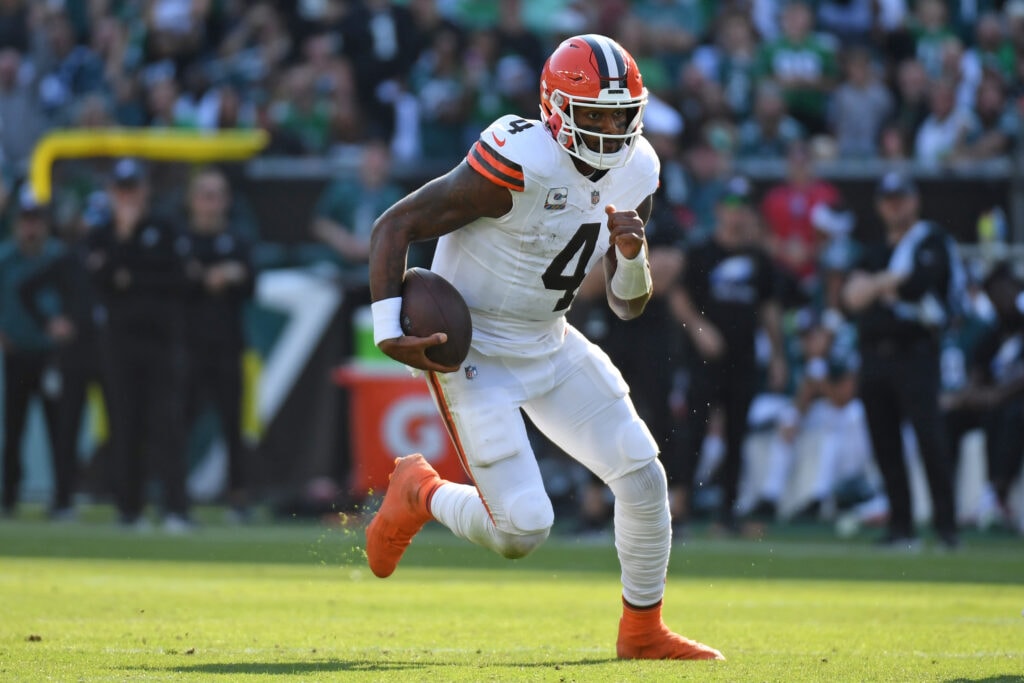
The Cleveland Browns’ quarterback competition entering camp is already defined by contrasting profiles, but a new detail may sharpen how the team views them. Pro Football Rumors reported that head coach Todd Monken’s quarterback evaluation has included an emphasis on mobility, framed as a factor in what he wants under center. In Cleveland, that matters immediately because the quarterback room is led by Deshaun Watson, with mobility as a notable part of his past production, while second-year passer Shedeur Sanders is also being viewed through the same physical-athletic lens.
Monken has been relatively light on specifics publicly, but a report attributed to Zac Jackson of The Athletic described Monken’s preference in clear terms. According to that account, Monken wants a quarterback who can move in ways that extend plays, not just deliver from a set pocket. The Browns’ internal and coaching focus on “mobility” also aligns with Monken’s track record as an NFL play-caller, a background that can shape how he designs reads, pressure responses, and rollout-friendly concepts.
Part of the context is that Monken’s offensive résumé includes working with quarterbacks known for creating yardage with their legs, at least during certain stages of their careers. Pro Football Rumors pointed to his time calling plays involving players such as Jameis Winston and Baker Mayfield, both of whom have shown scramble ability, and Lamar Jackson, whose mobility is the foundation of his game. That coaching history does not guarantee the Browns will replicate any one offense, but it does suggest Monken’s comfort level with athletic quarterbacking could be a deciding standard in camp.
Watson is the more “established” option in Cleveland’s QB competition, and the mobility conversation starts with how Pro Football Rumors characterized his ground production during his earlier NFL run. The report noted that over his last three seasons in Houston, Watson averaged about 470 rushing yards per season and added 15 rushing touchdowns with his legs. It also acknowledged that his Cleveland experience has been more limited in appearances, while asserting that his rushing yards per game in the 19 contests he played were comparable to those earlier performances. If that framing holds up in the team’s own evaluation, Watson’s ability to extend plays could remain a key part of why he stays in the conversation.
Sanders, meanwhile, is being judged as a different kind of fit, especially since his mobility is tied to how quickly he can translate athletic movement into effective throw timing. Pro Football Rumors described his rookie sample as showing improved mobility relative to his Colorado playing style, while emphasizing that college statistical comparisons can be distorted by how sacks are recorded as negative rushing yards against quarterbacks. In other words, the Browns’ coaching staff may be looking less at neat, comparable box-score lines and more at whether Sanders can avoid sacks, keep eyes downfield, and still deliver accurate throws after moving.
The Browns have three quarterbacks on their roster, including Dillon Gabriel, Shedeur Sanders, and Deshaun Watson, according to. That official snapshot underlines that this competition is not a one-dimensional test between two players. Still, the mobility emphasis described by Pro Football Rumors makes the top-of-the-depth-chart candidates especially relevant, since how each quarterback handles pressure and transitions from movement to passing can determine how confidently the coaching staff calls certain plays.
What to watch next is how Monken operationalizes the mobility preference. The clearest indicators will be early camp practice patterns: how often the offense uses designed movement, how quarterback run reads are coached, and whether the team treats pocket escape as a “second option” or as a core feature of the passing game. The Browns’ ultimate choice will likely reflect more than one trait, but mobility, as described in the reporting, could become the difference between “talented” and “best fit” in Cleveland’s current system.
Why It Matters
- A mobility preference can shift the balance of a quarterback competition toward players who can extend plays and protect throws under pressure.
- Mobility can influence offensive play-calling, including how often the Browns design rollouts, read-based concepts, and scramble-friendly progressions.
- If the Browns prioritize quarterback movement, it can affect how quickly the team installs timing-dependent passing packages and how they evaluate decision-making when lanes close.
- The winner of this battle will shape the Browns’ offensive identity and, by extension, how Cleveland tries to separate in the AFC North’s physical, pressure-heavy games.
Sources
Key Facts
- Pro Football Rumors reported that Browns head coach Todd Monken’s evaluation of quarterbacks includes an emphasis on mobility.
- The report attributed the mobility detail to a characterization by Zac Jackson of The Athletic.
- Cleveland has three quarterbacks listed on its roster, per: Dillon Gabriel, Shedeur Sanders, and Deshaun Watson.
- Pro Football Rumors described Watson’s prior NFL ground production in Houston as about 470 rushing yards per season over his last three years and 15 rushing touchdowns.
- Pro Football Rumors described Sanders’ rookie sample as showing improved mobility compared with what he displayed at Colorado, with an explanation that sacks are recorded differently in college statistical totals.