
THE APEX TIMES
TWENTYMAN: Lions’ Amon-Ra St. Brown and Sam LaPorta have become Goff’s most trusted late-game connections
Detroit’s passing game is built around dependable targets, and Tim Twentyman points to Amon-Ra St. Brown and Sam LaPorta as the two receivers Jared Goff leans on when a play has to be made.
Detroit fans have heard the phrase “security blanket” in a general sense for years, but Tim Twentyman applied it with specificity in his Week 5 observations from inside the Lions’ offense. In his view, a security blanket receiver is the one a quarterback turns to when the situation demands a big play on a critical down or during a key moment. For quarterback Jared Goff, Twentyman’s answer has been consistent: Amon-Ra St. Brown, and increasingly, Sam LaPorta.
Twentyman’s central point is rooted in trust and repeatability. He wrote that St. Brown has been Goff’s security blanket dating back to 2022, suggesting the connection is not a one-week trend. That matters because the most reliable third-down and late-game routes do not always show up in highlight form. They show up in the calm, mechanical part of a drive, when a quarterback needs the offense to produce despite pressure, coverage disguises, and limited space.
St. Brown’s role, as framed by Twentyman, is more than just “a good receiver.” It is the receiver as a safety valve and a security measure. When the offense needs to stay on schedule, a quarterback looks for the player who can win consistently enough that the decision-making gets easier. Twentyman’s wording emphasizes the moment of decision, when protections, play clocks, and defensive adjustments compress the time for uncertainty.
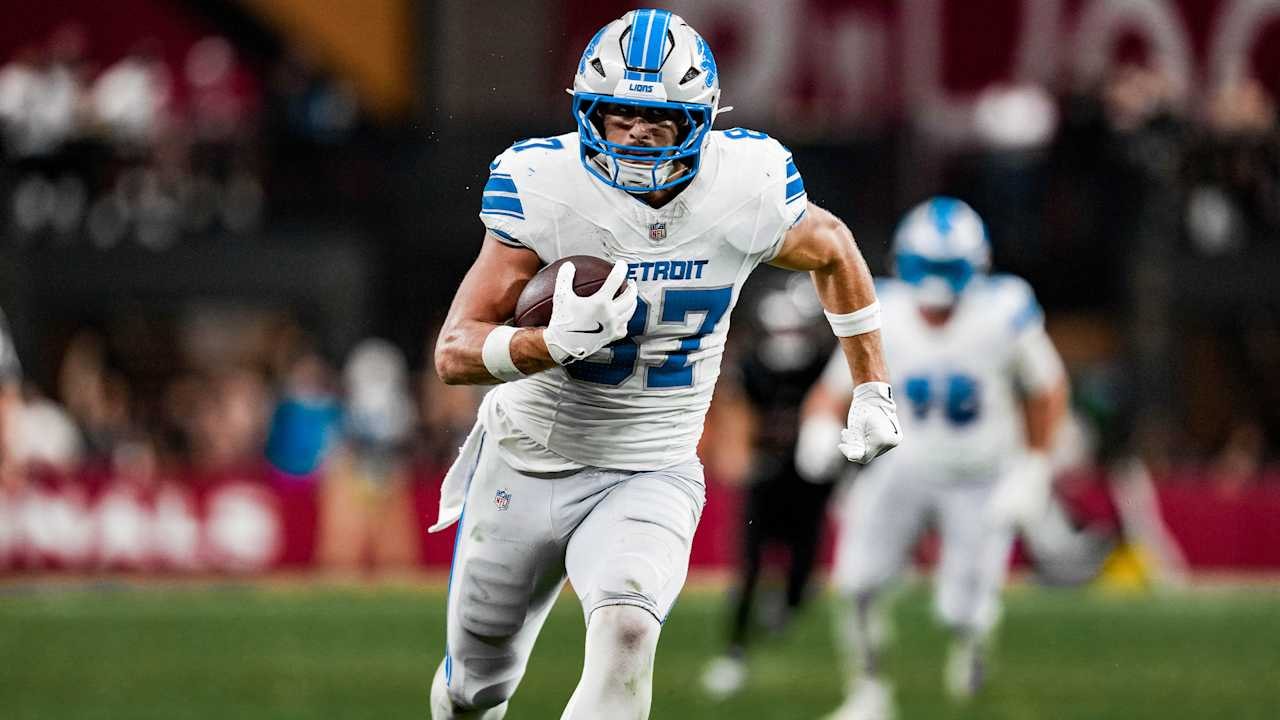
Twentyman also argued that LaPorta has grown into that same kind of trusted option. The tight end has become, in his assessment, another receiver Goff can target in those critical sequences. That is a meaningful evolution for a play-calling structure built around who can be relied on when the defense is taking away the obvious choices.
For Detroit, the practical value of having both a leading receiver and a tight end with security-blanket status is that it complicates defensive planning. If teams try to load up on one area of the field, Goff can pivot to the other target type. If defenses bracket or reduce space to force contested catches, the quarterback can still find a dependable release or matchup that fits the down and distance.
This does not mean every drive is scripted to end in a completed pass to those two players, and it does not eliminate the need for the rest of the offense to create openings. But Twentyman’s observations highlight how a quarterback’s comfort level shapes the offense’s momentum. When a team can repeatedly identify one or two players who are trusted in high-leverage moments, the passing attack becomes more stable, even when the run game or early passing patterns are not producing at full speed.
Looking ahead, the storyline to watch is whether Detroit’s late-down and critical-down targets continue to center on St. Brown and LaPorta as the season progresses. If opponents respond by disguising coverage or shifting attention away from one of them, the Lions’ ability to keep production flowing through the same trusted connection will be a major indicator of how sustainable the offense’s decision-making remains. Twentyman’s Week 5 emphasis makes the Lions’ top-of-the-target hierarchy sound less like a preference and more like an operational plan.
The league-wide lesson is that “security blanket” receivers are often not simply the most talented names on the roster. They are the ones who become the default answer in tight spots, the ones a quarterback can find without hesitation. In Twentyman’s account of Detroit’s offense, St. Brown has already earned that label, and LaPorta’s growing role suggests the Lions are building a second reliable pathway when games tighten.
Why It Matters
- A quarterback’s go-to options in high-leverage moments can influence how efficiently an offense converts third downs and manages late-game possessions.
- If St. Brown and LaPorta both function as trusted targets, opponents must account for multiple reliable receiving pathways rather than one.
- The tight end’s role as a safety-valve option can affect defensive scheming and how easily defenses can disguise coverage late in drives.
- Over time, the presence of two high-trust connections can make the offense more resilient when initial routes are disrupted or contested.
Key Facts
- Tim Twentyman described a “security blanket” receiver as the one a quarterback trusts for big plays on critical downs or key moments.
- Twentyman wrote that Amon-Ra St. Brown has been Jared Goff’s security blanket since 2022.
- Twentyman also said Sam LaPorta has become an increasingly important security-blanket option for Goff.
- The observations were part of Twentyman’s Week 5 notes focused on Detroit’s passing game decision-making.
- The article frames receiver trust and late-game reliability as core components of the Lions’ offensive stability.