
THE APEX TIMES
UCF’s defense unravels late again in loss to No. 18 Oklahoma State, exposing secondary and pass-rush questions
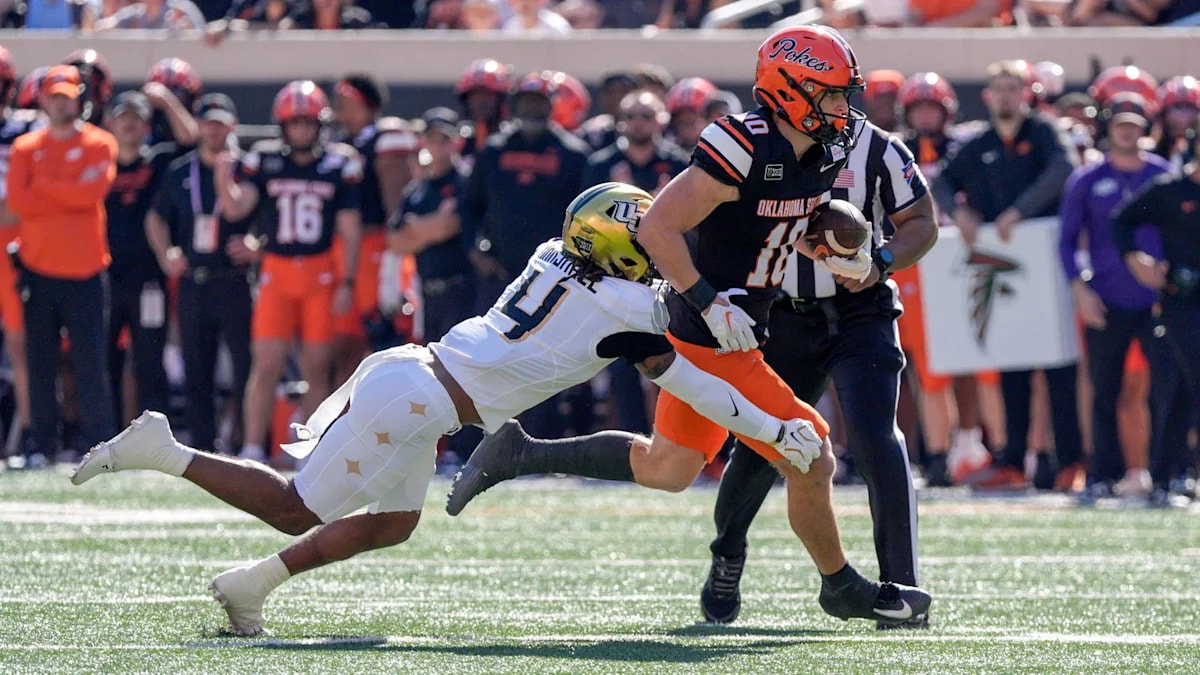
Late-game collapses and a pass rush that stalled set the tone as the UCF Knights dropped a key road test to No. 18 Oklahoma State. The defeat surfaced concerns about how the Knights defend in the back half, particularly in the secondary and on third down.
Oklahoma State got the win over UCF behind a finish UCF could not reliably protect, and the most telling theme of the game was defensive fade late. In the aftermath, the Knights were left to parse a performance that did not just fall short at the end, but appeared to break down in consecutive second halves, turning a winnable matchup into a missed opportunity against a nationally ranked opponent.
According to the postgame analysis published by Yahoo Sports, the first defensive takeaway centered on timing. The Knights’ issues were not isolated to a single drive or a single quarter, but instead clustered during late-game stretches, when opponents gained momentum and the defensive patterns that had worked earlier stopped holding. That matters because in college football, late-game execution tends to be a reflection of preparation, stamina, and the ability to adjust coverage and pressure once offenses identify tendencies.
The second takeaway focused on pressure, particularly the pass rush’s disappearance when Oklahoma State needed it most. UCF’s defense may have created some early disruption, but the report describes a vanishing pass rush that left the Cowboys’ passing game freer than it should have been, especially as the game moved forward. When a defense cannot sustain pressure, quarterbacks get cleaner looks, receivers can settle into routes, and third-down conversions become harder to prevent.
The third takeaway addressed the secondary, an area UCF had to rely on more heavily once the front stalled. Yahoo Sports notes that the Knights’ secondary was once considered one of the stronger units in its conference, but that it “crumbled” in the back half. The practical takeaway for UCF is that secondary breakdowns late in games often force safeties and cornerbacks into riskier decisions, and they can also reduce the margin for error when pressure is not arriving consistently.
Contextually, this kind of defensive story carries extra weight for a team trying to compete for higher-profile wins. UCF’s ability to take down ranked teams depends on controlling tempo, preventing chunk plays, and sustaining third-down stops, because ranked opponents are typically built to punish small lapses. When late-game defenses lose both coverage integrity and pass rush, it can erase early confidence quickly.
There are also development questions inside the takeaway itself. A defense can be “confident” in its identity, as the report suggests UCF was, yet still fail when execution diverges from plan. For the Knights, the next coaching challenge is to identify why adjustments were not effective during consecutive second halves, whether that is schematic clarity, personnel matching, or communication at critical moments.
For Oklahoma State, the win reinforces what teams want to see against top-level competition: the ability to maintain offensive rhythm and apply pressure back at the opponent when the game narrows. For UCF, the loss is not just about the final result. It raises what to watch next, including whether the Knights can keep their defensive fundamentals steady into late-game situations and whether the pass rush and secondary can function as a connected unit rather than two separate problems that emerge independently.
UCF’s turnaround path will likely be measured drive by drive, particularly on long sequences late in games. If the Knights can stabilize third down, sustain pressure, and limit coverage breakdowns after halftime, the defensive confidence referenced in the analysis can become something more than a preseason belief. If not, the same pattern could repeat in future matchups against teams built to capitalize when opponents’ defenses tire or lose their footing.
Why It Matters
- Late-game defensive reliability often determines which teams can win close games against ranked competition, and UCF’s breakdown raises immediate execution questions.
- If the pass rush cannot consistently generate pressure, it can force the secondary into coverage without help, making long plays more likely late.
- The defeat provides a clear diagnostic for UCF’s coaching staff: fix adjustments after halftime and tighten third-down defense to avoid repeated second-half lapses.
- For Oklahoma State, the result is a reminder of how ranking-level offenses can expand advantages when pressure and coverage wane simultaneously.
Key Facts
- UCF lost to No. 18 Oklahoma State in a game where late defensive stretches were pivotal.
- Yahoo Sports’ postgame analysis identifies the Knights’ late-game defensive collapse as a central theme.
- The report describes a pass rush that became less effective as the game progressed.
- The analysis points to secondary breakdowns that appeared after the Knights’ earlier confidence in that unit.
- The defensive problems are characterized as recurring across consecutive second halves rather than confined to one moment.
- The postgame framing emphasizes that the issues hurt UCF’s ability to sustain an upset push against a ranked opponent.