
THE APEX TIMES
UCLA coach Bob Chesney says there is “serious concern” quarterback Nico Iamaleava could miss the rest of the season
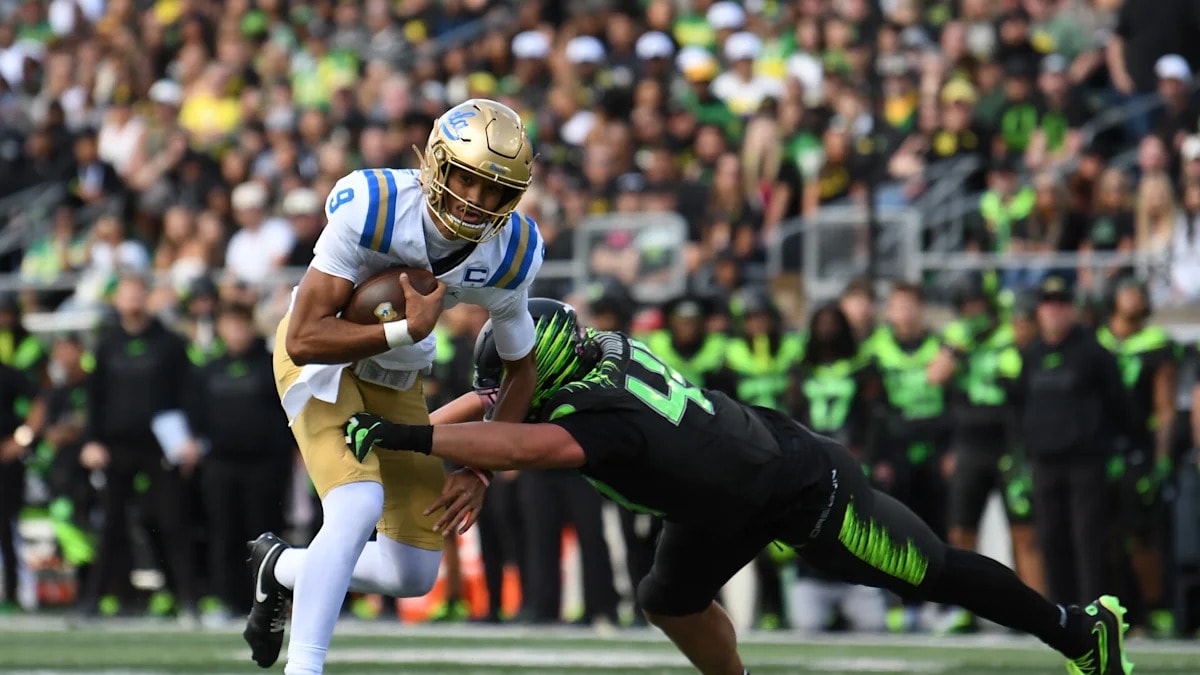
Iamaleava was hurt just before halftime in the Bruins’ 17-15 win over Oregon, and coach Bob Chesney indicated the knee injury could be season-altering.
UCLA’s October breakthrough against Oregon came with an immediate and potentially season-defining cost. Quarterback Nico Iamaleava was injured just before halftime of the Bruins’ 17-15 victory on Saturday, and coach Bob Chesney said afterward there is “serious concern” that the knee injury could keep Iamaleava out for the rest of the season.
The timing matters. A quarterback injury late in the first half changes the game plan going forward, especially against an opponent like Oregon that can adjust tempo and field position. UCLA still found a way to win a tight, low-scoring game, but the longer-term picture now pivots from week-to-week outcomes to the availability of its offensive leader.
Chesney’s comments, as reported by Yahoo Sports, frame the situation as more than a short absence. When a coach uses language like “serious concern” about a knee injury and ties it to missing the rest of the season, it indicates that the team is preparing for a scenario that would require meaningful quarterback reps and a new rhythm on offense.
Iamaleava, who has been the centerpiece of UCLA’s passing attack, now faces the kind of uncertainty that can ripple through protections, play-calling, and the development of backup options. In college football, even one missed month can force a different set of formations and decision-making habits, because quarterbacks are not just throwers. They are the pre-snap processors who manage protections, route adjustments, and third-down calculations.
The Bruins will also have to manage the human side of the situation. In the same week, a quarterback’s health affects how other players are utilized. Running backs may carry additional responsibilities if the passing game becomes more conservative. Receivers could see different target patterns if the backup is more likely to operate within specific timing windows, and the coaching staff may lean into packages that reduce reads or simplify progression.
For UCLA, the stakes extend beyond one game. With the season already underway, the quarterback depth chart becomes a cornerstone of how the Bruins handle their remaining schedule, especially when they face opponents that pressure the pocket and test third-down conversion rates. Even if Iamaleava returns earlier than feared, the program still has to plan as though he might not, because recovery timelines in-season can be difficult to predict.
What to watch next is straightforward but decisive: whether UCLA provides an injury update, how quickly the program identifies the operational starter if Iamaleava is sidelined, and how UCLA’s offense performs under a different quarterbacking plan in the weeks ahead. The margin between an adjustment that stabilizes an offense and one that forces continual patchwork often shows up quickly, starting with play selection and execution on third down.
Why It Matters
- If Iamaleava misses extended time, UCLA’s offensive identity could shift quickly, affecting play-calling, protection schemes, and third-down execution.
- A quarterback change in-season can impact timing, route details, and decision-making, which can alter how the team matches up against each opponent’s pressure package.
- UCLA’s ability to keep winning hinges on whether a backup can deliver enough consistency to prevent the offense from becoming overly conservative.
Sources
Key Facts
- UCLA beat Oregon 17-15 on Saturday.
- Quarterback Nico Iamaleava was hurt just before halftime of the game.
- UCLA coach Bob Chesney said there is “serious concern” Iamaleava could miss the rest of the season.
- The injury involved Iamaleava’s knee.
- The story centers on how the injury could affect UCLA’s quarterback availability for the remainder of the season.