
THE APEX TIMES
UFC flyweight champion Natalia Silva returns home to a reception that falls short of the script
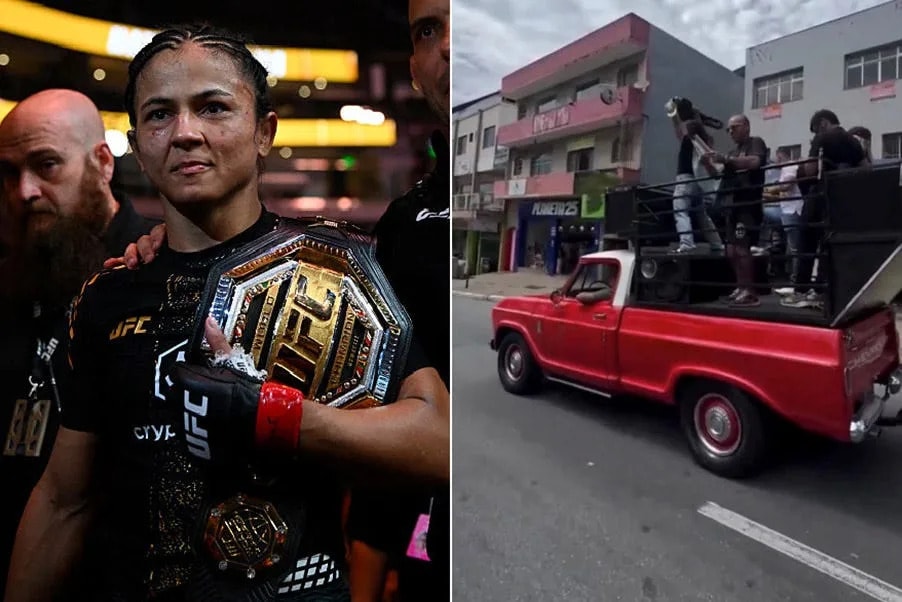
After defeating Wang Cong to capture the women’s flyweight title at UFC 332, Natalia Silva’s hometown in Brazil staged a homecoming that did not unfold as fans and the champion’s camp expected.
Natalia Silva’s coronation as a UFC champion arrived with the kind of global recognition the sport now brings to its new titleholders. But the homecoming that followed her women’s flyweight victory over Wang Cong at UFC 332 did not quite match the hero’s welcome many newly crowned champions are accustomed to receiving when they return to their roots, according to Yahoo Sports’ account of events in her Brazilian hometown.
The difference between the arena and the hometown is at the center of the report. In UFC’s current era, championship moments are amplified instantly across leagues and platforms, and returning with the belt can turn into a local celebration that resembles a parade or civic festival. In Silva’s case, the hometown reception reportedly did not land as a smooth, celebratory scene tied neatly to her title win.
At UFC 332, Silva captured the women’s flyweight championship by defeating Wang Cong, marking the highest point of her career in the sport’s most visible division structure. That context matters because title changes do not only affect the champion’s status, they alter the promotional and emotional landscape for everyone around her, including fans back home who may have planned their own moments of recognition.
Yahoo Sports framed Silva’s homecoming as a test of what UFC titles mean beyond the octagon. The account suggests that the belt, even when earned in front of a wide audience, does not automatically guarantee the kind of public reception that some athletes hope for when they return to the place that shaped them.
The report also highlights how expectations can diverge between a champion’s anticipated return and the realities of public-facing events. Homecoming ceremonies depend on logistics, local coordination, and crowd management, and when those factors do not align, the day can become more complicated than a straightforward victory lap.
For UFC fans, the episode fits a broader pattern in combat sports where a champion’s narrative is no longer limited to fight night. Titles now carry cultural visibility, and that visibility can create pressure for public moments that may or may not go as planned, especially when the champion is returning to a community without the same production resources as a major event venue.
What to watch next is how UFC and Silva’s team handle the title-picture storyline moving forward. The homecoming may be a moment of contrast, but it does not change the on-record outcome from UFC 332 that put the women’s flyweight championship in Silva’s hands. If the sport’s calendar continues to progress, the next public chapter will likely be less about parades and more about how quickly the division rallies around the next challenger and what comes after a new champion’s arrival.
Why It Matters
- A new champion’s public story is now part of UFC’s title ecosystem, shaping how fans interpret the significance of belts beyond fight night.
- Homecoming receptions can influence how quickly a champion’s momentum translates into long-term community engagement.
- Incidents or friction around high-visibility events can become part of the broader narrative around a title reign, even when fight outcomes are unchanged.
- For the women’s flyweight division, the next phase is still about who emerges as the next challenger after a title change at UFC 332.
Key Facts
- Natalia Silva won the women’s flyweight title by defeating Wang Cong at UFC 332.
- Yahoo Sports reported that Silva’s homecoming parade in her Brazilian hometown did not go as planned.
- The coverage contrasts expected “hero’s welcome” customs for newly crowned UFC champions with the reported hometown reception.
- The report frames the moment as evidence that a UFC championship’s meaning can vary outside the octagon.