
THE APEX TIMES
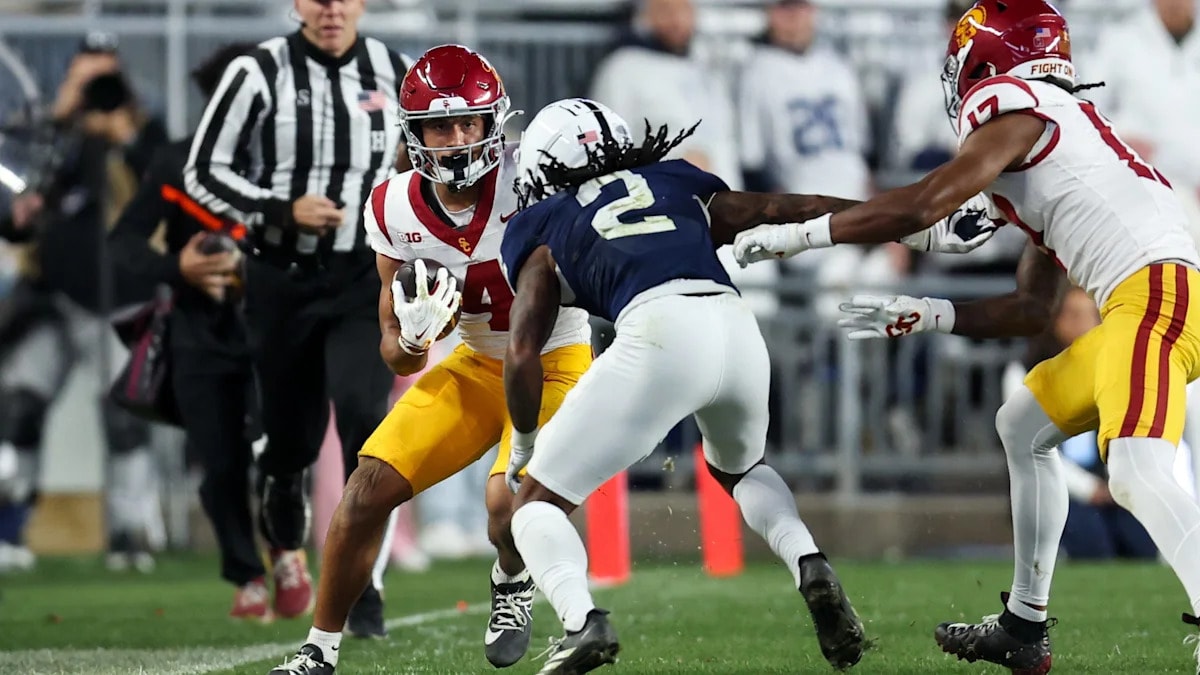
USC freshmen shine in road win narrative vs. Penn State, led by Trent Mosley and Kayden Dixon-Wyatt
A rebuilding-inflected USC season picture got a useful data point on the road, with multiple freshmen singled out for impact against Penn State as the Trojans’ class continued to turn into playable depth.
USC’s late-season storyline gained clarity in the Trojans’ road test against Penn State, where a group of first-year contributors stood out in the game narrative. Rather than treating recruiting class progress as a long-term exercise, the performance profile focused on freshmen making the kind of plays that affect momentum and play calling, especially on defense.
Trent Mosley emerged as the most prominent freshman name in the account, described as returning to action and dominating. That matters because it reframes the Trojans’ rotation decisions, turning a freshman into a high-leverage option rather than a pure situational player. When a new class member can command an opponent’s attention in a high-visibility environment, USC’s development track becomes easier to sustain across weeks.
Kayden Dixon-Wyatt was also identified among USC’s prime freshmen performers for the Penn State matchup. The framing here is important, because it suggests the production was not isolated to a single position group. Freshmen showing up on both sides of the ball, even with varied roles, is usually the clearest sign that recruiting evaluation is translating into usable snaps rather than only practice-floor promise.
Luke Wafle was another freshman highlighted in the same tracker-style breakdown. The description emphasized improvement and pointed to a particularly important defensive play. That kind of specific, impact-adjacent contribution can be more valuable for a coaching staff than steady but unspectacular output, because it supports trust in game plans and late-game packages.
The overall takeaway from the tracker theme is that USC’s class did more than “fit” the program. It delivered moments that mattered during one of the season’s biggest road settings. Against a Penn State team, that means the freshmen were not only learning on the fly, they were also playing within the game’s real constraints, where assignments and timing determine whether a play becomes a stop or a conversion.
There are limits to what can be concluded from a freshmen-focused review alone. The description highlights standout names and types of plays, but it does not provide a full, comprehensive statistical ledger of how each freshman produced across the entire matchup. Still, for recruiting and team-building purposes, the identification of multiple freshmen as key contributors is a meaningful report about USC’s depth development.
What to watch next for USC is whether the Trojans can maintain this freshmen-driven reliability over subsequent opponents. If Mosley, Dixon-Wyatt, and Wafle continue to be referenced as high-impact players, it would indicate that USC’s coaching staff is successfully integrating this class into consistent roles, not merely highlighting peaks. For Penn State, the immediate question becomes how to counter the specific freshman skill sets that the game narrative says were hardest to manage.
Why It Matters
- Freshmen identified as high-impact players can change how USC allocates reps and designs late-game rotations.
- Multiple first-year contributors across roles suggests recruiting evaluation is translating into functional depth.
- Strong road-showing narratives help define team identity and confidence, especially on defense where momentum swings often decide games.
Key Facts
- A USC freshmen tracker highlighted multiple first-year contributors in the Trojans’ road matchup narrative vs. Penn State.
- Trent Mosley was described as returning and dominating during the game.
- Kayden Dixon-Wyatt was named among USC’s prime freshmen performers for the matchup.
- Luke Wafle was noted for improvement and for producing an important defensive play.
- The write-up framed the game as one of the biggest road settings of the season.