
THE APEX TIMES
Vanderbilt builds a penalty-cleanup plan for Arkansas week after stretches of costly discipline lapses
The Commodores are turning to a tighter practice approach aimed at reducing repeat errors following a run of penalty problems in recent losses.
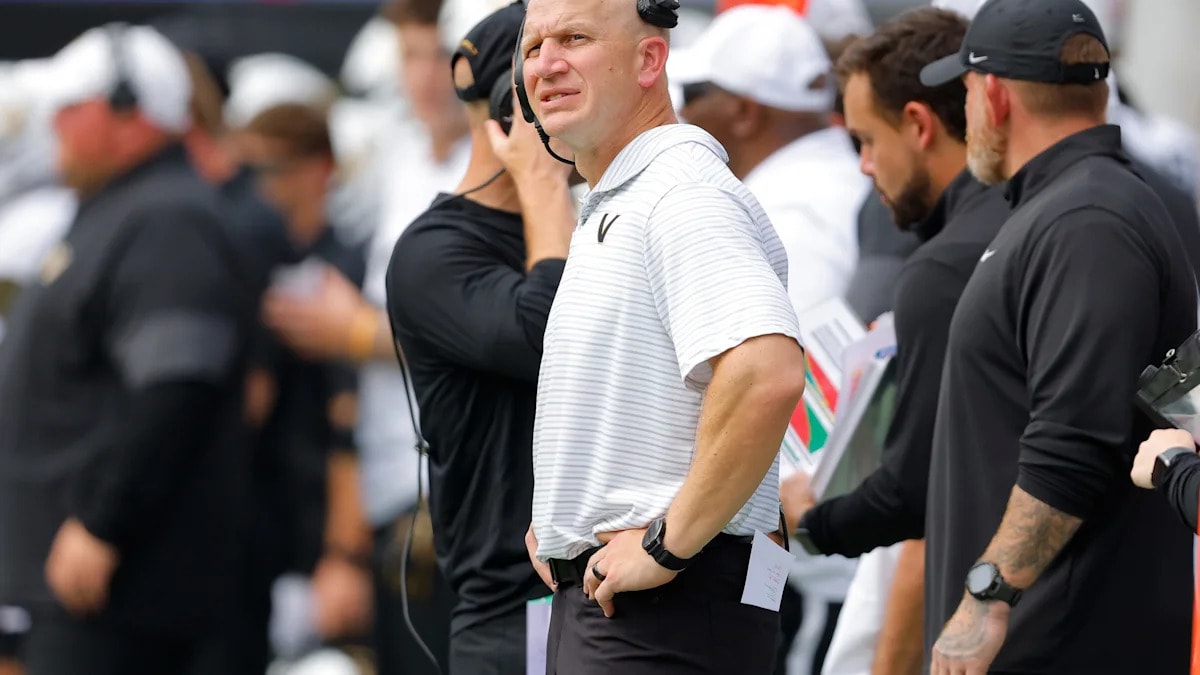
Vanderbilt is approaching its next game with a clear priority that goes beyond basic game plan work. According to reporting from Yahoo Sports, the Commodores have been trying to eliminate penalties by changing how they work in practice, using a new rule structure after struggling with discipline in three straight losses to Auburn, Georgia and Ole Miss.
The focus on penalties matters in college football because small mistakes compound quickly, especially when a team is already playing from behind or trying to manage momentum. Even when the overall talent gap is modest, penalties can erase positive plays, extend opponents’ drives, and put a defense or offense into down-and-distance situations that are harder to execute.
In the reported plan, Vanderbilt reportedly punished the team during practice and then instituted an additional set of rules intended to reduce repeated infractions. The intent is not simply to address one isolated lapse, but to create a more consistent in-practice standard that carries over to Saturdays. In practical terms, that usually means tightening accountability, emphasizing fundamentals tied to penalty avoidance, and reducing the kinds of mental errors that lead to flags.
The backdrop for Vanderbilt’s attention to discipline is a streak in which the Commodores have been hurt by penalties across multiple weeks. The Yahoo Sports report frames the current emphasis as a response to an “abundance” of penalties during that stretch, a pattern that has likely influenced how coaches evaluate process during practices. When a team repeatedly sees flags in different phases, the remedy often becomes operational rather than motivational.
The timing is notable, too. With Arkansas on the horizon, Vanderbilt is attempting to correct a controllable issue before it becomes a defining theme in the game. Penalty prevention is especially important when an opponent can sustain drives, win field position, or force third downs that punish a team already dealing with self-inflicted setbacks.
Vanderbilt’s approach also highlights how programs try to treat penalties as a coaching problem that can be trained. Instead of waiting to react after a flag, the team reportedly structured practice with consequences and a rule-based system designed to keep players from repeating the same errors. The effectiveness of such changes typically shows up first in lower flag totals, then in fewer “automatic” mistakes like repeat procedure-type issues or discipline breakdowns on special teams.
For the next test against Arkansas, the key question will be whether the practice standard translates to game tempo and decision-making under pressure. Fans will be watching whether Vanderbilt can protect drive momentum, avoid gifting opponents extra downs, and keep the play-calling environment stable enough to let schemes develop. If the penalty numbers dip, it would suggest the new practice framework is doing its job, even if the roster’s on-field execution still takes time to fully catch up.
At the same time, the report does not provide full details on the exact penalty targets or the mechanics of the new practice rule, so some specifics remain unclear. Still, the broader storyline is consistent with what teams do when discipline issues become a repeat problem: create direct in-practice consequences, reinforce penalty-avoidance habits, and then measure outcomes in the next conference matchup.
Why It Matters
- Penalties can swing game momentum by negating offensive gains and extending opponents’ drives, making discipline a high-leverage coaching area.
- A penalty-focused practice plan indicates Vanderbilt is prioritizing controllable execution issues that can be trained week to week.
- If Vanderbilt reduces flags against Arkansas, it can stabilize play-calling and improve both offensive rhythm and defensive third-down efficiency.
- Repeat discipline problems can also affect how coaches plan rotations and in-game responsibilities, shaping player development and readiness.
Sources
Key Facts
- Yahoo Sports reported that Vanderbilt is working to eliminate penalties through changes in practice ahead of an Arkansas game.
- The report describes Vanderbilt as having an abundance of penalties.
- The coaching response came after Vanderbilt struggled with penalties in three consecutive losses to Auburn, Georgia and Ole Miss.
- The team reportedly punished itself in practice and then instituted a new practice rule intended to reduce penalties.