
THE APEX TIMES
Vikings notebook from New Orleans highlights Aaron Jones’ power to the end zone
In an official Vikings recap of their Week 5 visit to the Saints, Minnesota’s emphasis was on sustaining runs and finishing them at the goal line, with veteran back Aaron Jones highlighted for his impact in the scoring area.
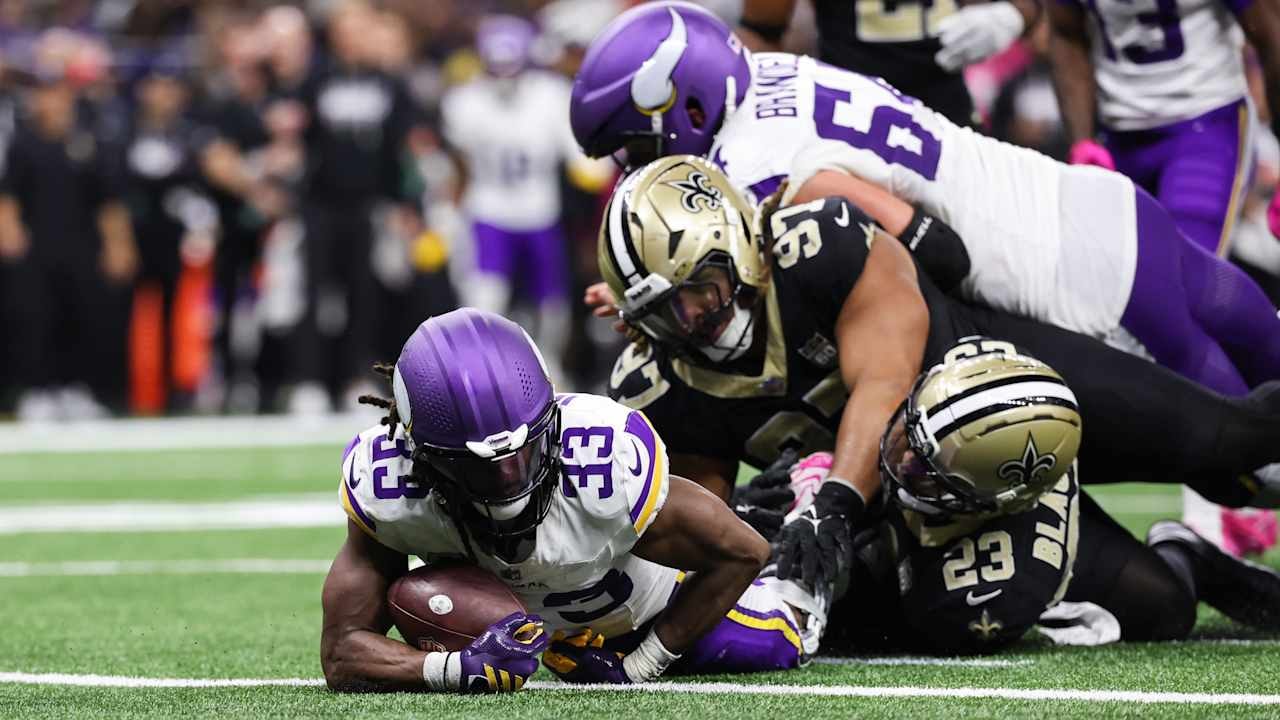
The Minnesota Vikings’ official game notebook from their New Orleans trip focused on one clear theme: getting the ball inside the red zone and turning physical, patient run plays into points. In the Vikings’ observations from Week 5, the standout moment described was a scoring sequence featuring Aaron Jones, Sr., “way into the end zone,” a reference to the kind of short-yardage push Minnesota wants its run game to deliver against quality defenses.
Jones’ role, as depicted in the Vikings’ recap, was less about finesse and more about power and momentum. The phrasing in the team’s write-up points toward a drive-ending play where ball security, leg drive, and decisive running through traffic mattered, particularly in the portion of the field where defenses tend to tighten lanes and reduce space.
Beyond the single scoring highlight, the Vikings’ emphasis in the same notebook carried over to how the run game sets the tempo. When a team can repeatedly move the ball without constantly handing the offense back to third down, the quarterback is protected from predictable defensive patterns, and the play-calling can stay balanced longer. That is the kind of operational advantage a power running back like Jones is often asked to help create.
The Vikings’ staff also framed its attention on what happens immediately before the end zone. In many games, the difference between “almost” and points comes down to a series of small execution items, including leverage at the line of scrimmage and the ability to maintain forward progress as defenders close. The notebook’s focus on a Jones end-zone moment suggests Minnesota’s coaching staff wanted to underline that its best scoring chances came from successful, sustained execution rather than isolated big plays.
New Orleans has a reputation for forcing offenses into uncomfortable, condensed down-and-distance situations, so Minnesota’s approach, as reflected in the team’s own observations, points to a strategy built around staying composed. If the Vikings could convert the early run work into later red-zone opportunities, they could avoid becoming overly dependent on the passing game when coverage tightens and the field shrinks.
For Minnesota, the practical takeaway from the Week 5 observations is how it intends to keep building its identity. The notebook’s attention to Jones’ end-zone impact, and the broader emphasis on finishing drives, sets a reference point for what the Vikings will likely want to repeat in upcoming games: consistent rushing attempts, controlled red-zone possessions, and the ability for a veteran back to deliver at the goal line. Without additional statistical detail here, those remain the main storylines the Vikings chose to highlight publicly.
Looking ahead, the most important question is whether Minnesota can sustain that same run-first, finish-at-the-end-zone approach over a longer stretch rather than only in one highlighted sequence. The Vikings will also need the supporting cast to mirror the execution implied by the team’s emphasis on end-zone running, because big-play scoring is typically the product of multiple earlier blocks and timely route spacing by the offense.
Why It Matters
- For the Vikings, red-zone efficiency built on run-game execution is a foundational piece of how they want to win, especially against defenses that compress the field.
- A featured end-zone run by a veteran back like Aaron Jones reinforces Minnesota’s emphasis on finishing drives with power and sustained ball movement.
- How a team converts early-run success into later red-zone points often shapes play-calling, third-down frequency, and overall game tempo.
- The Week 5 emphasis provides a clear benchmark for Minnesota’s offensive identity to carry forward in subsequent weeks.
Sources
Key Facts
- Minnesota’s official Week 5 notebook was published from the Vikings’ site after the team’s game in New Orleans.
- The notebook’s end-zone highlight featured Aaron Jones, Sr., described as making a run “way into the end zone.”
- The recap emphasized the Vikings’ ability to convert red-zone opportunities into points through the run game.
- The focus of the write-up suggested Minnesota’s priorities included maintaining momentum and staying balanced on drives, not just isolated scoring plays.
- The publication presented the highlighted moment as part of a broader set of in-game observations from Minnesota’s coaching and communications staff.