
THE APEX TIMES
Vikings’ Training Camp Notes Highlight Kyler Murray and T.J. Hockenson Red-Zone Connection
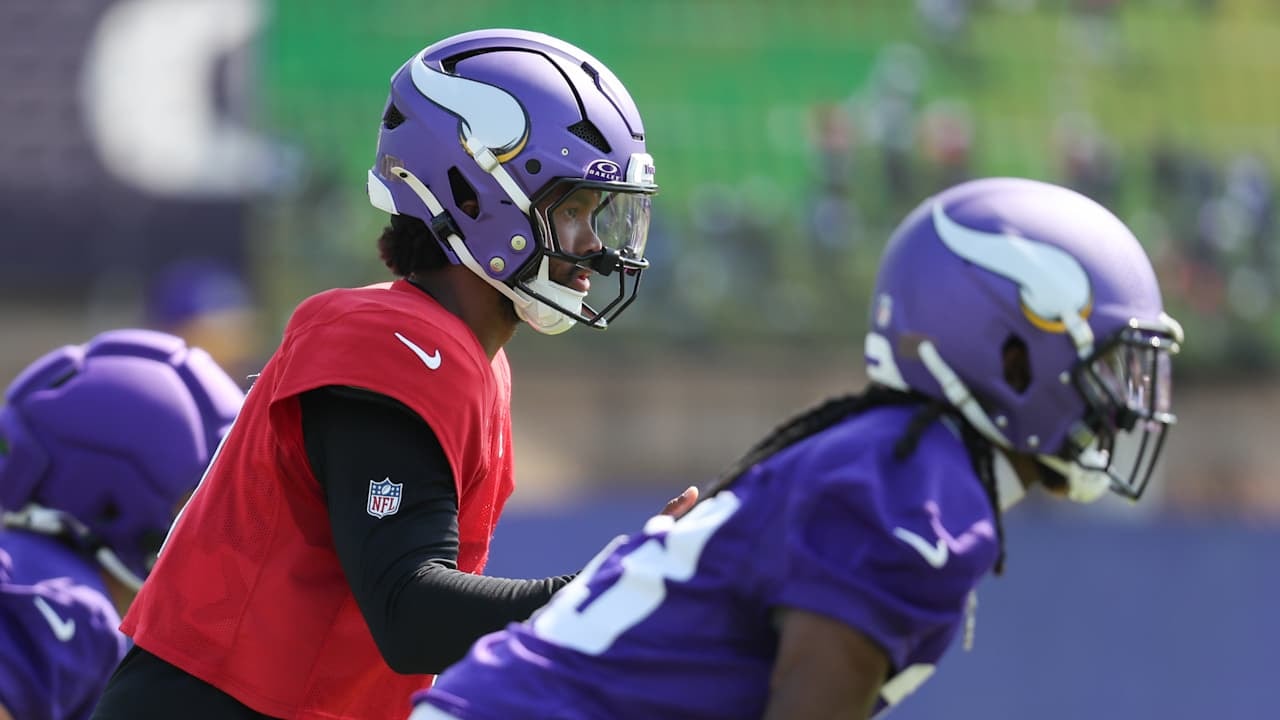
At Minnesota’s Eagan camp, the early storyline has been the quarterback-to-tight end chemistry building inside the scoring area, with Kyler Murray and T.J. Hockenson drawing particular attention from team observations.
Minnesota Vikings training camp has entered its back half in Eagan, and one of the most repeated practical themes from the team’s own daily look is the emphasis on what happens when the field compresses. According to the Vikings’ training camp observations, Kyler Murray and T.J. Hockenson have been generating noticeable traction in the red zone, a setting where timing, route detail, and target trust tend to show up faster than in the open field.
The red zone is often where a team’s offensive identity becomes most measurable. It is also where a quarterback’s decision-making under tighter spacing becomes clearer, and where a tight end’s job typically expands beyond simple seam routes. In the framework of the Vikings’ camp reporting, the Murray-to-Hockenson connection is presented as a building block for Minnesota’s ability to turn drives into points, especially on the downs when defenses commonly tighten matchups and disguise coverage.
T.J. Hockenson’s role in this specific storyline is central because tight ends can be the quarterback’s safety valve, the matchup advantage, or the route that breaks the defense’s structure. A reliable connection to the position can also reduce the risk of predictable calls, since defenses must account for quick-hitting options in condensed zones. The Vikings’ observations do not present the work as finished, but they do suggest the emphasis is on creating a repeatable rhythm between the passer and his most trusted over-the-middle target when space shrinks.
For Murray, the focus matters for more than just production. Quarterback camp work in the red zone is a different kind of repetition than longer patterns on the outside, with more attention to ball placement and anticipation. The Vikings’ camp notes frame the rapport with Hockenson as a chemistry point, implying that the two are developing trust in tight coverage situations rather than relying exclusively on elaborate play design.
What makes this worth watching is how quickly red-zone timing tends to translate to game-plan confidence. Even when training camp periods do not mirror full-game conditions, the most stable offensive connections tend to survive the early-season noise. If Minnesota’s Murray-Hockenson combination continues to show up in the team’s daily look, it may become a reference point for how the Vikings structure situational packages later in camp and into the preseason.
There is also a broader team-building implication. Quarterback-to-skill-player continuity can help simplify offensive adjustments in real time, because the staff can build tendencies around trust, not just theoretical matchups. A tight end connection, specifically, can anchor the middle of the progression and give the quarterback a consistent answer when first reads are blanketed.
Still, training camp observations are best treated as process indicates, not as proof of final outcomes. The Vikings’ report highlights a connection in one area of work, but it does not, in the available information, include session-by-session results or quantified production. The takeaway is therefore directional: Minnesota wants its red-zone offense to move through Murray and Hockenson, and the early camp work suggests progress toward that goal.
As the calendar advances, the next question is whether the connection holds under more game-like defensive looks and whether it integrates with the rest of the red-zone playbook. If the Vikings keep emphasizing the same pairing inside the scoring area, that will indicate the staff is comfortable that the chemistry is not just momentary, but becoming a dependable template for drives that must end with points.
Why It Matters
- A productive red-zone passing game can shift how defenses treat the Vikings’ offensive play-calling late in drives.
- Quarterback-to-tight-end chemistry can make situational offense more reliable because the intermediate window often narrows in condensed space.
- If the Murray-Hockenson connection keeps trending, it can influence how Minnesota builds its red-zone packages and progression reads.
- The emphasis also suggests the Vikings are prioritizing timing and trust under tighter coverage, which is typically a predictor of better execution when games begin.
Sources
Key Facts
- The Minnesota Vikings published training camp observations from Eagan, Minn. describing early offensive emphasis on red-zone execution.
- The team’s observations specifically highlight a developing connection between quarterback Kyler Murray and tight end T.J. Hockenson.
- The report frames the pairing as especially noticeable inside the red zone.
- The publication date of the Vikings training camp observations was August 17, 2026.
- The team’s camp coverage presents the connection as part of ongoing practice themes rather than a final evaluation.