
THE APEX TIMES
Vikings Training Camp Spotlights Max Bredeson’s Versatile, Line-Focused Path to the NFL
Eagan-based practices are putting Minnesota’s fullback in motion, emphasizing the kind of lane-clearing work and pre-snap usage that can turn a practice-camp role into game-week value.
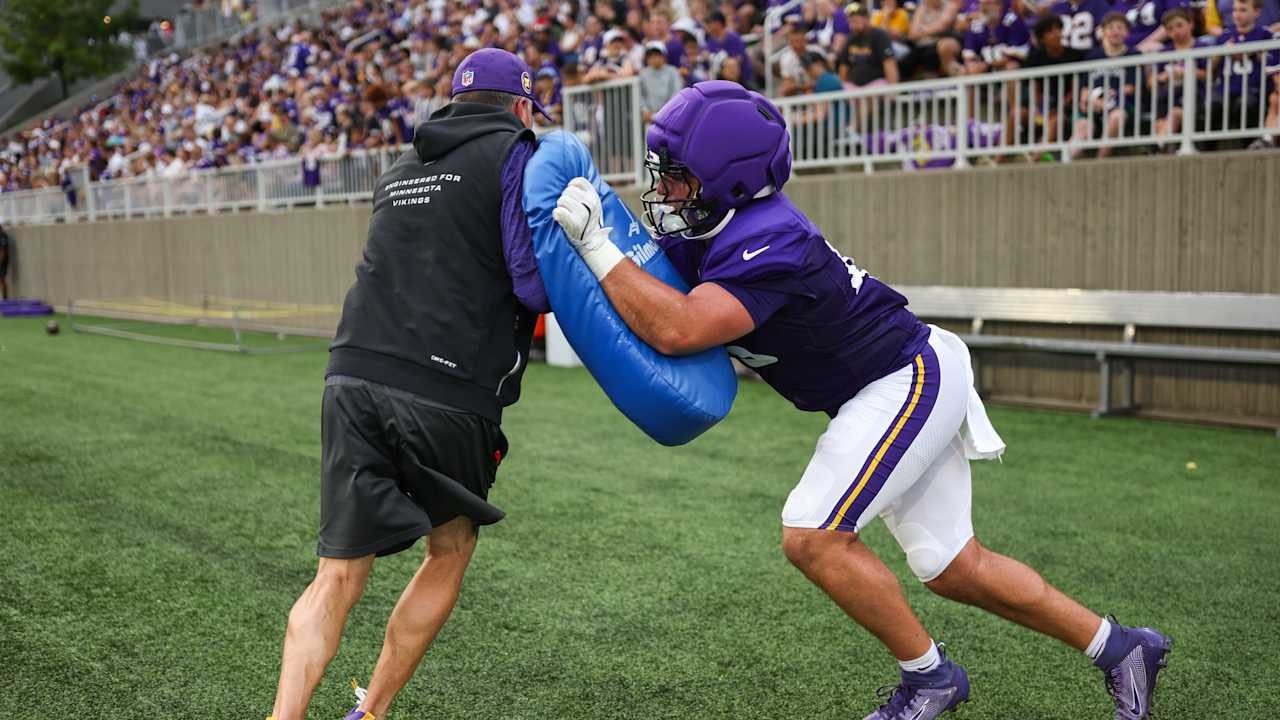
Max Bredeson’s NFL opportunity with the Minnesota Vikings is being framed as more than a traditional fullback tryout. At Vikings Training Camp in Eagan, the team is looking to see how Bredeson performs when his assignments are not static, but instead shift with formations, motions, and the run-game choreography that starts before the snap. The camp focus, as described by the Vikings, is on “unique intersections” between blocking responsibilities, movement packages, and the possibility of involvement in the passing game.
A fullback role in the modern NFL is often easiest to describe in one lane: protect the running game, create space, and finish plays at the point of attack. Minnesota’s camp approach, however, suggests a broader set of responsibilities for Bredeson. The Vikings’ coverage highlights that the work includes shifts and motions before plays, which matters because it tests whether a blocker can execute when the offense is changing alignment and timing, not just when the front is set.
The Vikings are also emphasizing the run-game mechanics tied to the fullback position. Lane-clearing blocking is a specific phrase in the team’s preview of Bredeson’s camp work, reflecting the idea that the job is not simply “blocking,” but carving out angles that let running backs hit the correct path. In practice settings, those blocks can reveal technique questions quickly, including hand placement, leverage, and how consistently a player can reach targets at different depths and angles.
Alongside those run-game fundamentals, the team’s description points to a second axis of evaluation: whether Bredeson can contribute as a receiver when plays are designed that way. The Vikings’ note says it is “quite possibly” a factor based on what has been seen so far at camp. That phrasing keeps expectations measured, but it also indicates that the staff is at least exploring how Bredeson fits into routes and catch opportunities, even if the primary expectation remains blocking.
For Bredeson, the immediate value of training camp is the visibility. Motions and shifts are the kinds of details that typically show up on practice field reports and film breakdowns. If a player can track assignments cleanly after the offense changes shape, coaches tend to trust that player on game-day when the formation disguises are tighter and the execution window is shorter. In a roster environment where roles can swing quickly, being usable in multiple pre-snap looks is an asset.
Minnesota’s interest in a “unique intersections” storyline also points to how the Vikings may view roster construction and play design. Even if a fullback’s snap count is limited compared to linemen and running backs, the position can influence the run game’s identity by stabilizing lead-and-trap angles, short-yardage sequences, and certain play-action looks. By testing Bredeson’s blocking and movement together, the Vikings are effectively checking whether he can serve as an operational bridge between the run scheme and the formation package.
What to watch next is whether the camp evaluation translates into specific usage during preseason-like situations, including how often Bredeson is deployed in motion, whether lane-clearing assignments stay consistent against live run looks, and whether any designed passing touches materialize as the practices progress. For now, the team has offered a clear portrait of the criteria: execute the blocking job reliably, handle shifting alignments, and be prepared if the offense opens a door for receptions.
Why It Matters
- A fullback’s value can hinge on whether he can execute in formation changes, and motion-based evaluation can reveal whether a player is dependable when schemes disguise timing.
- Lane-clearing blocking is central to sustaining and accelerating the run game, meaning the staff’s focus suggests they want immediate, practical impact from the position.
- Exploring passing involvement, even in limited ways, can expand how often the offense keeps defenses honest with personnel and route pressure.
- Camp usage patterns often foreshadow which roles are likely to matter on Sundays, especially in tight-game and short-field scenarios where fullback play can affect outcomes.
Sources
Key Facts
- The Minnesota Vikings featured Max Bredeson in a Training Camp piece focused on how he is being evaluated on the field in Eagan, Minnesota.
- The Vikings described Bredeson’s work as including shifts and motions before snaps, testing fit in formation-based timing.
- The camp emphasis includes lane-clearing blocks for running backs, highlighting the fullback’s core run-game function.
- The team indicated there may be some involvement in catches, based on what has been observed during camp.
- The article frames Bredeson’s opportunity as building an NFL story through the combination of blocking and pre-snap usage.