
THE APEX TIMES
Virginia opens Depth Chart Tuesday with veteran-forward front five protecting Beau Pribula
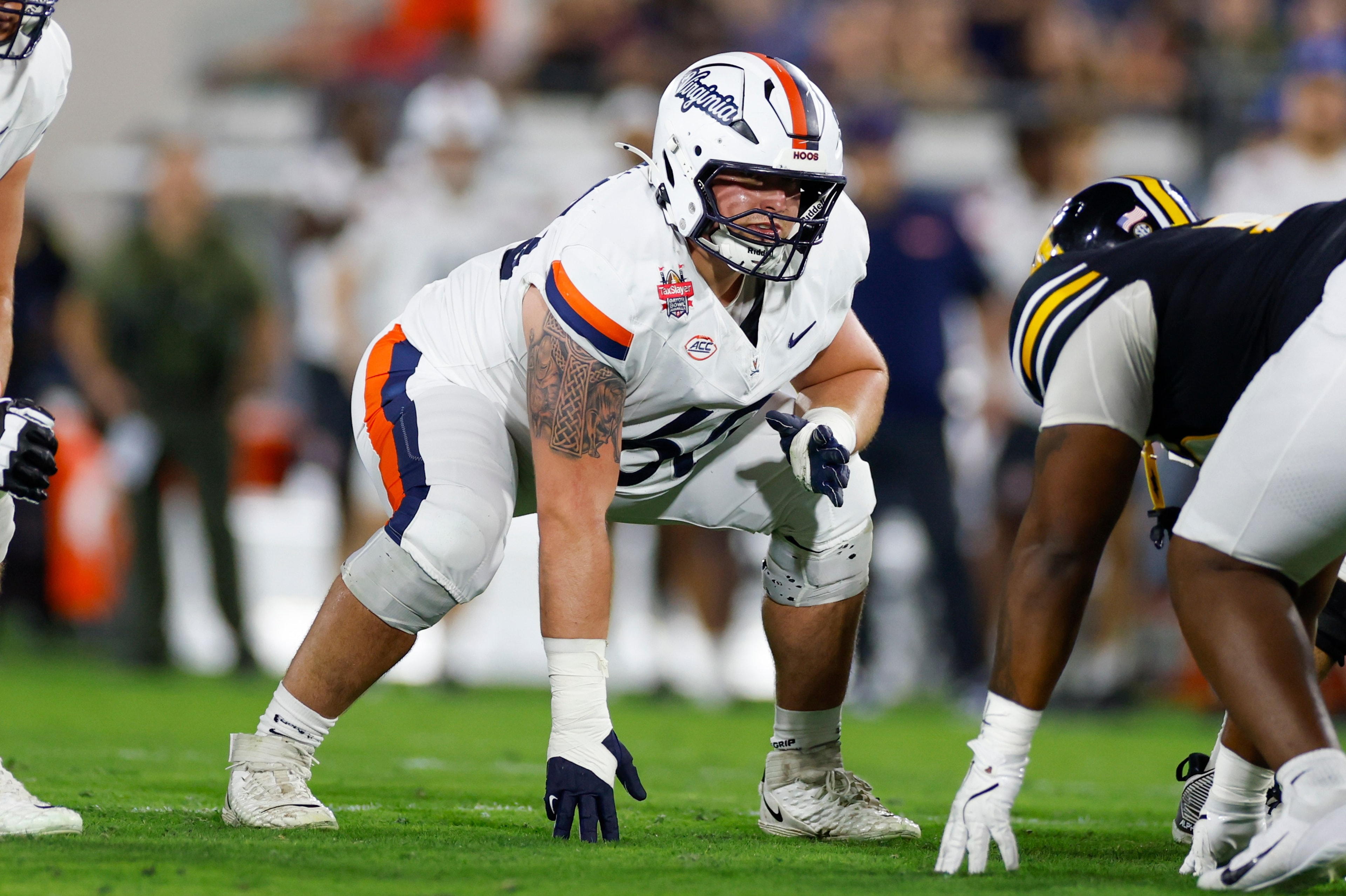
The Cavaliers’ offensive line looks built for experience, featuring a front that includes a 5th-year player, two 6th-years and two 7th-years entering the season.
Virginia’s first “Depth Chart Tuesday” of the 2026 season put a spotlight on just how much lived-in experience the Cavaliers expect to have up front. The publication framing the reveal noted that Virginia’s offensive line rotation is anchored by a front five that includes a 5th-year offensive lineman, two players in their 6th year, and two in their 7th year, an unusual mix that indicates a deliberate approach to continuity and in-game patience at the line of scrimmage.
That matters because Virginia’s offensive identity begins with its quarterback’s protection and the run game’s rhythm. The same report connected the veteran line directly to its primary task: protecting Beau Pribula and acting as a catalyst for a successful ground game. In practical terms, an older, more seasoned group is often better equipped to handle early-down constraints, adjust to defensive fronts quickly, and win the small, repeatable battles that determine whether drives extend or stall.
The timing of the reveal is also notable. “Depth Chart Tuesday” is meant to formalize how the staff views its rotation going forward. By leading with the composition of the front five, Virginia is essentially telling its fan base and opponents that the offensive line will be a strength of the season rather than a developmental project. For a team looking to create consistency, having linemen with multiple seasons of college play can reduce variability in assignments and allow the staff to lean on fundamentals when the scheme is tested.
Experience up front can help more than just pass protection. If Virginia wants its run game to build momentum, the line has to sustain blocks long enough for the play to develop and then recognize the second-level contact points that turn a “good” run into an “earned” first down. The report’s emphasis on the Cavaliers’ collective longevity implies that Virginia expects to translate its settled personnel into sharper execution, particularly in the physical stretches that decide tight games.
There is also a roster-construction angle here. When a team has multiple sixth- and seventh-year players on the same unit, it can reflect either careful recruiting, the retention of contributors over several seasons, or the integration of experienced players into roles that require communication. The result, at least on paper, is that Virginia’s offensive line is staffed with players who have already seen a wide range of defensive looks, which can be valuable when the offense is asked to hold up in noise, pressure, and tempo changes.
Still, depth-chart composition is not a guarantee of performance. Football games are affected by execution day to day, the ability to avoid penalties and missed assignments, and whether the line can maintain cohesion against fresh defensive movement. What to watch next for Virginia is how the Cavaliers translate the experience advantage into measurable drive outcomes early in the season, particularly whether the offensive line sustains runs, improves its tackle-break success around the line, and provides Pribula with consistent pockets.
If the front five can consistently deliver on its protection and run-game catalyst role, it gives Virginia a clearer path to controlling games instead of reacting to them. The most telling updates will come after early weeks when the depth chart is stress-tested by opponents with different front designs, and when Virginia’s ground game either builds steady gains or reveals where the scheme needs refinement. For now, the opening look is straightforward: the Cavaliers are leaning into “grown men” along the line to set the tone.
Why It Matters
- Offensive line continuity can improve both pass protection and the ability to sustain a run game long enough to create drive momentum.
- With a more experienced front, Virginia may be better positioned to handle defensive front changes and communicate protections under pressure.
- If Pribula receives consistent protection, the offense can play more freely on schedule rather than compensating for early-down instability.
- The unit’s age and experience profile can shape how the Cavaliers manage the season’s key stretches, especially in physical games where trench play decides field position.
Key Facts
- Virginia’s first “Depth Chart Tuesday” spotlighted its offensive line’s experience level for the season.
- The front five described includes a 5th-year player, two 6th-year players, and two 7th-year players.
- The report framed the veteran line as protecting Beau Pribula.
- The report also described the offensive line as a catalyst for Virginia’s ground game.
- The emphasis on the front five suggests the coaching staff expects continuity and reliability up front early.