
THE APEX TIMES
Virginia Tech gives its quarterback job to a Penn State transfer
A transfer from Penn State has been named the starting quarterback at Virginia Tech, underscoring how quickly teams can reshape their rosters through the modern college transfer market.
Virginia Tech has selected a Penn State transfer as its starting quarterback, a decision that puts the Hokies’ 2026 offensive identity directly into the hands of a player who arrives already battle-tested in an experienced program setting. The move is being read as both a football choice and a roster-management statement, because it reflects a broader pattern of bringing in players from a proven coaching ecosystem to accelerate development and early-season cohesion.
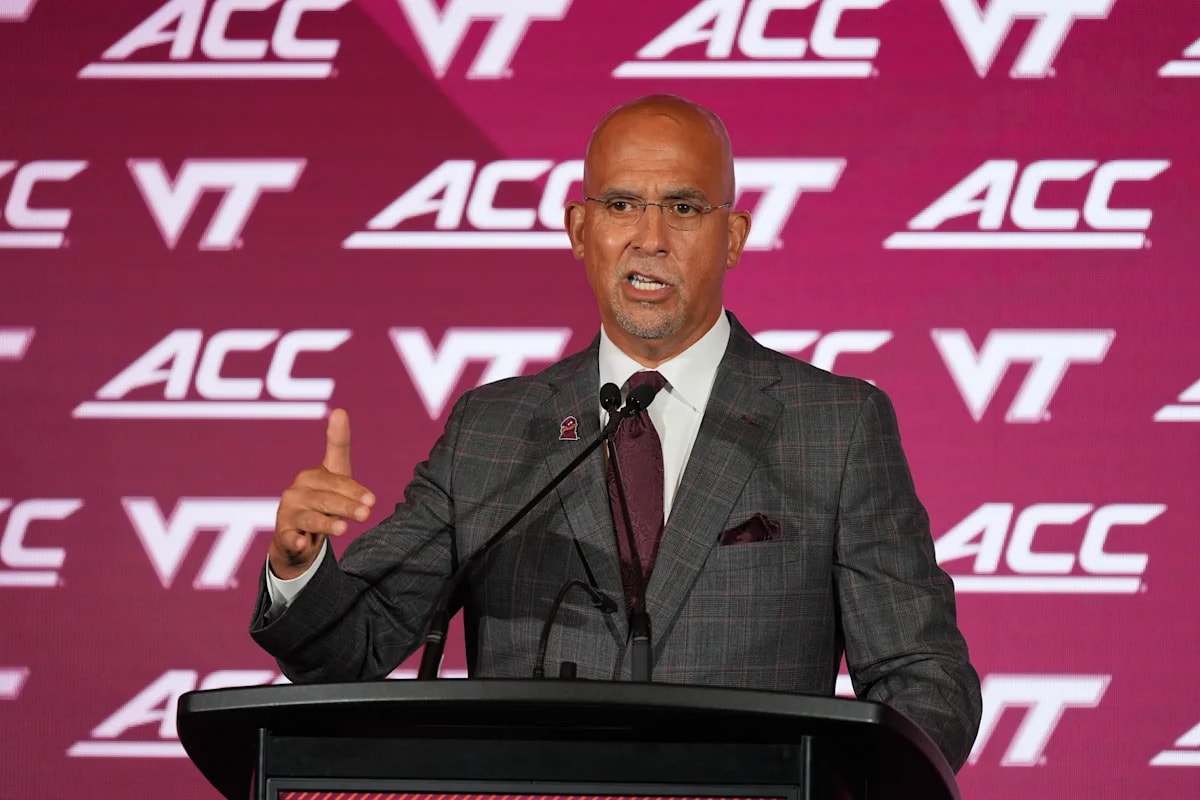
The quarterback appointment also fits a familiar storyline in college football’s coaching-and-transfer cycle. As Yahoo Sports framed it, James Franklin has “taken a bunch of Penn State players” to Virginia Tech, creating an environment where multiple transfers are expected to land quickly into meaningful roles. In that context, the quarterback decision is less about a slow build and more about establishing a leadership position early, with the expectation that familiarity and prior scheme exposure can shorten the learning curve.
The Hokies’ approach is being compared to Penn State’s own recent roster transitions, and especially to what has happened elsewhere when a coaching staff inherits depth and then reloads through the transfer portal. Yahoo’s comparison pointed to Matt Campbell’s transfer-heavy era at Iowa State, when dozens of Iowa State players were reported to have followed him to State College and were expected to contribute immediately. While Virginia Tech’s situation is a different program context, the underlying theme is the same: a new staff can retool a roster quickly by identifying players who fit its system.
At Virginia Tech, the practical football impact is straightforward. Starting quarterback is not only a play-caller and decision-maker, it also influences how quickly an offense can operate with timing, personnel groupings, and game-plan continuity. Even when a transfer brings prior experience, quarterback development at the next level often depends on live reps, protection recognition, and chemistry with receivers and the offensive line. Naming a starter now indicates the staff’s intent to streamline those priorities from the outset.
There is, however, a caveat to the way fans interpret transfer-quarterback announcements in August. Reports can establish a pecking order, but college offenses are still built through practice availability, fall-camp performance, and how the unit responds once the pace and scrutiny of game week arrive. Until the first snap in a competitive setting, it remains possible that roles evolve for other key positions, or that the offense’s chemistry takes time to fully match preseason expectations.
For Virginia Tech’s season outlook, the quarterback decision is likely to be viewed through two lenses. First, it affects the leadership and cadence of the offense, which can shape third-down efficiency and how confidently the team can manage risk. Second, it acts as a recruiting and transfer beacon, showing prospective players that the staff is willing to give meaningful opportunities to newcomers who can win the job and fit the system.
The next thing to watch is how the Hokies’ broader group of Penn State transfers integrates around the quarterback. If the staff’s “multiple roles” framing plays out, the starting unit could become a recognizable core quickly, which often helps teams hold up better in the early season. Even so, the quarterback, more than anyone else, will be the clearest test of whether this roster-building strategy can translate from practice and camp to results on the field.
The story will also be worth revisiting after Virginia Tech’s first high-leverage opponent, because the transfer-to-starting role should be reflected in decision-making under pressure. If the quarterback selection is validated early, it reinforces the Hokies’ belief in rapid roster turnover as a sustainable method rather than a one-year fix. If it struggles, it will raise questions about how quickly the staff’s system can become second nature across the entire offense.
Why It Matters
- The starting quarterback decision shapes the offensive learning curve and the team’s leadership on game day.
- A transfer quarterback plus multiple expected contributors suggests the Hokies may try to reduce early-season continuity problems.
- Comparing the move to past transfer-heavy coaching transitions highlights how staff philosophy can rapidly alter roster construction.
- How the starter performs early will be the clearest measure of whether transfer-based roster building can deliver immediately.
Key Facts
- Virginia Tech has named a transfer from Penn State as its starting quarterback, according to Yahoo Sports.
- Yahoo Sports reports that Virginia Tech’s coach has brought multiple Penn State players to the program and expects several of them to have significant roles.
- The report frames the quarterback decision as part of a roster-building approach that resembles a previous “transfer-heavy” run associated with Matt Campbell.
- The decision is presented as an early indicator of how quickly Virginia Tech plans to integrate new personnel into its offensive identity.