
THE APEX TIMES
Wake Forest must reload its defensive backfield behind standout improvement, as both starting corners and a top safety depart
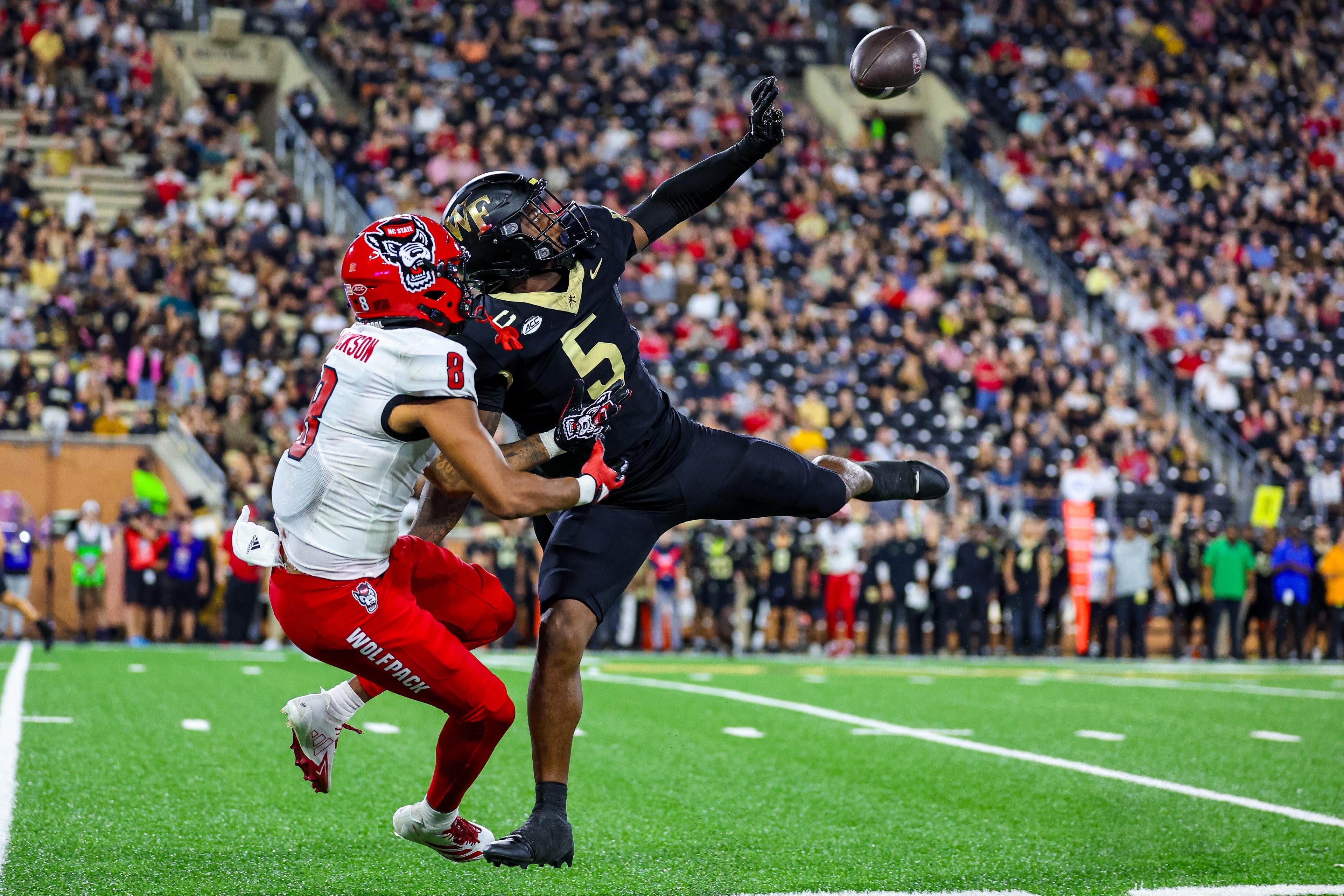
The Demon Deacons’ secondary was among college football’s biggest turnaround stories last season, but the 2026 defensive back depth chart now faces major replacement needs.
Wake Forest enters the 2026 season carrying momentum from a defensive backfield that quietly reshaped expectations. In the secondary’s turnaround from 2025 to last year, opponents completed passes at a 59% rate, compared with 70% the season before. The Deacs also limited passing yardage to 207 yards per game, down from 279 in 2025, and reduced opponent passing touchdowns to 0.9 per game, down from 1.9 in 2025.
Those numbers, as framed in a 2026 positional preview, highlight how much of Wake Forest’s defensive identity has been built around coverage discipline and quarterback pressure indirectly forcing less efficient throws. The same preview points to Patterson as a leading figure in the group, positioning him as a stabilizing presence as the defense attempts to keep that momentum going in a new season.
The challenge for Wake Forest is personnel. The team will have to replace both starting cornerbacks, with the departures of 3rd Team All-ACC defensive back Karon Prunty and Lardarius Webb Jr. That matters because corners are often asked to be the first line of response in man coverage and the primary adjustment point in zone schemes when routes cross or receivers threaten the boundary.
Even with a strong secondary coach’s plan and capable younger players waiting in the wings, replacing two starting corners is not just a matter of matching film grades. Wake Forest will need new answers to the same everyday questions coaches face early in training camp: who can stick through route variation, who can win matchups in space, and who can communicate coverage checks quickly enough to keep the rest of the back end clean.
At safety, Wake Forest also has a significant gap to close. The preview identifies First Team All-ACC safety Nick Andersen as departing after finishing his career tied to program production, including 368 tackles, which is described as placing him eighth in Wake Forest history. A safety who supplies that volume of stops changes how offenses attack the entire defense, because quarterbacks must account for both run support and the deep-middle area in coverage.
The combination of two corner departures and the loss of an All-ACC safety increases the importance of how Patterson and the rest of the returning defensive backs develop chemistry with the new pieces. It also raises the stakes for the defensive scheme in 2026, since the secondary’s success last year was built around limiting completions, compressing the passing game’s yardage, and reducing touchdown frequency.
What to watch next for Wake Forest is not only who wins starting jobs, but whether the defensive backfield can reproduce the same statistical profile from the prior season. If the completion rate climbs, if passing yardage rises materially, or if the touchdown rate rebounds, the turnaround story could start to lose its edge quickly, especially in a conference where quarterback play can swing week-to-week. The 2026 defensive backfield will be measured as much by prevention of damage as by highlight plays.
Why It Matters
- Replacing both starting corners changes how opponents can attack the boundary and how quickly the defense can recover from route depth or route combinations.
- Losing an All-ACC safety who recorded 368 career tackles affects coverage structure, run fits, and the defense’s ability to limit big completions and passing touchdowns.
- The statistical turnaround from 2025 to last season sets a clear baseline, so the 2026 secondary’s performance will be judged against preventing the same passing damage.
Key Facts
- Wake Forest’s secondary held opponents to a 59% completion rate after allowing 70% in 2025.
- Opponents averaged 207 passing yards per game against Wake Forest, down from 279 in 2025.
- Wake Forest limited opponent passing touchdowns to 0.9 per game, down from 1.9 in 2025.
- The 2026 preview names Patterson as a leading presence in the secondary.
- Wake Forest must replace starting corners Karon Prunty and Lardarius Webb Jr.
- The preview identifies Nick Andersen as an All-ACC safety who finished with 368 tackles, described as eighth in program history.