
THE APEX TIMES
Weiss ejected after balk argument involving Sale in Braves-Yankees game
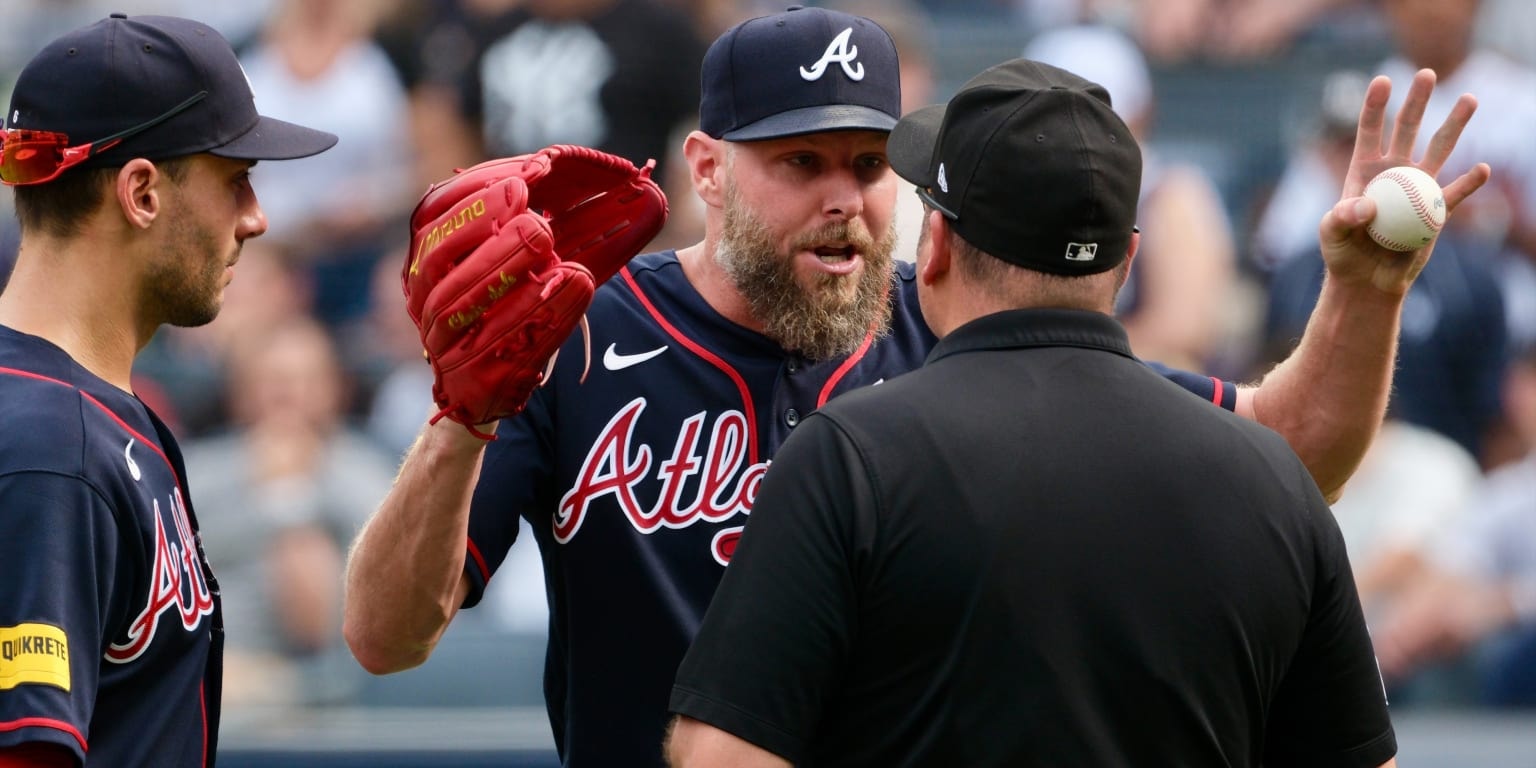
Braves manager Walt Weiss was tossed in the fifth inning after disputing a run-scoring balk call involving left-hander Chris Sale, drawing a quick change in the dugout’s game-day management.
In the fifth inning of a Braves game against the Yankees on Saturday afternoon, Braves manager Walt Weiss was ejected after he argued a balk call that came against left-hander Chris Sale. The dismissal was issued by home plate umpire Dan Merzel as Weiss protested the ruling, turning a late-game sequence into a test of patience for both benches.
The specific call mattered immediately because the balk was ruled to have led to a run. In baseball, a balk is not just a judgment about a pitcher’s mechanics, it is treated as an immediate violation that can force base runners to advance and can swing innings quickly, particularly when the fielding side is trying to limit damage.
Sale, a veteran southpaw for Atlanta, was the pitcher on the mound when the play developed. While the balk was officially recorded as such by the crew, Weiss challenged the decision strongly enough that the argument escalated beyond a standard request for clarification.
Merzel’s decision to eject Weiss underscored how balk protests are often handled in real time. Umpires can be willing to explain certain rule applications, but once a disagreement becomes sustained and public, the penalty is typically enforced to keep the game moving, prevent further delays, and avoid turning an umpiring decision into an extended on-field review.
For the Braves, the immediate impact was practical rather than strategic. With the manager removed, the team’s in-game decision-making shifts to assistants, and the dugout’s emotional tone changes. The fifth inning is also a key leverage spot in MLB games, when teams are balancing bullpen planning with the need to respond to any run that comes from mis-execution or controversy.
For the Yankees and their staff, a balk call tied to a run gives the offense an edge that does not require a hit. It also creates an added burden for the pitching side: even when the pitcher believes the action was legal, the field crew’s interpretation can alter the base-state and set up subsequent batters with different pressure.
Balks are evaluated under MLB’s rules on pitching position, timing, and restrictions meant to prevent deception. Even a small difference in set-and-delivery mechanics, or a perceived violation of what the pitcher must do to deliver without misleading the runner, can produce a call. Because those decisions are often fast and fact-specific, disputes can be difficult to resolve on the spot once the ruling is made.
What to watch next is whether Atlanta’s response shows discipline at the plate and in the field after the ejection, and whether the bullpen usage reflects the way the inning played out after the run-scoring balk. For New York, the takeaway is to keep applying pressure in base-running situations and force opponents to navigate both high-leverage pitching and the timing expectations that can draw balks. Meanwhile, for both clubs, the incident will likely remain a reference point for how balk arguments are handled when emotions run high in the middle innings.
Why It Matters
- A run-scoring balk can change the base state instantly, making the inning’s momentum difficult to recover from.
- Manager ejections can disrupt a team’s on-field communication and shift late-inning game management to assistants.
- Balk disputes highlight how quickly pitchers must comply with timing and delivery rules under real-time umpiring.
- The Braves will be evaluating how they respond to high-pressure base-running sequences after a controversial ruling.
Key Facts
- Braves manager Walt Weiss was ejected in the fifth inning against the Yankees.
- The ejection came after Weiss argued a balk call.
- The balk call was made against Braves left-hander Chris Sale.
- Home plate umpire Dan Merzel issued the ejection.
- The balk was ruled to have resulted in a run-scoring situation.
- The incident occurred during a Saturday afternoon game in New York.