
THE APEX TIMES
What’s at stake for the Nets’ 2025 draft class as Brooklyn turns toward the 2026-27 season
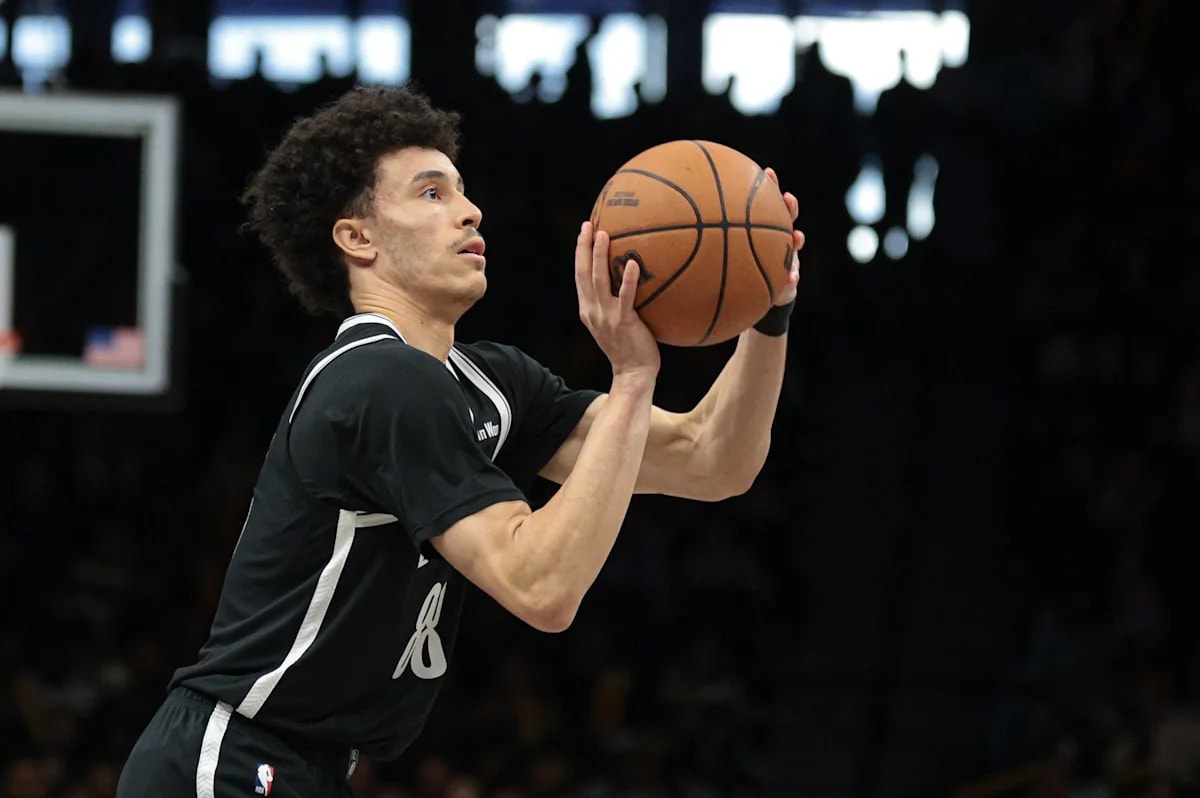
With training camp approaching in late September, the Brooklyn Nets’ focus is sharpening on whether the franchise’s 2025 NBA Draft group can justify its place in the rotation during the run-up to the second season of development.
The Brooklyn Nets are beginning preparations for the 2026-27 NBA season with a familiar summer question for any rebuilding or retooling roster: how quickly can young players turn potential into regular-season value? The immediate lens is the franchise’s 2025 NBA Draft class, which is entering its second season and will be judged not on flashes in practice or early summer work, but on consistency once games matter.
According to Yahoo Sports, Brooklyn is about a month away from starting training camp in late September, when the organization will shift from offseason development plans to a tighter, team-wide evaluation process. The Nets will still want to win as many games as possible, but the stakes for the draft class extend beyond the standings. The second season is often when a coaching staff can identify whether a player’s strengths fit real lineup needs, and whether areas of improvement have narrowed enough to earn repeat minutes.
For a draft class, “what’s at stake” is partly structural. The first year typically includes a learning curve: understanding NBA spacing, reading help defense, and managing minutes and role expectations. The second year changes the test. Players are expected to translate offseason work into on-court decision-making, especially in moments that repeatedly determine possessions, such as first side-to-side entries, late-clock actions, transition responses, and defensive assignments that require comfort rather than effort.
Yahoo’s framing also suggests Brooklyn’s internal competition will become more consequential as 2026-27 approaches. The Nets’ younger players will be evaluated relative to the rest of the roster, including veterans and any offseason acquisitions, because the rotation ultimately decides development paths. A prospect can progress in two ways: by earning stable opportunities or by proving enough in limited time that the staff adjusts role expectations faster than planned. Either route creates momentum, but only one leads to the kind of sustained responsibility that accelerates growth.
The next season also places a subtle time horizon on the draft class. Even without changing the long-term rebuild logic, teams must weigh how quickly they can shape a stable core. If the Nets’ 2025 selections demonstrate steady improvement by the time the season settles, it reduces the need for constant churn and makes future roster planning more precise. If they do not, the organization typically faces a harder decision about whether the current youth group can carry meaningful minutes or whether additional assets must be prioritized.
That is why the Nets’ 2026-27 outlook, as described in the Yahoo report, is not only about performance in isolation but about development outcomes that compound. A draft class can still be a work in progress, yet the second-year window tends to separate late starters from impact-ready players. If the Nets’ young group provides more reliable production and more consistent two-way effort, it can reshape the team’s identity, tightening the link between player development and competitive results.
As training camp nears, the team-wide watch will shift from “can they improve” to “are they trusted.” Brooklyn’s offseason intent will be measured through how those players look in the preseason rotation, how quickly they are able to handle defensive reads and offensive reads at speed, and whether the staff keeps expanding roles once games begin. For the Nets and their 2025 draft class, the answer will define how much of the rebuilding timeline belongs to the young players, and how much remains open to change.
Why It Matters
- Second-year development often determines whether a draft class becomes a rotation core or remains a developmental project, shaping Brooklyn’s roster stability.
- Role certainty impacts player confidence and coaching trust, which can affect both individual growth and team lineup continuity.
- If young players provide dependable two-way play, it can clarify the Nets’ identity and reduce how often the organization must rebuild through new moves.
- Early-season usage patterns in 2026-27 will be a key indicator of whether the Nets believe the draft class is ready to carry meaningful minutes.
Key Facts
- The Brooklyn Nets are preparing for the 2026-27 NBA season, with training camp expected to begin in late September.
- Yahoo Sports reports that the Nets’ 2025 NBA Draft class is approaching its second season, which is central to the organization’s development evaluation timeline.
- The report frames the team goal as balancing the pursuit of wins with the need to develop younger players on the roster.
- The idea of “more at stake” next season is tied to whether the draft class can make a tangible leap from first-year learning to consistent contribution.