
THE APEX TIMES
What should the Braves focus on this offseason after a Dodgers NLDS exit?
In a post-elimination review, MLB’s Braves beat analysis argues Atlanta’s 2026-27 work should center on roster fit, catching and lineup clarity, the contract picture for key bats, rotation health and velocity questions, and leadership stability.
One week after the Braves were eliminated by the Dodgers in the NL Division Series, the focus of Atlanta’s offseason planning is less about recapping October results and more about identifying which roster paths can realistically lead to a different outcome in 2027.
First on the list is Jurickson Profar, whose return the analysis says should not be a priority given the club’s recent history with him. The argument is that bringing him back would force Atlanta to consider both financial cost and clubhouse impact after the outfielder’s PED suspensions over the prior two years.
At catcher, the analysis points to how William Contreras’ postseason performance has revived internal frustration in Braves fandom that began with the Dec. 2022 three-team trade. It also contrasts Contreras’ two-way value in Milwaukee with Atlanta’s earlier experience, including the claim that Sal Fasano’s role as catching coach ended after Contreras’ success there.
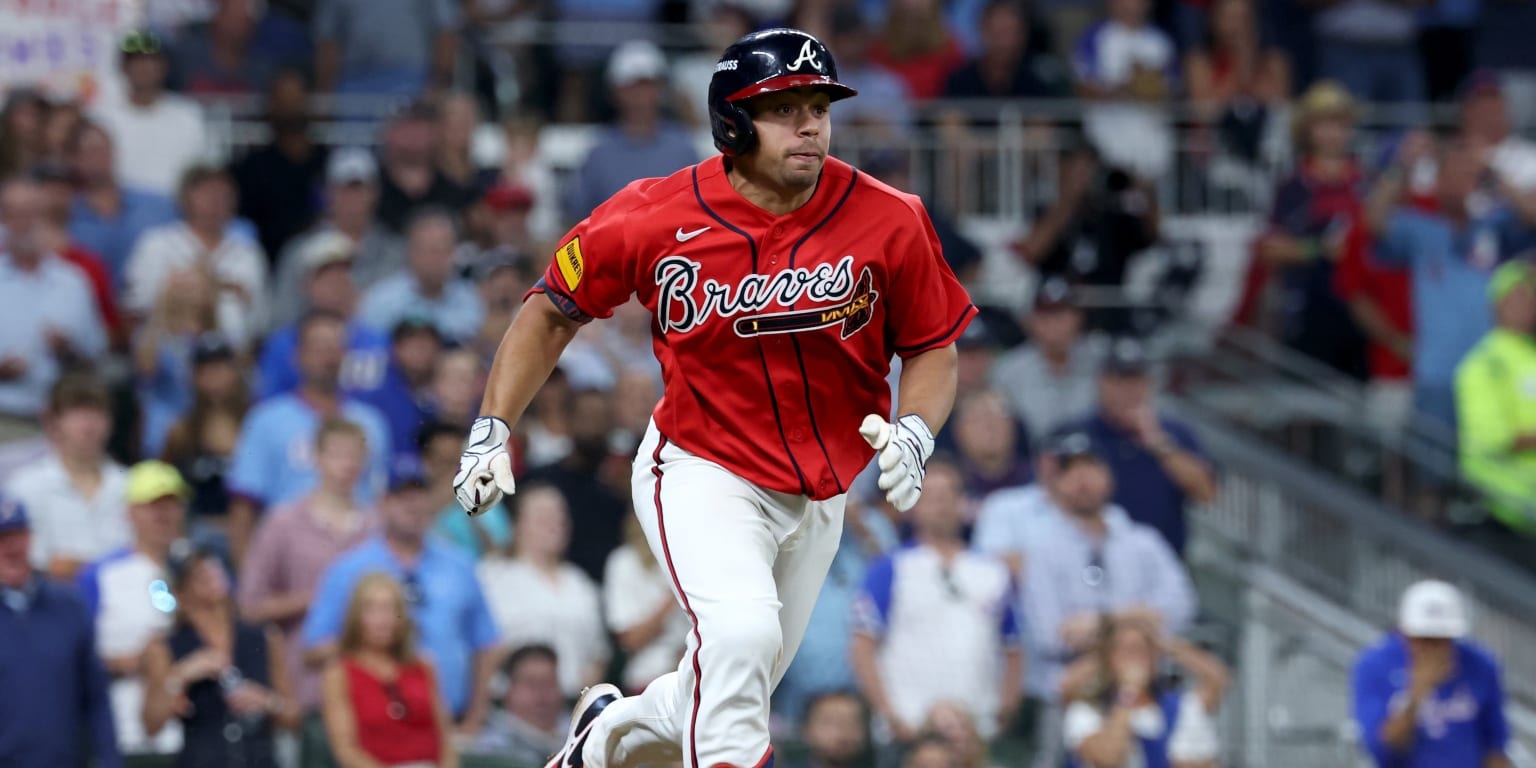
The Braves’ likely internal fork, according to the same view, is whether to shape the next team around Drake Baldwin as the primary catcher. The analysis states Baldwin graded slightly better defensively than Contreras using Fielding Run Value this year, and adds that it sees Baldwin ahead offensively across the past two seasons in home runs, batting average, and OPS.
The offseason also has to account for Austin Riley’s trajectory and contract risk. The analysis argues that Riley’s 2026 season did not follow the expected script after he returned from season-ending injuries in 2024 and 2025, and it notes he is owed $22 million annually through 2032. Riley turns 30 on April 2, and the piece frames 2027 as the next chance to see whether he can return to the form of his 2023 third consecutive 30-homer season.
On the pitching side, the analysis emphasizes uncertainty as the common denominator. It groups together constraints tied to Spencer Strider’s elbow, Reynaldo López entering the third year of a three-year, $30 million extension, and Austin Schwellenbach’s previously fractured elbow now featuring a screw. With those variables in play, the argument calls for Atlanta to pursue at least two starting pitchers in the winter.
Finally, the Braves’ clubhouse and organizational leadership are included as a concrete decision point. The analysis singles out Walt Weiss, contrasting his 2026 impact with the fact the Braves lost four starting pitchers, a left fielder (Profar), and a catcher (Murphy) during spring training, while still rebounding through the regular season.
Why It Matters
- Catching and lineup roles are positioned as a pivot point for 2027, with the analysis effectively pushing Atlanta toward a Baldwin-centric plan.
- The Riley contract becomes a central roster-building constraint if performance does not recover, shaping how much flexibility Atlanta has elsewhere.
- Starting pitching is treated as the biggest structural question heading into 2027, affecting how aggressive the Braves can be in other offseason spending.
- Leadership continuity is framed as part of the team-building equation, not just a narrative after a disappointing October.
Key Facts
- The discussion is framed one week after Atlanta was eliminated by the Dodgers in the NL Division Series.
- The analysis argues the Braves should not re-sign or re-acquire Jurickson Profar, citing PED suspensions over the prior two years and the implied clubhouse cost.
- It attributes renewed Braves-fan frustration over William Contreras to the Dec. 2022 three-team trade that brought Sean Murphy to Atlanta.
- The analysis prefers Drake Baldwin over Contreras as the catcher/DH option, citing Fielding Run Value defensive comparisons (-1 for Baldwin versus -3 for Contreras) and offense across the past two seasons (home runs, batting average, OPS).
- It describes Austin Riley’s 2026 season as his worst despite returning from injuries and notes his $22 million annual salary through 2032.
- It argues Atlanta should pursue at least two starting pitchers, citing health and performance uncertainty around Strider, Schwellenbach, and López.
- It credits Walt Weiss for the Braves’ response after multiple spring-training losses and a midseason rebound.