
THE APEX TIMES
What went wrong for the Raiders’ rushing game vs. the Chiefs, and why the answer starts up front
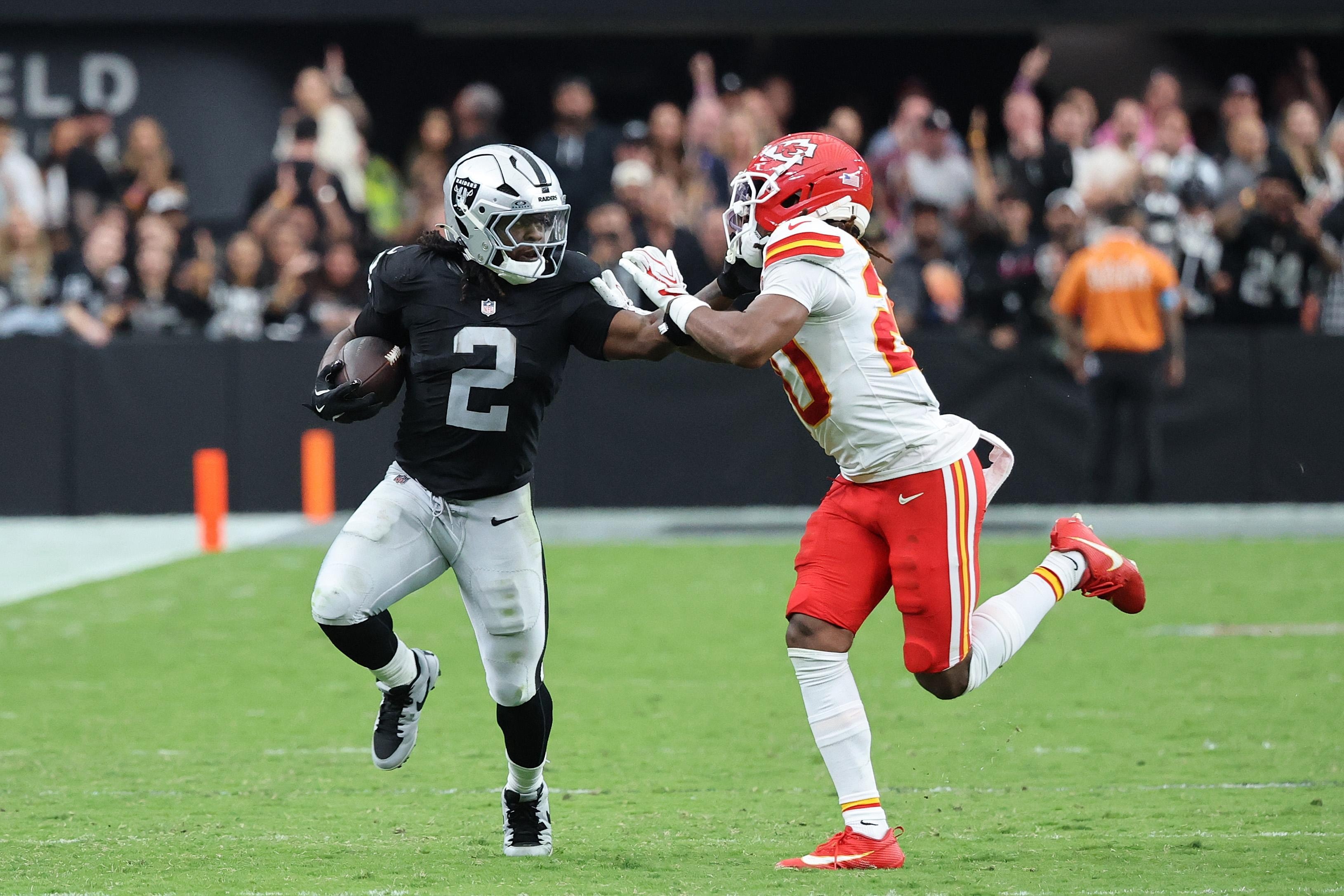
Las Vegas managed 72 rushing yards on 26 carries without a touchdown against Kansas City, and the breakdown points to Kansas City’s ability to disrupt the line at the point of attack.
The Raiders’ offense ran into a familiar ceiling in their matchup with the Kansas City Chiefs, producing a rushing day that looked more like survival than strategy. Las Vegas totaled 72 rushing yards on 26 carries and did not score any rushing touchdowns, a stark outcome in a game where the ground attack was supposed to set the tone.
In the aftermath, the question quickly became who should take responsibility for the woeful production. The framing from Yahoo Sports centers on credit and blame working in opposite directions. The article argues the Chiefs earned the advantage early by forcing the Raiders to fight for every step, turning standard run looks into tight-space, low-leverage attempts.
Kansas City’s interior impact is a major part of that explanation. Yahoo Sports specifically highlights Peter Woods, Felix Anudike-Uzomah, Chris Jones and Khyiris Tonga as key defenders who created “absolute fits” for the Raiders’ run game. The logic is simple: when the defense can win inside, the offense’s run decisions become slower, and the run lanes shrink to the point where even good designs struggle to gain traction.
For the Raiders, the carry volume itself suggests the staff did not abandon the run quickly. Twenty-six rushing attempts indicate the plan stayed in place long enough to see it through different downs and game scripts. But the efficiency never arrived. Without a rushing touchdown and without meaningful yardage, the run game failed to generate either the momentum swing or the late-game margin that ground attacks usually provide.
This is where “blame” becomes more complicated than a single unit. When a run attack underperforms, responsibility can stretch across play calling, blocking execution, and the defense’s ability to defeat the scheme. The Yahoo Sports piece leans heavily toward the last component, arguing that Kansas City’s defensive front created the conditions that prevented the Raiders from getting clean runs. In other words, even a decent plan can collapse if the line of scrimmage becomes a battleground that the offense cannot consistently win.
The other element to consider is the type of disruption that defenders like Jones and Tonga can impose in the middle. A defensive interior that consistently pushes the pocket inward or collapses gaps forces the offense to reroute runners, cut earlier than intended, or rely on second and third efforts to make up lost space. Those adjustments can reduce the offense’s ability to sustain a rhythm, turning every successful run into an exception rather than the expectation.
From a Raiders perspective, the immediate question is what changes next to make the rushing attack look like it belongs in a modern NFL game. Whether the answer is better leverage at the point of attack, faster reads to punish pressure, or sharper run-game identity, the yardage and touchdown output from this matchup show that the current approach did not translate against a Chiefs defense capable of winning physically in the interior.
For Kansas City, the rushing performance may say as much about their defensive front as it does about Las Vegas. If the Chiefs can repeatedly control the line and deny lanes, they can shape opponents’ playbooks even when they are not stacking box scores with highlights. The Raiders’ 72 yards on the ground on 26 carries is one clear piece of evidence, and it sets up a straightforward watch for what happens when these units meet again or when the Raiders face teams that do not match Kansas City’s inside disruption.
Why It Matters
- A non-productive rushing attack reduces an offense’s options, forcing it to play from behind schedule on downs and distances.
- Dominance up front can swing whole game plans, making the run game less about design and more about winning the line of scrimmage.
- For Las Vegas, fixing the run efficiency is tied to identity, because consistent ground production changes passing windows and third-down conversion paths.
- For Kansas City, the result reinforces the strategic value of interior defensive pressure in dictating opponents’ offensive structure.
Key Facts
- Las Vegas ran 26 times for 72 rushing yards against Kansas City.
- The Raiders recorded zero rushing touchdowns in the game.
- The Yahoo Sports analysis credits Kansas City defenders Peter Woods, Felix Anudike-Uzomah, Chris Jones and Khyiris Tonga for disrupting the Raiders’ run game.
- The article’s core argument is that the Chiefs controlled the point of attack, limiting run efficiency.