
THE APEX TIMES
Why Alabama and Georgia is college football’s rivalry built for elite-level stakes
As the sport changes around it, the matchup has held onto something rarer than proximity: shared standards, high-level recruiting pipelines, and games that tend to matter when the championship picture is still being drawn.
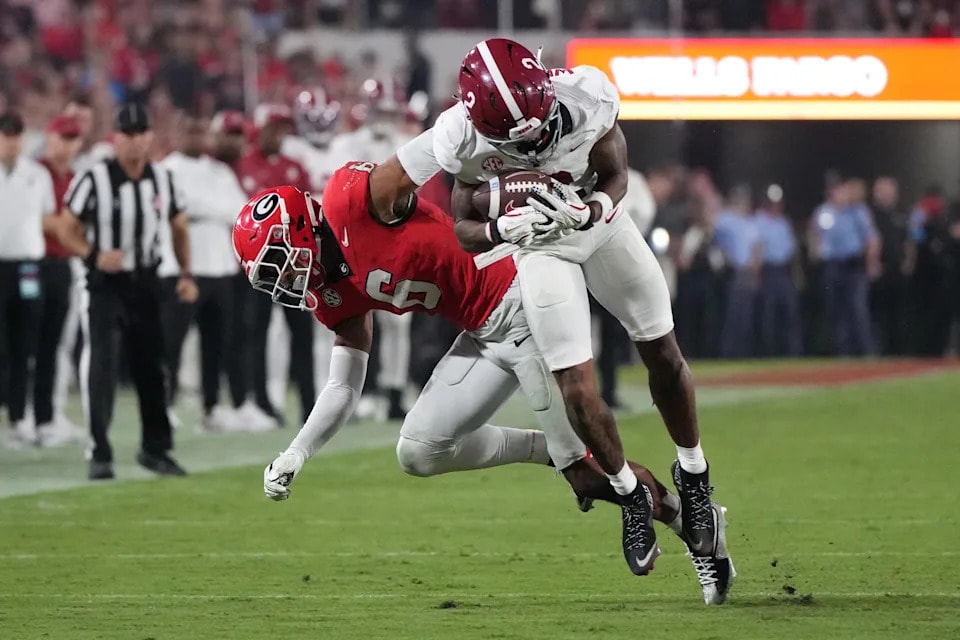
Alabama-Georgia is often described as college football’s marquee rivalry, but the case being made in a new Yahoo Sports piece is more specific than pageantry. The writer argues the series stands out because it is driven less by contempt between neighboring programs and more by mutual respect rooted in repeatedly reaching the top of the sport. When the Crimson Tide and Bulldogs meet, the stakes are usually shaped by each team’s ability to recruit and develop at an elite level, which in turn keeps the contest from feeling like just another annual tradition.
The argument leans on how rivalries usually form in college football. Many stem from regional proximity, the easy logic of “they’re close, so they became rivals.” In contrast, Alabama and Georgia are presented as a rivalry that has evolved alongside the sport itself, surviving changes in how champions are identified and how conferences are built. That endurance matters, because conference realignment has erased or diluted plenty of long-running matchups, leaving fewer series with a consistent national spotlight.
The Yahoo Sports piece also frames the series as a through-line across major eras of college football. It points to the rivalry’s adaptation from the poll era into the modern age, while noting broader societal and competitive shifts that have transformed the sport, including the integration of football and the expansion that reshaped who could be in the same national conversation. In that sense, Alabama-Georgia is described as a rivalry that has repeatedly kept pace with college football’s restructuring, rather than being frozen in a single historical moment.
What makes that “elite” framing persuasive is the way it connects rivalry identity to contemporary standards. In modern recruiting and development cycles, programs need sustained excellence to stay nationally relevant, and both Alabama and Georgia have built reputations on that expectation. So when the teams play, the rivalry does not rely solely on history or geography. It is reinforced by the likelihood that both sides are arriving with championship-level aspirations, which keeps the games consequential well beyond bragging rights.
That also explains why the matchup can feel unusually compatible with modern college football’s incentives. Even when national titles are decided through playoff formats and ranking systems, the most compelling games tend to be the ones between programs that regularly recruit at the top of the sport and field units capable of controlling outcomes. The Yahoo Sports piece characterizes Alabama-Georgia as the kind of meeting where those qualities collide, with the rivalry intensified by the fact that both fan bases expect to measure themselves against the best.
Still, there is a limit to what can be concluded from a retrospective or opinion-driven story. The piece is not a statistical study of which rivalry “should” be ranked highest, and it does not rely on one specific game’s score, standings scenario, or transactional development. Instead, it argues from the series’ broader identity, its survival through major college football changes, and the pattern of high-stakes meetings it produces when two elite programs share a calendar.
Looking ahead, the most practical way to watch whether the argument holds up is to treat Alabama-Georgia as a barometer for the sport’s top-tier standards. If the rivalry continues to produce matchups that feel nationally meaningful, with both programs consistently positioned as contenders when they meet, then the “elite-built” description will remain more than a rhetorical flourish. If one side is forced into a rebuilding cycle or the broader league structure reduces the frequency of high-leverage games, the rivalry could still be historic but might lose some of the edge that keeps it distinctive.
For now, the headline takeaway is simple: Alabama-Georgia is presented as a rivalry that keeps earning its place because it is built on excellence as much as it is built on tradition, and because it has managed to remain relevant as college football itself has changed around it.
Why It Matters
- Rivalry identity influences how college football fans and recruits perceive a program’s long-term standard of excellence.
- A matchup that consistently functions as an elite test tends to carry extra weight for the title picture and for team-building messaging.
- Endurance through conference realignment suggests Alabama-Georgia has a resilience that many other series have lost.
- The “mutual respect” framing underscores why the rivalry can remain compelling even when the broader sport’s structure changes.
Sources
Key Facts
- A Yahoo Sports analysis argues Alabama-Georgia is college football’s best rivalry largely because it centers on elite standards and mutual respect, not just regional rivalry.
- The piece contrasts Alabama-Georgia with many rivalries that are described as being formed primarily from geographic proximity.
- The series is characterized as having evolved across major college football eras, including the poll era and the sport’s broader social and competitive transformations such as integration and expansion.
- The story notes that conference realignment has erased or reduced some traditional rivalries, while Alabama-Georgia has remained prominent.
- The central theme is that when Alabama and Georgia play, the matchup’s stakes are typically shaped by both teams sustaining high-level competitiveness.